How to Find Your Ayurvedic Body Type: 3 Methods Compared
Discover three reliable ways to find your Ayurvedic body type: online quizzes, self-assessment, and professional consultation. Learn the pros and cons of each.

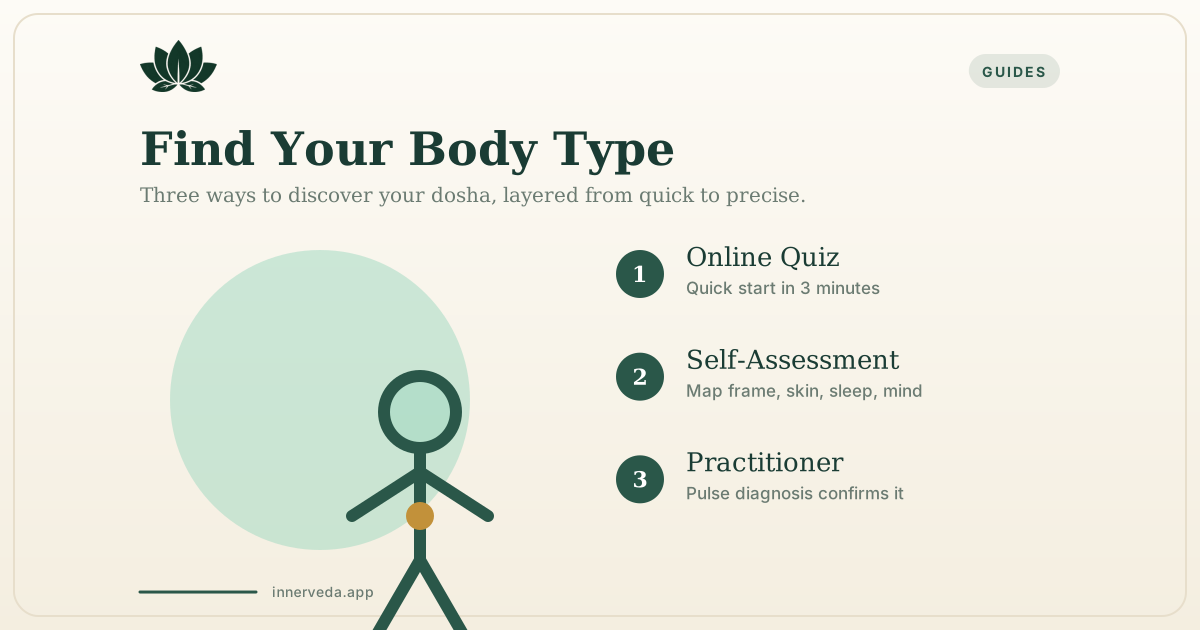
You can find your Ayurvedic body type through three main methods: online dosha quizzes (quick but less precise), structured self-assessment using physical and mental traits (more thorough), or professional pulse diagnosis by an Ayurvedic practitioner (most accurate and personalised).
Why Knowing Your Body Type Matters
In Ayurveda, your body type, or Prakriti, is the foundation for every health recommendation. It shapes which foods nourish you, which exercises energise you, what kind of sleep schedule suits you, and how you respond to stress.
Get your dosha wrong and you spend years following advice designed for someone else's body. Get it right and the personalised approach starts feeling almost intuitive.
Three main methods. Here's how they compare.
Method 1: Online Dosha Quizzes
How They Work
Online quizzes typically present 20-40 questions covering physical traits, digestion, personality, sleep patterns, and stress responses. Your answers are scored, and the dosha with the highest score is identified as your dominant type.
Pros
- Quick and accessible: Most take 2-10 minutes
- Free: Widely available at no cost
- Good starting point: Provides a general direction for exploration
- Immediate results: You get answers right away
Cons
- Limited depth: Cannot assess pulse, tongue, or subtle physical features
- Self-reporting bias: You may describe who you want to be rather than who you are
- Current state confusion: If you are stressed or unwell, answers may reflect Vikriti (imbalance) rather than Prakriti (constitution)
- Variable quality: Not all quizzes are created by qualified practitioners
Tips for Better Quiz Results
- Think about your lifelong patterns. How were you as a child and teenager, not just today.
- Ask someone who knows you well. They may see traits you overlook.
- Take multiple quizzes. If three different quizzes give the same result, that is a stronger signal.
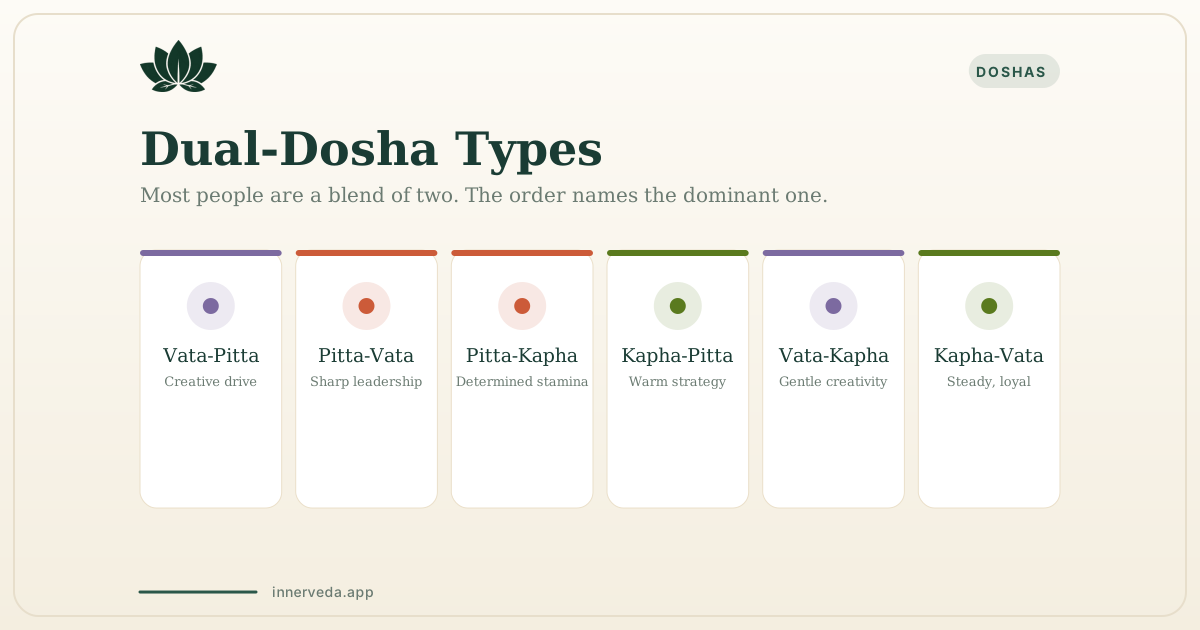
- Note your secondary dosha. Most people are dual-dosha types.
Method 2: Structured Self-Assessment
How It Works
This method involves systematically evaluating yourself across multiple categories: body frame, skin, hair, digestion, elimination, sleep, emotions, mental patterns. Then map each trait to its corresponding dosha.
The Assessment Categories
Physical Frame
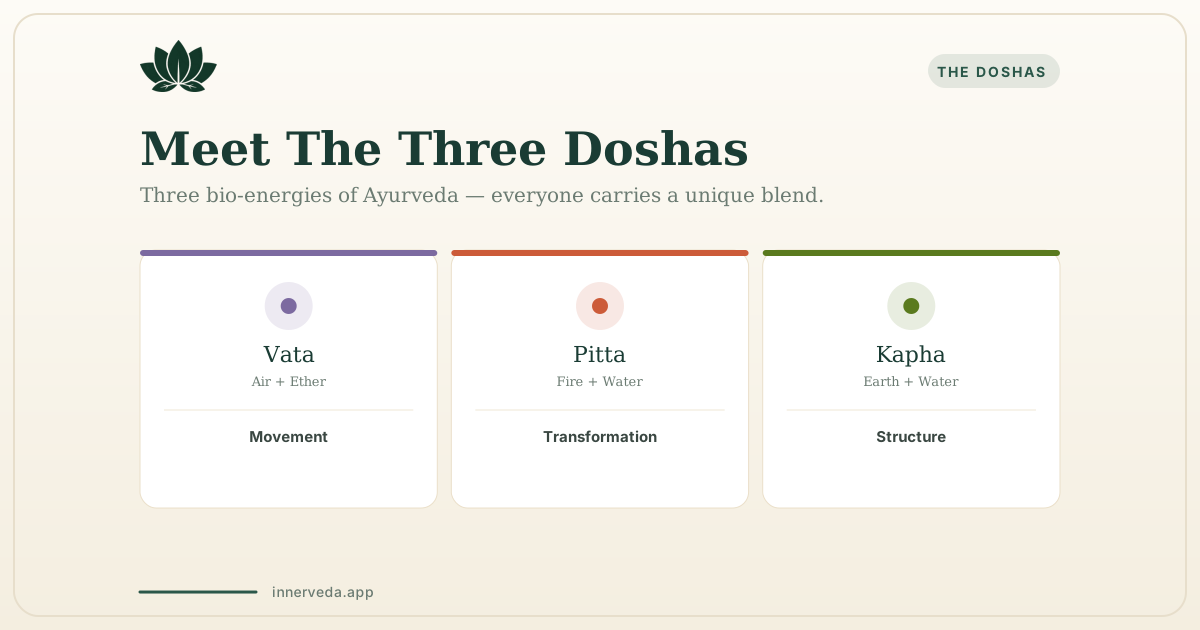
- Vata: Thin, light, tall or short, narrow shoulders and hips
- Pitta: Medium, proportionate, moderate muscle tone
- Kapha: Larger, sturdy, wide shoulders and/or hips, gains weight easily
Skin and Hair
- Vata: Dry, thin, rough skin. Dry, frizzy, or curly hair.
- Pitta: Warm, sensitive, prone to redness. Fine, early greying hair.
- Kapha: Thick, smooth, oily skin. Thick, wavy, lustrous hair.
Digestion
- Vata: Irregular appetite, bloating, gas, variable elimination
- Pitta: Strong appetite, acidity, regular elimination, gets irritable when hungry
- Kapha: Slow but steady appetite, sluggish digestion, infrequent but regular elimination
Sleep
- Vata: Light sleep, difficulty falling asleep, wakes easily
- Pitta: Moderate sleep, falls asleep reasonably well, may wake from heat
- Kapha: Deep, heavy sleep, slow to wake, can oversleep
Mental and Emotional Patterns
- Vata: Quick-thinking, creative, anxious under stress, scattered when imbalanced
- Pitta: Sharp, focused, irritable under stress, perfectionist when imbalanced
- Kapha: Calm, steady, withdrawn under stress, lethargic when imbalanced
Pros
- More thorough: Covers a broader range of traits than most quizzes
- Educational: You learn about Ayurveda as you assess yourself
- Repeatable: You can reassess seasonally to track changes
- No cost: Just requires time and honest self-reflection
Cons
- Time-consuming: Requires careful thought across many categories
- Still self-reported: Subject to the same biases as quizzes
- Requires Ayurvedic knowledge: You need to understand what each trait means
- Cannot detect subtle imbalances: Physical examination provides more nuance
How to Do It Well
- Create a chart with three columns (Vata, Pitta, Kapha) and tally your traits
- Assess each category separately. Don't let one strong trait influence your overall assessment.
- Consider your childhood. Your Prakriti is most visible before adult habits and stresses layer on top.
- Look for the pattern. Where two doshas consistently dominate, you are likely that dual-dosha type.
Method 3: Professional Ayurvedic Consultation
How It Works
A qualified Ayurvedic practitioner uses Ashtavidha Pariksha, eight methods of clinical assessment, to determine your body type. The most well-known of these is Nadi Pariksha (pulse diagnosis).
The Eight Assessment Methods
- Nadi (pulse): The practitioner reads the quality, speed, and rhythm of your pulse at the wrist
- Mutra (urine): Colour, frequency, and quality provide diagnostic information
- Mala (stool): Consistency, frequency, and quality indicate digestive health
- Jihva (tongue): Coating, colour, shape, and marks on the tongue reveal dosha states
- Shabda (voice): Tone, speed, and quality of speech reflect dosha dominance
- Sparsha (touch): Skin temperature, moisture, and texture
- Drik (eyes): Size, colour, moisture, and brightness indicate dosha balance
- Akriti (overall appearance): Body frame, posture, and facial features
Pros
- Most accurate: Trained practitioners can detect subtleties self-assessment cannot
- Identifies both Prakriti and Vikriti: You learn your body type and current imbalances simultaneously
- Personalised recommendations: You receive specific diet, lifestyle, and herbal guidance
- Detects health issues: Practitioners may identify emerging imbalances before symptoms appear
Cons
- Cost: Professional consultations typically range from 50 to 200 pounds/dollars
- Access: Qualified practitioners may not be available in all areas
- Quality varies: Not all practitioners are equally experienced
- Time: Initial consultations usually take 60-90 minutes
Finding a Qualified Practitioner
Look for practitioners with:
- Formal Ayurvedic education: BAMS (Bachelor of Ayurvedic Medicine and Surgery) or equivalent
- Clinical experience: Ask about years of practice and areas of focus
- Professional membership: Registration with recognised Ayurvedic professional bodies
- Clear communication: They should explain their findings in terms you understand
Which Method Should You Choose?
The ideal approach is a layered strategy:
- Start with an online quiz. Get your initial direction in 3 minutes.
- Follow up with self-assessment. Deepen your understanding over a week.
- Confirm with a professional when you are ready for precision and personalised guidance.
Most people find that the quiz and self-assessment agree on their primary dosha. If they don't, or if you have specific health concerns, a professional consultation is worth the investment.
Next Steps
- Start now. Take our free dosha quiz for your initial assessment.
- Learn the doshas. Read Understanding Your Dosha for a comprehensive foundation.
- Explore dual types. Most people are a mix. Learn about dual-dosha types.
Frequently Asked Questions
A consultation with a qualified Ayurvedic practitioner using Nadi Pariksha (pulse diagnosis) is considered the most accurate method. They assess your pulse qualities, physical features, health history, and lifestyle to determine both your birth constitution and current imbalances.
Online quizzes can provide a useful starting point and general direction, but they have limitations. They work best when you answer honestly about your lifelong tendencies rather than your current state. For a more precise assessment, combine quiz results with self-study or professional guidance.
Quiz results vary because each quiz weights questions differently, asks about different traits, and you may answer based on your current state rather than lifelong patterns. Stress, diet changes, and seasons can all influence how you perceive yourself at quiz time.
Your birth constitution (Prakriti) does not change, but your current state (Vikriti) shifts with seasons, age, and lifestyle. Reassessing your Vikriti every season or during major life changes helps you adjust your self-care appropriately.
References & sources
- Prakriti and its associations with metabolism, chronic diseases, and genotypes— Journal of Ayurveda and Integrative Medicine, 2014
- Recapitulation of Ayurveda constitution types by machine learning of phenotypic traits— Scientific Reports, 2017
- Genome-wide analysis correlates Ayurveda Prakriti— Journal of Alternative and Complementary Medicine, 2011
Classical sources
- Sushruta Samhita— Sharira Sthana, Chapter 4 (Garbhavyakarana Shariram) verses ~57-58
- Yogaratnakara— Purvardha (first part), Ashtasthana/Ashtavidha Pariksha section —
This article is for educational purposes only and reflects traditional Ayurvedic perspectives alongside selected research. It is not medical advice. Always consult a qualified healthcare provider before acting on any information presented here.
Written by
Ganesh Kompella
Founder, InnerVeda
Research assisted by Vaidya AI
Trained on 500+ classical Ayurvedic texts

Medically reviewed by Dr. Sheetal Rajput
BAMS (Bachelor of Ayurvedic Medicine & Surgery)
Continue Reading
Put this into practice
Take the free body type assessment. Get a personalised wellness plan with nutrition, meditation, and daily routines matched to your body.
Find Your Body Type — Free~3 min · no signup