What Is Ayurveda? A Complete Beginner's Guide
Learn what Ayurveda is, its core principles, the three doshas, and how this ancient wellness system can transform your daily health in simple, practical ways.


Ayurveda is a 5,000-year-old holistic health system from India that personalises wellness based on your unique dosha (Vata, Pitta, or Kapha). It uses diet, herbs, routines, and lifestyle practices to maintain balance and prevent disease. Find Your Dosha to begin your journey.
The World's Oldest Wellness System
Ayurveda is a comprehensive health and wellness system that originated in India over 5,000 years ago, recognised by the World Health Organization as a traditional system of medicine. Its name comes from two Sanskrit words: "Ayur" (life) and "Veda" (knowledge). Making it literally "the science of life."
Unlike modern medicine, which often focuses on treating disease after it appears, Ayurveda's primary purpose is prevention. It provides a detailed framework for understanding your unique constitution and living in harmony with your nature to maintain health and vitality.
What makes Ayurveda remarkable, and increasingly relevant today, is its central insight: there is no single prescription for health that works for everyone. Your ideal diet, exercise routine, sleep habits, and even career path depend on your individual constitution.
The Core Principles of Ayurveda
The Five Elements
Ayurveda teaches that everything in the universe, including your body, is composed of five fundamental elements:
- Earth (Prithvi): provides structure, stability, and solidity
- Water (Jala): provides fluidity, cohesion, and lubrication
- Fire (Agni): provides transformation, metabolism, and intelligence
- Air (Vayu): provides movement, circulation, and nerve impulses
- Ether/Space (Akasha): provides openness, expansion, and freedom
These five elements combine in pairs to form the three doshas, the cornerstone of Ayurvedic medicine.
The Three Doshas
The doshas are three bio-energetic forces that govern all physiological and psychological functions. A 2014 genomic study found that individuals classified into different Prakriti types showed distinct gene expression patterns, lending scientific support to this ancient classification system:
Vata (Air + Ether): the principle of movement
- Governs: breathing, circulation, nerve impulses, speech, creativity
- Physical traits: lean frame, dry skin, cold hands
- Personality: creative, enthusiastic, quick-thinking
- When balanced: energetic and joyful
- When imbalanced: anxious, restless, constipated
Pitta (Fire + Water): the principle of transformation
- Governs: digestion, metabolism, body temperature, intellect
- Physical traits: medium build, warm skin, sharp features
- Personality: focused, organised, ambitious
- When balanced: confident and decisive
- When imbalanced: irritable, inflamed, critical
Kapha (Earth + Water): the principle of structure
- Governs: immunity, lubrication, stability, emotional grounding
- Physical traits: solid build, smooth skin, thick hair
- Personality: calm, nurturing, loyal
- When balanced: loving and steady
- When imbalanced: lethargic, possessive, congested
The Key Concepts of Ayurveda
Prakriti and Vikriti
- Prakriti: your inborn constitution that remains constant throughout life
- Vikriti: your current state of balance, which shifts due to diet, lifestyle, stress, and seasons
The goal of Ayurvedic practice is to bring Vikriti back in line with Prakriti, restoring your natural balance.
Agni (Digestive Fire)
Ayurveda considers digestion the cornerstone of health. Agni is the metabolic fire that transforms food into nourishment. When Agni is strong, you digest efficiently and feel energised. When weak, toxins (Ama) accumulate and disease follows.
Ama (Toxins)
Ama is the residue of incomplete digestion. A sticky substance that clogs channels, dulls the mind, and undermines immunity. Signs of Ama include a coated tongue, body heaviness, brain fog, and joint stiffness.
Ojas (Vital Essence)
Ojas is the refined essence produced by perfect digestion. The substance of immunity, vitality, and inner radiance. Building Ojas through proper diet, rest, and balanced living is a central Ayurvedic goal.
How Ayurveda Works in Practice
Ayurveda is not merely a theoretical system. It provides practical tools for daily life:
Diet (Ahara)
Food is considered the primary medicine in Ayurveda. Rather than prescribing the same diet for everyone, Ayurveda recommends foods based on your dosha:
- Vata types benefit from warm, moist, grounding foods
- Pitta types thrive on cooling, moderately spiced foods
- Kapha types do best with light, warm, stimulating foods
Learn more in our Ayurvedic diet guide.
Daily Routine (Dinacharya)
A consistent daily routine is one of Ayurveda's most powerful tools. Key elements include:
- Waking early (before 6 AM)
- Tongue scraping and oil pulling
- Self-massage with warm oil (Abhyanga)
- Exercise appropriate to your dosha
- Regular mealtimes with lunch as the largest meal
- Evening wind-down routine
- Sleep by 10 PM
Seasonal Living (Ritucharya)
Ayurveda recognises that different seasons aggravate different doshas and adjusts recommendations accordingly:
- Spring: Kapha season. Favour lighter foods and more activity
- Summer: Pitta season. Favour cooling foods and moderate exercise
- Autumn: Vata season. Favour warming, grounding foods and routines
- Winter: Kapha season. Favour warming, nourishing foods with moderate activity
Herbal Medicine (Dravyaguna)
Ayurveda uses thousands of herbs and herbal formulations to support health. Common herbs include:
- Ashwagandha: adaptogenic stress support
- Turmeric: anti-inflammatory and digestive support
- Triphala: gentle detoxification and digestive regulation
- Brahmi: cognitive and mental clarity support
- Tulsi: immune and respiratory support
Yoga and Meditation
Ayurveda and yoga are sister sciences. Together they address physical, mental, and spiritual wellness:
- Yoga asanas maintain physical flexibility and strength
- Pranayama (breathing exercises) balance the nervous system
- Meditation cultivates mental clarity and emotional resilience
The History of Ayurveda
Ayurveda's wisdom is recorded in ancient texts that remain relevant today:
- Charaka Samhita (c. 300 BCE): the foundational text on internal medicine, diagnosis, and treatment
- Sushruta Samhita (c. 600 BCE): the surgical text, remarkably advanced for its era
- Ashtanga Hridaya (c. 600 CE): a comprehensive synthesis of earlier texts
These texts describe a sophisticated medical system that included surgery, pharmacology, psychology, and preventive medicine millennia before these disciplines were formalised in Western medicine.
Ayurveda in the Modern World
Today, Ayurveda is practised worldwide and increasingly studied by modern science. Research institutions are investigating Ayurvedic herbs, dietary practices, and lifestyle recommendations, with promising results in areas like stress management, digestive health, and inflammation.
Ayurveda works beautifully alongside modern medicine. It does not replace the need for medical care, particularly for acute conditions. Instead, it provides a comprehensive framework for daily wellness, disease prevention, and personalised health optimisation that complements modern healthcare.
Next Steps for Beginners
Ready to explore Ayurveda? Here is a practical starting path:
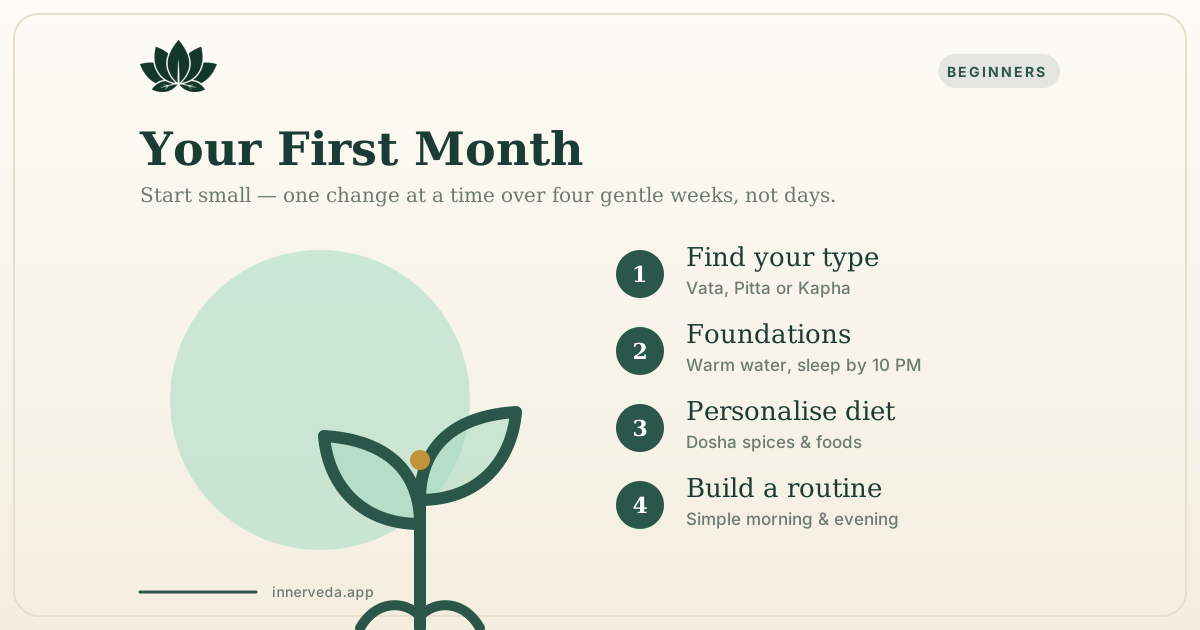
- Discover your dosha: Find Your Dosha with our free assessment
- Learn about your dosha: read our guides on Vata, Pitta, or Kapha
- Adjust your diet: explore eating for your dosha
- Build a morning routine: start with our Dinacharya guide
- Explore further: dive into our beginner's guide for a step-by-step approach
References & Sources
Clinical Research
- Patwardhan B, Warude D, Pushpangadan P, Bhatt N. "Ayurveda and traditional Chinese medicine: a comparative overview." Evidence-Based Complementary and Alternative Medicine, 2005. Reviewed 2018. PubMed
- Prasher B, Negi S, Aggarwal S, et al. "Whole genome expression and biochemical correlates of extreme constitutional types defined in Ayurveda." Journal of Translational Medicine, 2008. PubMed
- Chauhan A, Semwal DK, Mishra SP, Semwal RB. "Ayurvedic research and methodology: present status and future strategies." Journal of Traditional and Complementary Medicine, 2017. DOI
Classical Texts
- Charaka Samhita, Sutra Sthana, Chapter 1. Available at Wisdom Library
- Sushruta Samhita, Sharira Sthana. Available at Wisdom Library
InnerVeda's content is for educational purposes only and does not constitute medical advice.
Frequently Asked Questions
Ayurveda comes from two Sanskrit words: 'Ayur' meaning life and 'Veda' meaning knowledge or science. It literally translates to 'the science of life' or 'knowledge of longevity.' It is one of the world's oldest holistic healing systems, originating in India over 5,000 years ago.
Ayurvedic lifestyle practices like mindful eating, yoga, meditation, and daily routines are generally considered safe. However, Ayurvedic herbs and supplements should be used with guidance, especially if you have existing health conditions or take medications. Always consult a healthcare provider before starting new supplements.
While modern medicine typically addresses specific symptoms and diseases, Ayurveda focuses on maintaining balance and preventing illness through personalised diet, lifestyle, and herbal practices. Modern medicine excels at acute care and diagnostics. Ayurveda excels at holistic prevention and chronic wellness. They can complement each other effectively.
References & sources
- Ayurveda and Panchakarma: Measuring the Effects of a Holistic Health Intervention— The Scientific World Journal, 2014
- Prakriti and its associations with metabolism, chronic diseases, and genotypes— Journal of Ayurveda and Integrative Medicine, 2015
- Ayurvedic genomics — establishing a genetic basis for mind-body typologies— Journal of Alternative and Complementary Medicine, 2015
Classical sources
- Charaka Samhita— Sutrasthana 1 (Deerghanjiviteeya Adhyaya) 41
- Ashtanga Hridaya— Sutrasthana 1 (Ayushkamiya Adhyaya) 6
- Ashtanga Hridaya— Sutrasthana 2 (Dinacharya Adhyaya) 1
- Ashtanga Hridaya— Sutrasthana 2 (Dinacharya Adhyaya) 8
This article is for educational purposes only and reflects traditional Ayurvedic perspectives alongside selected research. It is not medical advice. Always consult a qualified healthcare provider before acting on any information presented here.
Written by
Ganesh Kompella
Founder, InnerVeda
Research assisted by Vaidya AI
Trained on 500+ classical Ayurvedic texts

Medically reviewed by Dr. Sheetal Rajput
BAMS (Bachelor of Ayurvedic Medicine & Surgery)
Practise this
Guided sessions that put this article into practice.
Continue Reading

What Is My Dosha? Vata, Pitta and Kapha Explained

Dosha Quiz Explained: How Ayurvedic Constitution Tests Work
Ayurveda for Beginners: Where to Start (2026 Guide)

Signs Your Dosha Is Out of Balance (And What to Do)

Dual-Dosha Types Explained: Why Most People Are a Mix
Put this into practice
Take the free dosha assessment. Get a personalised wellness plan with nutrition, meditation, and daily routines matched to your body.
Find Your Dosha — Free~3 min · no signup