7 Ayurveda Myths Debunked by Science
Separating fact from fiction in Ayurveda. We examine 7 common myths about Ayurvedic medicine and what modern science actually says about each one.

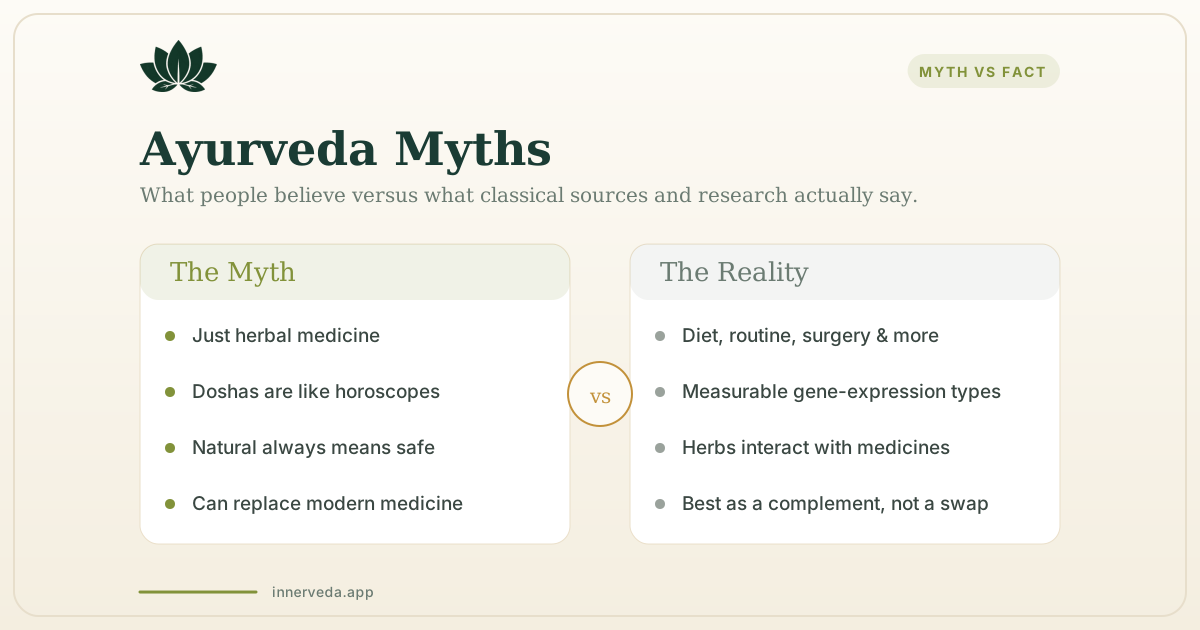
Most popular beliefs about Ayurveda are either oversimplified or flat-out wrong. This article walks through 7 common myths, from 'Ayurveda is just herbal medicine' to 'dosha types are not real', and what traditional sources and modern research actually say.
Why Myths About Ayurveda Matter
Ayurveda is one of the world's oldest health systems, with roots going back more than 3,000 years. In its recent resurgence, it has attracted both eager advocates and sharp skeptics, and both sides regularly get things wrong.
Uncritical advocacy convinces people Ayurveda can replace modern medicine. Uninformed skepticism dismisses the genuine wisdom inside the tradition. Neither extreme is useful.
This article tries to do something different. It takes a balanced, evidence-informed look at common myths, and lays out what classical sources and modern research actually say.
Myth 1: "Ayurveda Is Just Herbal Medicine"
The Myth
Many people reduce Ayurveda to turmeric lattes and ashwagandha supplements, viewing it as one more herbal medicine tradition.
The Reality
Herbs are one tool in a vast system. Ayurveda is a health framework that covers:
- Dietary science (Ahara): personalised nutrition by dosha and season
- Daily and seasonal routines (Dinacharya and Ritucharya): structured lifestyle practices
- Psychology (Manas Chikitsa): understanding and treating the mind
- Surgery (Shalya Tantra): the Sushruta Samhita describes over 300 surgical procedures
- Panchakarma: a sophisticated detoxification system
- Rasayana: rejuvenation and longevity science
- Pranayama and meditation: breath and mind practices
- Exercise science (Vyayama): constitution-specific movement recommendations
Reducing Ayurveda to herbs is like reducing modern medicine to pharmaceuticals. You miss the majority of what the system does.
What science says: The lifestyle components of Ayurveda, stress management, circadian eating, mindful practices, personalised nutrition, line up with some of the strongest evidence in preventive medicine.
Myth 2: "Dosha Types Are Not Real"
The Myth
Critics argue that Vata, Pitta, and Kapha are unscientific categories without biological basis, no different from horoscopes or personality quizzes.
The Reality
The three-dosha system was not developed through modern scientific methods. Even so, several lines of research suggest that constitutional typing has measurable correlates:
- Genomic studies: A 2015 study in the Journal of Ayurveda and Integrative Medicine found distinct gene expression profiles among Vata, Pitta, and Kapha-dominant individuals
- Metabolomic research: Studies have identified different metabolic signatures in different dosha types
- Physiological measurements: Research has documented differences in body temperature, pulse characteristics, and digestive parameters across dosha types
- Precision medicine parallels: The concept of grouping individuals by constitutional type for personalised treatment mirrors the goals of precision medicine and pharmacogenomics
The dosha system is best understood as a practical clinical framework, a way of categorising individual variation that helps guide personalised recommendations. It may not map perfectly onto modern biological categories, but its clinical utility is backed by thousands of years of observational data and emerging research.
What science says: Constitutional typing is being explored in systems biology and precision medicine. The specific mechanisms behind doshas need more research. But the principle of personalised health based on individual variation is strongly supported by modern science.
Myth 3: "Ayurveda Is Anti-Science"
The Myth
Some people believe that Ayurveda and science are fundamentally opposed, that embracing one means rejecting the other.
The Reality
Ayurveda was, in its historical context, a scientific endeavour. The classical texts show systematic observation, hypothesis formation, clinical testing, and detailed record-keeping. The Charaka Samhita describes clinical trials (different from modern randomised controlled trials, but trials nonetheless) and stresses empirical observation.
Many Ayurvedic principles have been validated by modern research:
- Turmeric's anti-inflammatory properties: extensive research on curcumin
- Circadian rhythm alignment: chrono-nutrition research supports Ayurveda's meal timing advice
- Gut-brain connection: Ayurveda's Agni-Manas link mirrors the modern microbiome-brain axis
- Meditation benefits: thousands of studies validate meditation's effects on stress, attention, and brain structure
- Spice bioactivity: ginger, cinnamon, black pepper, and other Ayurvedic spices have demonstrated bioactive properties
Intellectual honesty also requires acknowledging that some Ayurvedic claims lack modern evidence, and that parts of the tradition need updating in light of current knowledge (the use of certain heavy metals in some traditional preparations, for one).
What science says: Ayurveda and science can coexist productively. Embrace what has evidence support, stay open about what is being studied, and critically evaluate claims that have no evidence basis at all.
Myth 4: "Ayurvedic Herbs Are Always Safe Because They're Natural"
The Myth
Because Ayurvedic herbs are "natural," they must be inherently safe and free from side effects.
The Reality
This is one of the most dangerous myths. Natural does not mean safe. Several concerns exist:
- Heavy metal contamination: Some traditionally prepared Ayurvedic formulations (particularly Rasa Shastra preparations) contain mercury, lead, or arsenic. Proponents argue these are processed into safe forms. Independent testing has found dangerous levels in some products.
- Drug interactions: Ayurvedic herbs can interact with pharmaceutical medications. Ashwagandha may affect thyroid medications, and turmeric may interact with blood thinners.
- Quality control: Herbal supplements are not regulated as strictly as pharmaceuticals. Product quality, potency, and purity vary significantly between manufacturers.
- Inappropriate self-prescription: Taking powerful herbs without understanding their effects on your specific constitution can create new imbalances.
What science says: Treat Ayurvedic herbs with the same respect you would give any medicine. Buy from reputable, third-party-tested sources. Tell your doctor about any herbs you take. Consult a qualified Ayurvedic practitioner for personalised guidance. And never use herbs as a replacement for prescribed medications without medical supervision.
Myth 5: "You Must Follow Your Dosha Diet Perfectly or It Won't Work"
The Myth
Some sources present Ayurvedic dietary guidelines as rigid, all-or-nothing rules. Eat the wrong food for your dosha and face immediate consequences.
The Reality
Ayurveda is fundamentally about balance and gradual adjustment, not perfection. The classical texts acknowledge that:
- Context matters: A food that aggravates your dosha in one season may be fine in another
- Quantity matters: Small amounts of "wrong" foods rarely cause problems. Habitual excess is what creates imbalance.
- Agni matters: If your digestion is strong, it can handle occasional deviations
- Mental state matters: Eating with joy and gratitude softens the effects of imperfect food choices
- Gradual change is preferred: Ayurveda recommends slow dietary changes, not overnight overhauls
The 80/20 principle applies well. Eat according to your dosha 80% of the time, and the remaining 20% will not undo your health.
What science says: Dietary adherence research consistently shows that moderate, sustainable approaches outperform rigid, restrictive ones. The Ayurvedic emphasis on gradual change and self-awareness aligns with modern behaviour change science.
Myth 6: "Ayurveda Is Only for Indians or Hindus"
The Myth
Some people view Ayurveda as exclusively Indian or religiously Hindu, and therefore not applicable or appropriate for other cultures.
The Reality
Ayurveda originated in the Indian subcontinent and has cultural connections to Hindu, Buddhist, and Jain traditions. Its principles are universal:
- Doshas exist across all ethnicities. Running hot or cold, having dry or oily skin, being naturally thin or sturdy transcends culture.
- Digestive principles are universal. Strong digestion, regular meals, and seasonal eating apply to every human.
- Seasonal rhythms affect everyone. Winter's cold and summer's heat influence health regardless of cultural background.
- Mindfulness practices benefit all. Meditation, breathing exercises, and daily routines support wellbeing universally.
Ayurveda's core insight, that health is personalised, that food is medicine, that lifestyle matters as much as treatment, belongs to no single culture. It's human wisdom.
What science says: Personalised nutrition, circadian health, stress management, and preventive medicine are universal health priorities recognised globally by modern medicine.
Myth 7: "Ayurveda Can Replace Modern Medicine"
The Myth
Probably the most harmful myth. That Ayurveda alone can address all conditions, making conventional medicine unnecessary.
The Reality
Ayurveda excels in certain areas:
- Prevention and wellness promotion
- Chronic lifestyle condition management (as a complement to medical care)
- Digestive health optimisation
- Stress management and mental wellness
- Personalised nutrition and lifestyle guidance
- Post-illness recovery support
Modern medicine excels in other areas:
- Acute emergencies (trauma, heart attacks, strokes)
- Infectious disease treatment (antibiotics, antivirals)
- Surgical intervention
- Diagnostic precision (imaging, blood work, genetic testing)
- Cancer treatment
- Life-saving pharmaceutical interventions
The ideal approach is integrative. Use Ayurveda for prevention, daily wellness, and personalised lifestyle guidance. Rely on modern medicine for acute conditions, diagnostics, and specific medical treatments.
What science says: Integrative medicine, combining the best of traditional and modern approaches, is increasingly recognised as optimal patient care by leading medical institutions worldwide.
The Balanced Path Forward
Ayurveda offers genuine, time-tested wisdom that can improve daily health and wellbeing. But it is best practised with:
- Intellectual honesty: acknowledging both its strengths and limitations
- Safety awareness: using herbs responsibly and from reputable sources
- Integrative thinking: combining Ayurvedic wisdom with modern medical knowledge
- Personalisation: the core Ayurvedic principle that makes it valuable
- Qualified guidance: consulting practitioners for serious concerns
The myths around Ayurveda, from both enthusiasts and skeptics, serve no one. The truth, as always, is more nuanced, more interesting, and more useful than any extreme position.
Discover your unique dosha with our Dosha Quiz and begin an evidence-informed Ayurvedic practice today.
Frequently Asked Questions
Parts of Ayurveda have strong scientific support (anti-inflammatory spices, circadian rhythm alignment, gut health emphasis, meditation benefits). Other parts lack robust clinical evidence. The honest answer is that Ayurveda contains both validated wisdom and claims that still need research.
Most Ayurvedic dietary and lifestyle practices are safe. However, some herbal preparations have been found to contain heavy metals or contaminants. Always purchase herbs from reputable sources, consult qualified practitioners, and inform your doctor about any Ayurvedic supplements you take.
Ayurveda should not be positioned as a cure for specific diseases. Its strength lies in prevention, wellness promotion, and complementary support. For serious medical conditions, Ayurveda works best alongside, not instead of, conventional medical care.
While the three-dosha system has not been validated in the way blood types have, emerging research in phenotyping, metabolomics, and precision medicine suggests that grouping individuals by constitutional types has practical utility. Several studies have found measurable physiological differences between dosha-dominant groups.
References & sources
- Prakriti and its associations with metabolism, chronic diseases, and genotypes— Journal of Ayurveda and Integrative Medicine, 2014
- Recapitulation of Ayurveda constitution types by machine learning of phenotypic traits— Scientific Reports, 2017
- Therapeutic roles of curcumin: lessons learned from clinical trials— Foods, 2017
- Adaptogenic and anxiolytic effects of Ashwagandha root extract— Indian Journal of Psychological Medicine, 2012
Classical sources
- Charaka Samhita— Vimanasthana, Chapter 4 (Trividha Roga Vishesha Vijnaniya Vimana — Three Means of Knowing Disease) 4.3
- Charaka Samhita— Sutrasthana, Chapter 5 (Matrashitiya Adhyaya — On the Proper Quantity of Food) 5.3
- Sushruta Samhita— Sutrasthana, Chapter 25 (Ashtavidha Shastra Karmaniya Adhyaya — Eight Kinds of Surgical Operations) —
This article is for educational purposes only and reflects traditional Ayurvedic perspectives alongside selected research. It is not medical advice. Always consult a qualified healthcare provider before acting on any information presented here.
Written by
Ganesh Kompella
Founder, InnerVeda
Research assisted by Vaidya AI
Trained on 500+ classical Ayurvedic texts

Medically reviewed by Dr. Sheetal Rajput
BAMS (Bachelor of Ayurvedic Medicine & Surgery)
Practise this
Guided sessions that put this article into practice.
Continue Reading

Put this into practice
Take the free dosha assessment. Get a personalised wellness plan with nutrition, meditation, and daily routines matched to your body.
Find Your Dosha — Free~3 min · no signup