Ayurveda vs Traditional Chinese Medicine: Key Differences
Compare Ayurveda and Traditional Chinese Medicine side-by-side. Learn the key differences in philosophy, diagnosis, treatment, and which may suit you best.

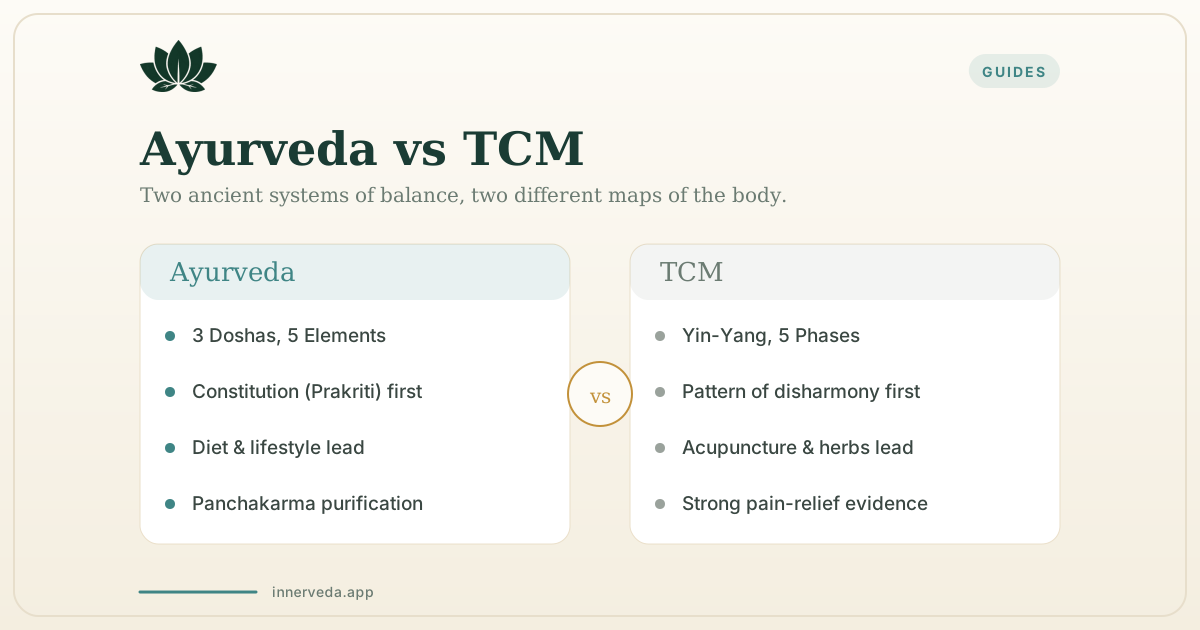
Ayurveda and TCM are both ancient holistic systems but differ in core frameworks. Ayurveda uses three doshas and five elements; TCM uses Yin-Yang and five phases. Both personalise treatment but through different diagnostic methods. Find Your Dosha to explore Ayurveda's personalised approach.
Two Ancient Giants of Holistic Medicine
Ayurveda and Traditional Chinese Medicine (TCM) are the two most comprehensive traditional medical systems still widely practised today. Both are thousands of years old, both take a holistic view of health, and both personalise treatment based on individual constitution.
The surface similarities are real. Underneath, these systems arise from completely different philosophical frameworks, use different diagnostic methods, and approach treatment in distinct ways. Understanding these differences helps you see what each system actually offers and how they can complement each other.
Philosophical Foundations
Ayurveda: The Five Elements and Three Doshas
Ayurveda is rooted in Samkhya philosophy, one of the six classical schools of Indian philosophy. It understands the universe through:
- Five Great Elements: Earth, Water, Fire, Air, Ether (Space)
- Three Doshas: Vata (Air + Ether), Pitta (Fire + Water), Kapha (Earth + Water)
- Three Gunas: Sattva (purity), Rajas (activity), Tamas (inertia), qualities of the mind
Health is balance among the three doshas according to one's individual constitution (Prakriti). Disease arises when this balance is disturbed.
TCM: Yin-Yang and the Five Phases
TCM is rooted in Taoist philosophy and understands the universe through:
- Yin and Yang: Complementary opposites that exist in dynamic balance
- Five Phases (Wu Xing): Wood, Fire, Earth, Metal, Water
- Qi (vital energy): The life force that flows through meridian channels
- Blood, Essence (Jing), and Spirit (Shen): Additional vital substances
Health is defined as harmonious flow of Qi and balanced Yin-Yang. Disease arises when Qi is blocked, deficient, or excessive.
Diagnostic Methods Compared
Ayurvedic Diagnosis
Ayurveda uses an eight-fold examination (Ashtavidha Pariksha):
- Nadi Pariksha: pulse diagnosis (reading the three dosha pulses)
- Mutra: urine examination
- Mala: stool examination
- Jihva: tongue examination
- Shabda: voice and speech assessment
- Sparsha: touch and skin examination
- Drik: eye examination
- Akriti: overall appearance and body build assessment
The goal is to determine both Prakriti (birth constitution) and Vikriti (current imbalance).
TCM Diagnosis
TCM uses a four-pillar examination:
- Observation (Wang): face colour, tongue coating, body shape, spirit
- Listening and smelling (Wen): voice quality, breathing, body odour
- Inquiry (Wen): detailed questioning about symptoms, history, preferences
- Palpation (Qie): pulse diagnosis (reading qualities across multiple positions)
The goal is to identify the pattern of disharmony, the specific combination of factors causing illness.
Key Difference
Ayurveda emphasises understanding your constitutional type first, then identifying imbalances from that baseline. TCM focuses on identifying the current pattern of disharmony without necessarily slotting people into fixed constitutional types (though TCM has constitutional concepts of its own).
Treatment Approaches
Ayurvedic Treatment
Ayurveda uses a comprehensive toolkit:
- Diet (Ahara): personalised nutrition based on dosha and imbalance
- Lifestyle (Vihara): daily and seasonal routines, sleep, exercise
- Herbal medicine (Dravyaguna): single herbs and complex formulations
- Panchakarma: five purification therapies (emesis, purgation, enema, nasal therapy, bloodletting)
- Yoga and pranayama: physical and breathing practices
- Meditation and mantra: mental and spiritual practices
- Rasayana: rejuvenation therapies
TCM Treatment
TCM employs its own distinct toolkit:
- Acupuncture: inserting fine needles at specific points along meridians
- Herbal medicine: complex multi-herb formulations (often decoctions)
- Moxibustion: burning mugwort near acupuncture points
- Cupping: creating suction on the skin to improve Qi flow
- Tui Na: therapeutic massage following meridian pathways
- Dietary therapy: food recommendations based on thermal nature and organ affinity
- Qigong and Tai Chi: movement and energy cultivation practices
What TCM Gets Right That Ayurveda Often Misses
Honest concession. Acupuncture has cleaner clinical evidence for specific pain conditions (chronic low back pain, knee osteoarthritis, tension headaches, post-operative nausea) than almost any single Ayurvedic intervention. If you walk into a pain clinic with sciatica, TCM has a 2,000-year head start over Ayurveda on the needle protocol. Ayurveda has Marma therapy, but the body of research is thinner.
Side-by-Side Comparison
| Aspect | Ayurveda | TCM |
|---|---|---|
| Origin | India (~3000 BCE) | China (~200 BCE) |
| Core framework | 3 Doshas, 5 Elements | Yin-Yang, 5 Phases |
| Constitutional typing | Central (Prakriti) | Present but less central |
| Pulse diagnosis | 3 positions (doshas) | 6+ positions (organs) |
| Primary treatment | Diet and lifestyle first | Acupuncture and herbs |
| Signature therapy | Panchakarma (purification) | Acupuncture (needle therapy) |
| Spiritual component | Explicitly integrated (yoga, meditation) | Present but often separate |
| Food classification | By taste, quality, and dosha effect | By thermal nature and organ affinity |
Herbal Medicine: A Closer Look
Both systems use extensive herbal pharmacopoeias, but the approach differs:
Ayurvedic herbalism:
- Classifies herbs by taste (Rasa), quality (Guna), potency (Virya), and post-digestive effect (Vipaka)
- Uses single herbs and multi-herb formulations
- Key herbs: Ashwagandha, Triphala, Turmeric, Brahmi, Shatavari
- Often combines herbs with ghee, honey, or milk for enhanced absorption
TCM herbalism:
- Classifies herbs by thermal nature, taste, and organ meridian affinity
- Primarily uses complex multi-herb formulations (often 8-15 herbs)
- Key herbs: Ginseng, Astragalus, Goji berries, Reishi mushroom, Dong Quai
- Often prepared as decoctions (boiled teas) or concentrated powders
Which System Is Right for You?
Consider Ayurveda if you:
- Want a comprehensive lifestyle framework for daily wellness
- Are interested in personalised nutrition based on dosha
- Prefer a prevention-first approach
- Want to integrate yoga and meditation into your health practice
- Are looking for dietary guidance and daily routine recommendations
- Resonate with the concept of doshas
Consider TCM if you:
- Are dealing with specific pain conditions (acupuncture excels here)
- Want a treatment approach that includes hands-on therapies
- Are interested in meridian theory and energy work
- Have conditions that respond well to acupuncture (headaches, musculoskeletal pain, nausea)
- Prefer regular practitioner visits over self-managed daily practices
Consider Both if you:
- Want the most comprehensive holistic approach
- Are open to integrating dietary (Ayurveda) and treatment (TCM) modalities
- Want constitutional insights (Ayurveda) combined with pattern diagnosis (TCM)
The Integration Approach
Many modern holistic practitioners draw from both traditions. A practical integration might look like:
- Use Ayurveda for daily wellness: diet, routine, sleep, seasonal living
- Use TCM for specific treatments: acupuncture for pain, cupping for tension
- Explore herbs from both traditions (with qualified guidance)
- Practise yoga (Ayurveda's sister science) alongside Qigong (TCM's movement practice)
The key is working with qualified practitioners in each system and being transparent about all treatments you are receiving.
Getting Started with Ayurveda
If you are drawn to Ayurveda's personalised, lifestyle-based approach, the first step is understanding your dosha. Find Your Dosha with our free assessment and begin exploring dietary and routine recommendations tailored to your unique balance.
Frequently Asked Questions
Neither system is universally more effective. Both have strengths in different areas. Ayurveda excels at preventive lifestyle medicine, dietary personalisation, and constitutional typing. TCM excels at acute pain management (acupuncture), herbal formulation, and pattern diagnosis. Many practitioners recommend integrating insights from both traditions.
Yes, many people incorporate elements of both systems. For example, you might follow Ayurvedic dietary principles while receiving acupuncture treatments. Work with qualified practitioners in each system to avoid conflicting recommendations, particularly with herbal medicines.
Ayurveda is generally considered older, with roots dating back over 5,000 years to the Vedic period in India. Traditional Chinese Medicine's earliest texts (the Huangdi Neijing) date to approximately 200 BCE, though its oral traditions may be older. Both systems developed independently and share some parallel concepts.
References & sources
- Prakriti and its associations with metabolism, chronic diseases, and genotypes— Journal of Ayurveda and Integrative Medicine, 2014
- Recapitulation of Ayurveda constitution types by machine learning of phenotypic traits— Scientific Reports, 2017
- Genome-wide analysis correlates Ayurveda Prakriti— Journal of Alternative and Complementary Medicine, 2011
Classical sources
- Yogaratnakara— Purvardha, Aturapariksha Prakarana (Examination of the Patient) —
- Sushruta Samhita— Sutrasthana, Dravya-Rasa-Guna-Virya-Vipaka-Vijnaniya Adhyaya (Chapter 40 in EasyAyurveda numbering; Chapter 41 in some editions) —
- Sushruta Samhita— Chikitsasthana, Chapter 33 (Sarvopaghatashamaniya / panchakarma) —
This article is for educational purposes only and reflects traditional Ayurvedic perspectives alongside selected research. It is not medical advice. Always consult a qualified healthcare provider before acting on any information presented here.
Written by
Ganesh Kompella
Founder, InnerVeda
Research assisted by Vaidya AI
Trained on 500+ classical Ayurvedic texts
Medically reviewed by Dr. Sheetal Rajput
BAMS (Bachelor of Ayurvedic Medicine & Surgery)
Practise this
Guided sessions that put this article into practice.
Continue Reading


Put this into practice
Take the free dosha assessment. Get a personalised wellness plan with nutrition, meditation, and daily routines matched to your body.
Find Your Dosha — Free~3 min · no signup