Is Ayurveda Scientific? What Research Says
Explore the scientific evidence behind Ayurveda. Learn what modern research validates, where gaps remain, and how to approach Ayurveda with informed confidence.

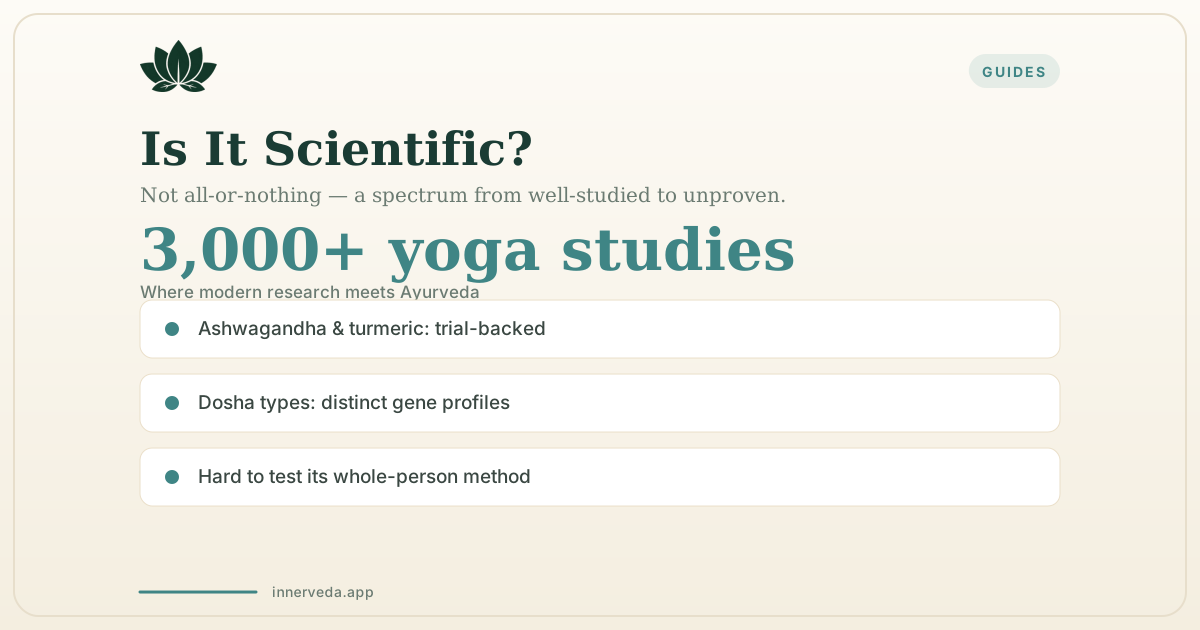
Ayurveda is increasingly supported by modern research. Studies validate turmeric's anti-inflammatory properties, Ashwagandha's stress-reducing effects, and yoga's health benefits. While more rigorous trials are needed, the evidence base is growing. Find Your Dosha to experience Ayurveda's personalised approach.
The Question Every Modern Seeker Asks
If you are drawn to Ayurveda but value evidence-based thinking, you have probably wondered: is any of this actually supported by science? Fair and important question.
The answer is nuanced. Ayurveda is not a monolithic system that's either entirely validated or entirely unproven. It is a vast, multifaceted tradition containing practices that range from well-supported by modern research to those that remain largely unstudied. Understanding this spectrum lets you engage with Ayurveda both respectfully and intelligently.
What Modern Science Has Validated
Herbal Medicine
Several Ayurvedic herbs have been studied in rigorous clinical trials:
Turmeric (Curcumin)
- Hundreds of studies demonstrate anti-inflammatory and antioxidant properties
- Clinical trials show benefits for joint comfort, digestive health, and metabolic markers
- Research published in journals like the Journal of Medicinal Food and Phytotherapy Research
- Challenge: bioavailability is low without piperine (black pepper) or fat. Something Ayurveda addressed centuries ago by always pairing turmeric with both.
Ashwagandha (Withania somnifera)
- Multiple randomised controlled trials show significant stress and anxiety reduction
- Studies have explored improved sleep quality and stress markers
- Research in the Indian Journal of Psychological Medicine showed a significant reduction in anxiety scores
- Growing evidence for cognitive and athletic performance support
Triphala
- Studies support its use for digestive regulation and gentle detoxification
- Research indicates antioxidant, anti-inflammatory, and antimicrobial properties
- Clinical trials show benefits for dental health, gut microbiome, and metabolic markers
Brahmi (Bacopa monnieri)
- Multiple trials demonstrate cognitive enhancement, particularly in memory
- A systematic review in the Journal of Ethnopharmacology confirmed cognitive benefits
- Evidence suggests neuroprotective properties
Tulsi (Holy Basil)
- Adaptogenic properties supported by clinical research
- Studies show benefits for stress response, blood sugar regulation, and immune function
Yoga and Meditation
These Ayurvedic sister practices have the strongest scientific evidence base:
- Yoga: Over 3,000 published studies; evidence for cardiovascular health, chronic pain, mental health, flexibility, and stress reduction
- Meditation: Thousands of studies; evidence for anxiety reduction, attention improvement, emotional regulation, and structural brain changes
- Pranayama: Growing evidence for autonomic nervous system regulation, anxiety reduction, and respiratory function
- Mindfulness: Extensive evidence for stress reduction, pain management, and mental health
Dietary Practices
Several Ayurvedic dietary principles align with current nutritional science:
- Regular meal timing: supported by chronobiology research
- Mindful eating: evidence for improved digestion and weight management
- Warm, cooked foods: easier to digest; reduces anti-nutrient content
- Spice use: bioactive compounds in common spices have demonstrated health benefits
- Seasonal eating: aligned with research on seasonal nutritional needs
The Dosha System: Emerging Evidence
The most distinctive aspect of Ayurveda, the three-dosha constitutional typing system, has been the subject of several intriguing studies:
Genomic Studies
Research from the CSIR-Institute of Genomics and Integrative Biology in India has found that:
- People classified into different Prakriti types show distinct gene expression profiles
- Vata, Pitta, and Kapha types differ in genes related to metabolism, immunity, and cellular processes
- A 2015 study in the Journal of Translational Medicine found that Prakriti classification correlated with specific biochemical and haematological parameters
Metabolic Differences
Studies have shown that:
- Different dosha types have measurably different metabolic rates
- Pitta types tend to have higher basal metabolic rates, consistent with Ayurvedic descriptions
- Kapha types show metabolic patterns consistent with efficient energy storage
Pharmacogenomics
Research suggests that dosha types may respond differently to medications:
- A study published in ACS Chemical Biology found that the three Prakriti types showed distinct drug metabolism profiles
- This aligns with Ayurveda's long-standing practice of personalising treatment by constitution
Limitations
While these studies are promising, they have limitations:
- Sample sizes are often small
- Prakriti assessment methods vary between studies
- More large-scale, multi-centre trials are needed
- The subjective nature of dosha assessment creates challenges for standardisation
Where Gaps Remain
Intellectual honesty requires acknowledging areas where evidence is limited:
Panchakarma
While individual components (like nasal irrigation) have evidence, the full Panchakarma purification protocol has limited rigorous clinical trial data. Some small studies show benefits for specific conditions, but large-scale randomised controlled trials are lacking.
Specific Herbal Formulations
While individual herbs are increasingly studied, traditional multi-herb formulations are often unstudied as complete formulas. The Ayurvedic principle that whole formulations work synergistically is plausible but requires more research.
The Ama Concept
The concept of Ama (metabolic toxins) is central to Ayurveda but does not map directly onto a specific biomedical concept. Some researchers have drawn parallels to oxidative stress, metabolic endotoxemia, or gut-derived toxins, but these connections remain speculative.
Subtle Body Concepts
Concepts like Ojas (vital essence), Prana (life force), and the subtle channels (Nadis and Srotas) are foundational to Ayurveda but difficult to measure with current scientific instruments.
Why Ayurveda Is Hard to Study
Several factors make Ayurveda challenging to evaluate using standard research methods:
-
Individualised treatment. Ayurveda treats the person, not the disease. Two people with the same condition may receive completely different treatments. Standard RCTs require giving everyone the same treatment.
-
Multi-modal interventions. Ayurveda typically combines diet, herbs, lifestyle, and practices simultaneously. Isolating the effect of any single component misses the systemic approach.
-
Long timeframes. Ayurvedic treatments often work gradually over weeks or months. Many trials are short-term.
-
Subjective outcomes. Ayurveda values outcomes like "feeling balanced" or "strong Agni," which are harder to measure than blood markers.
-
Funding gaps. Traditional medicine research receives far less funding than pharmaceutical research.
How to Practise Ayurveda Safely and Wisely
- Start with lifestyle practices. Diet, routine, sleep, and exercise adjustments have strong evidence and carry minimal risk.
- Use well-researched herbs. Ashwagandha, turmeric, and Triphala have good safety data from reputable sources.
- Buy from certified sources. Look for GMP-certified, third-party-tested Ayurvedic products.
- Consult healthcare providers, especially before combining herbs with medications
- Track your results. Notice changes in digestion, sleep, energy, and mood.
- Be wary of miracle claims. Legitimate Ayurveda uses cautious language ("may support," "traditionally used for") rather than cure claims.
- Combine with modern medicine. Ayurveda works alongside conventional care, not as a replacement.
The Growing Convergence
Modern science is increasingly moving toward principles that Ayurveda has practised for millennia:
- Personalised medicine: mirrors Ayurveda's constitution-based treatment
- The gut-brain axis: reflects Ayurveda's emphasis on digestion as the root of health
- Chronobiology: supports Ayurveda's time-specific daily routines
- Nutrigenomics: aligns with eating for your genetic/constitutional type
- Mind-body medicine: validates the integration of mental and physical health practices
This convergence suggests Ayurveda's core insights may have been ahead of their time. Expressed in a pre-scientific vocabulary, but containing genuine wisdom about how human bodies work.
Start Your Evidence-Informed Journey
Find Your Dosha with our free assessment and begin exploring Ayurveda through its most well-supported entry points: personalised diet, consistent daily routines, and proven practices like yoga and pranayama. Let the evidence and your own experience guide you forward.
Frequently Asked Questions
Ayurveda has a growing evidence base. Individual components like turmeric, Ashwagandha, yoga, and meditation have strong scientific support. The dosha system has preliminary validation through genomic and metabolic studies. However, the holistic, individualised nature of Ayurveda makes it challenging to study using standard randomised controlled trial methods.
Yoga and meditation have the strongest evidence, with hundreds of clinical trials supporting benefits for stress, anxiety, cardiovascular health, and pain management. Turmeric (curcumin), Ashwagandha, and Triphala have growing evidence from randomised controlled trials. Dietary practices like mindful eating and regular meal timing are also well-supported.
Many Ayurvedic herbs have good safety profiles when used appropriately. Quality control is essential. Purchase from reputable, certified manufacturers. Some Ayurvedic preparations have been found to contain heavy metals when sourced from unregulated suppliers. Always consult a healthcare provider before starting herbal supplements, especially alongside medications.
References & sources
- Efficacy and safety of Ashwagandha root extract on cognitive functions— Medicine, 2021
- Adaptogenic and anxiolytic effects of Ashwagandha root extract— Indian Journal of Psychological Medicine, 2012
- Therapeutic uses of Triphala in Ayurvedic medicine— Journal of Alternative and Complementary Medicine, 2017
- Meta-analysis of the efficacy of Bacopa monnieri on cognition— Journal of Ethnopharmacology, 2014
This article is for educational purposes only and reflects traditional Ayurvedic perspectives alongside selected research. It is not medical advice. Always consult a qualified healthcare provider before acting on any information presented here.
Written by
Ganesh Kompella
Founder, InnerVeda
Research assisted by Vaidya AI
Trained on 500+ classical Ayurvedic texts

Medically reviewed by Dr. Sheetal Rajput
BAMS (Bachelor of Ayurvedic Medicine & Surgery)
Practise this
Guided sessions that put this article into practice.
Continue Reading

What Is Ayurveda? A Complete Beginner's Guide
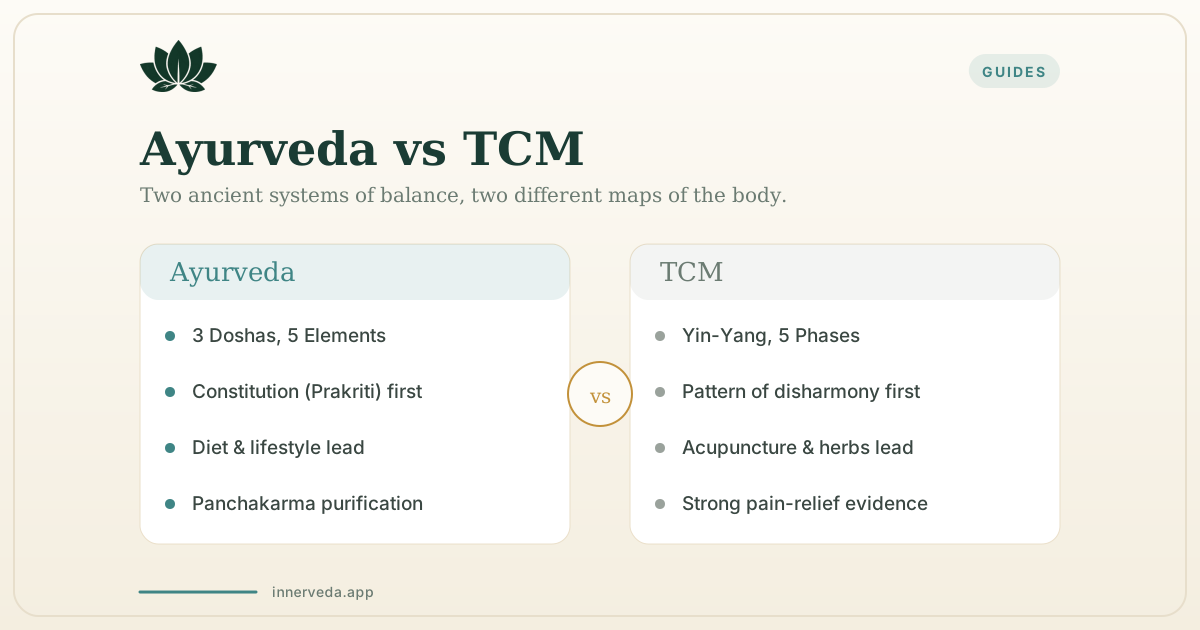
Ayurveda vs Traditional Chinese Medicine: Key Differences

Ayurveda for Beginners: Where to Start (2026 Guide)

Oil Pulling: The Ayurvedic Morning Practice Backed by Research
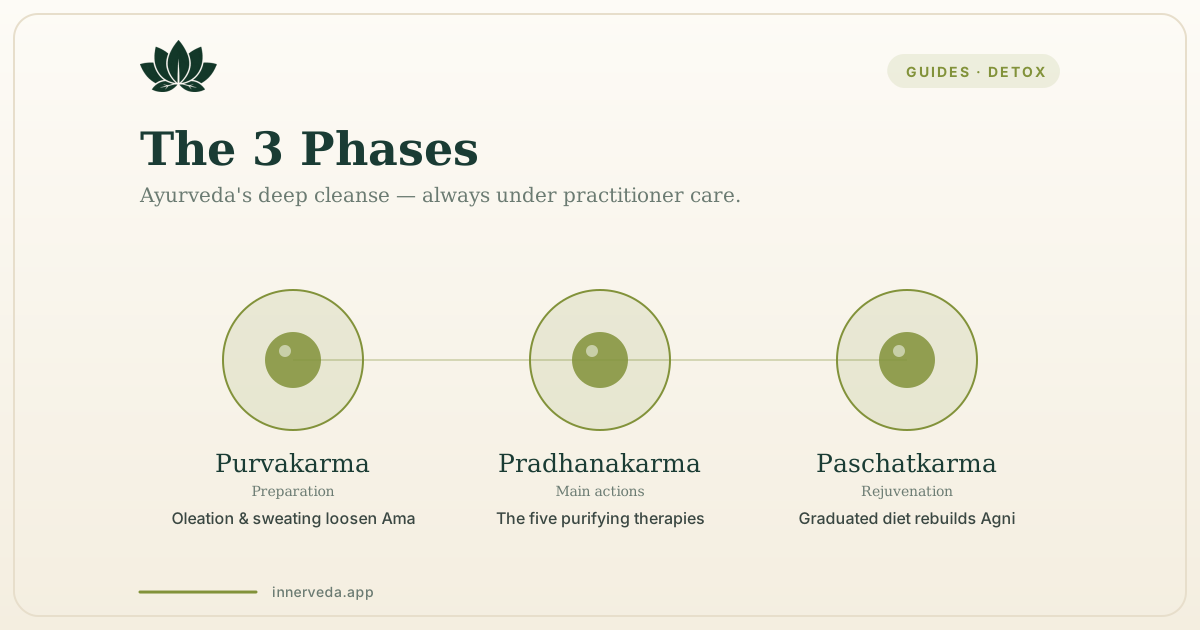
Panchakarma: Understanding Ayurvedic Detox

Start Ayurveda Today: Your First 7 Days, Step by Step
Put this into practice
Take the free dosha assessment. Get a personalised wellness plan with nutrition, meditation, and daily routines matched to your body.
Find Your Dosha — Free~3 min · no signup