Box Breathing for Your Body Type: A Personalised Guide
Learn box breathing (Sama Vritti) with personalised modifications for your body type. Step-by-step technique, timing, and benefits for Vata, Pitta, and Kapha.

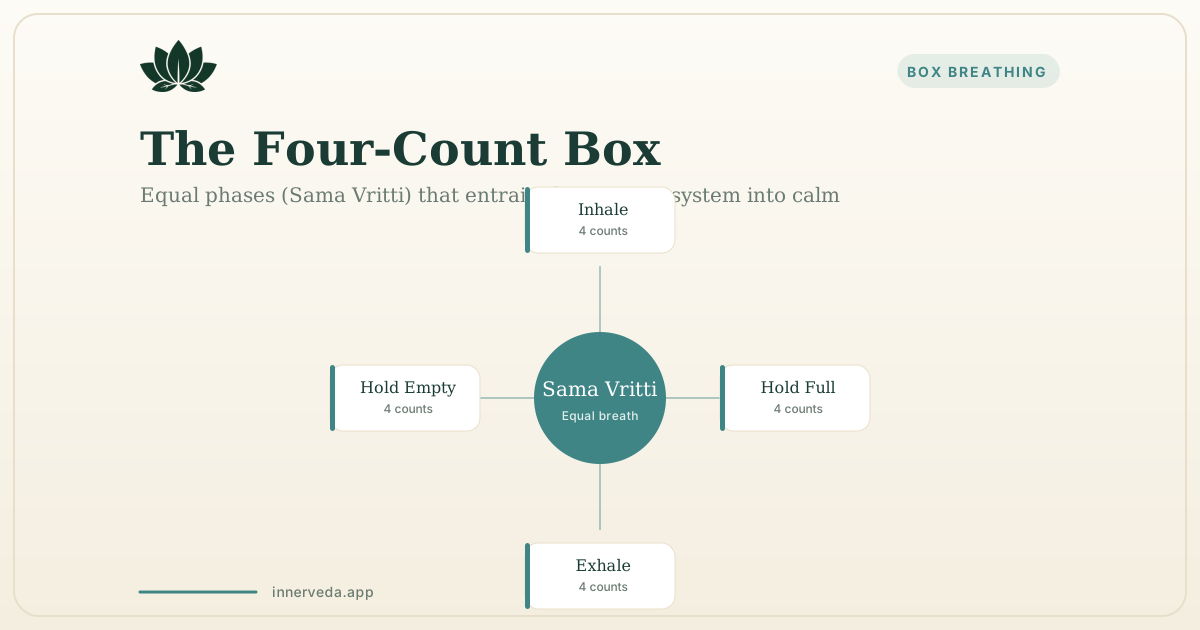
Box breathing (equal-ratio breathing) means inhaling, holding, exhaling, and holding again for equal counts. Vata types benefit from longer counts with a grounding emphasis. Pitta types benefit from cooling variations. Kapha types thrive with shorter, energising patterns. Find Your Body Type for your ideal ratio.
What Is Box Breathing?
Box breathing is a powerful, simple technique with four equal phases. They form a "box" or square pattern:
- Inhale for a set count
- Hold (lungs full) for the same count
- Exhale for the same count
- Hold (lungs empty) for the same count
Navy SEALs use it. So do first responders, athletes, and executives. The reason is consistency. It works under pressure. In the Ayurvedic and yogic traditions, it is known as Sama Vritti, "equal fluctuation" breathing.
What makes box breathing so versatile is how easily it modifies for different body types. Adjust the count, the emphasis, and the timing, and the same technique calms Vata anxiety, cools Pitta intensity, or wakes up Kapha sluggishness.
The Basic Technique
Getting Started
- Sit comfortably with a straight spine
- Place your hands on your knees, palms down (grounding) or palms up (receptive)
- Close your eyes or soften your gaze
- Take 2 to 3 natural breaths to settle
The 4-4-4-4 Pattern (Standard)
- Inhale through the nose for 4 counts
- Hold (lungs full) for 4 counts
- Exhale through the nose for 4 counts
- Hold (lungs empty) for 4 counts
Repeat for 4 to 8 rounds.
Visualisation
Imagine drawing a square as you breathe:
- Inhale: draw the left side upward
- Hold full: draw the top across
- Exhale: draw the right side downward
- Hold empty: draw the bottom across
The image helps maintain focus and even timing.
Box Breathing by Body Type
Vata Type: The Grounding Box
Vata types benefit most from box breathing. The structure and regularity is exactly what their mobile, scattered energy needs.
Recommended pattern: 4-4-6-2
- Inhale for 4 counts
- Hold full for 4 counts (grounding)
- Exhale for 6 counts (calming, extended release)
- Hold empty for 2 counts (brief, not anxiety-inducing)
Why this works: The extended exhale activates the parasympathetic nervous system. The shortened empty hold prevents the air-hunger anxiety Vata types often feel. The full hold provides grounding stability.
Practice tips:
- Keep the breath gentle and smooth. No forceful inhaling
- Practise 8 to 10 rounds (about 5 to 7 minutes)
- Best times: before bed, on waking, or during anxious moments
- Use the visualisation to give the mind a focus point
- Wrap yourself in a blanket for extra warmth and security
Pitta Type: The Cooling Box
Pitta types benefit from a version that emphasises the cooling, surrendering aspects of breath.
Recommended pattern: 4-4-6-4
- Inhale for 4 counts
- Hold full for 4 counts
- Exhale for 6 counts (cooling, releasing control)
- Hold empty for 4 counts (practising surrender)
Why this works: The extended exhale helps Pitta types release their tendency to grip and control. The equal hold at the bottom builds the capacity to rest in emptiness rather than rushing to the next action.
Practice tips:
- Focus on softness. Imagine the breath as cool water flowing
- Practise 6 to 10 rounds (about 5 to 8 minutes)
- Best times: midday (to release morning intensity), before difficult conversations, or when feeling irritable
- Breathe through the left nostril only for extra cooling (advanced variation)
- Practise in a cool, quiet space
Kapha Type: The Energising Box
Kapha types benefit from a more stimulating version that counters heaviness and sluggishness.
Recommended pattern: 4-6-4-4
- Inhale for 4 counts
- Hold full for 6 counts (building internal fire)
- Exhale for 4 counts (not too long, maintaining energy)
- Hold empty for 4 counts (creating lightness)
Why this works: The extended full hold builds internal heat and Agni. The standard exhale prevents the excessive relaxation Kapha does not need more of.
Practice tips:
- Sit upright with no back support. Stay alert
- Practise 6 to 8 rounds (about 5 to 6 minutes)
- Best times: morning (to clear sleep heaviness), after lunch (to prevent post-meal drowsiness), or before exercise
- Keep the pace slightly brisker than the other variations
- Follow with Kapalabhati for maximum energising effect
Progressive Practice Guide
Week 1-2: Foundation Phase
Use the standard 4-4-4-4 pattern, regardless of body type.
- 4 rounds, once daily
- Focus on maintaining even counts
- Notice which phases feel easy and which feel challenging
Week 3-4: Personalisation Phase
Switch to your body-type-specific pattern.
- 6 to 8 rounds, once daily
- Begin to notice the effects on your mental state
- Experiment with timing (morning vs evening)
Month 2: Deepening Phase
Increase counts if comfortable (e.g., 5-5-7-3 for Vata).
- 8 to 10 rounds, once or twice daily
- Combine with meditation afterwards
- Use as an acute stress-management tool throughout the day
Month 3 and Beyond: Integration Phase
Box breathing becomes a reliable tool in your daily life.
- Daily morning practice (5 to 10 minutes)
- Quick rounds (3 to 4) throughout the day as needed
- Seasonal adjustment of patterns
Situational Applications
Before a Stressful Meeting
3 to 4 rounds of standard 4-4-4-4. Takes 90 seconds and resets your nervous system.
During Anxiety
Vata pattern (4-4-6-2) for 5 to 8 rounds with eyes closed. Focus entirely on the counting.
When Angry or Frustrated
Pitta pattern (4-4-6-4) for 4 to 6 rounds. Emphasise the long, slow exhale as a release.
When Feeling Sluggish
Kapha pattern (4-6-4-4) for 4 to 6 rounds, followed by 2 minutes of brisk walking.
Before Sleep
Any pattern with extended exhale (4-4-8-2) for 6 to 8 rounds. Keep eyes closed and body still.
Common Challenges and Solutions
Feeling dizzy: Reduce the count or skip the empty hold. Dizziness means you are pushing too hard.
Mind wandering: Use the square visualisation or count with your fingers to maintain focus.
Uneven counts: Use a metronome app set to one beat per second until your internal timing develops.
Discomfort with empty hold: Common for Vata types. Shorten the empty hold to 1 or 2 counts until it becomes comfortable.
Falling asleep: Common for Kapha types. Sit upright, keep eyes slightly open, and use the energising Kapha pattern.
Combining Box Breathing with Other Practices
Box breathing pairs well with:
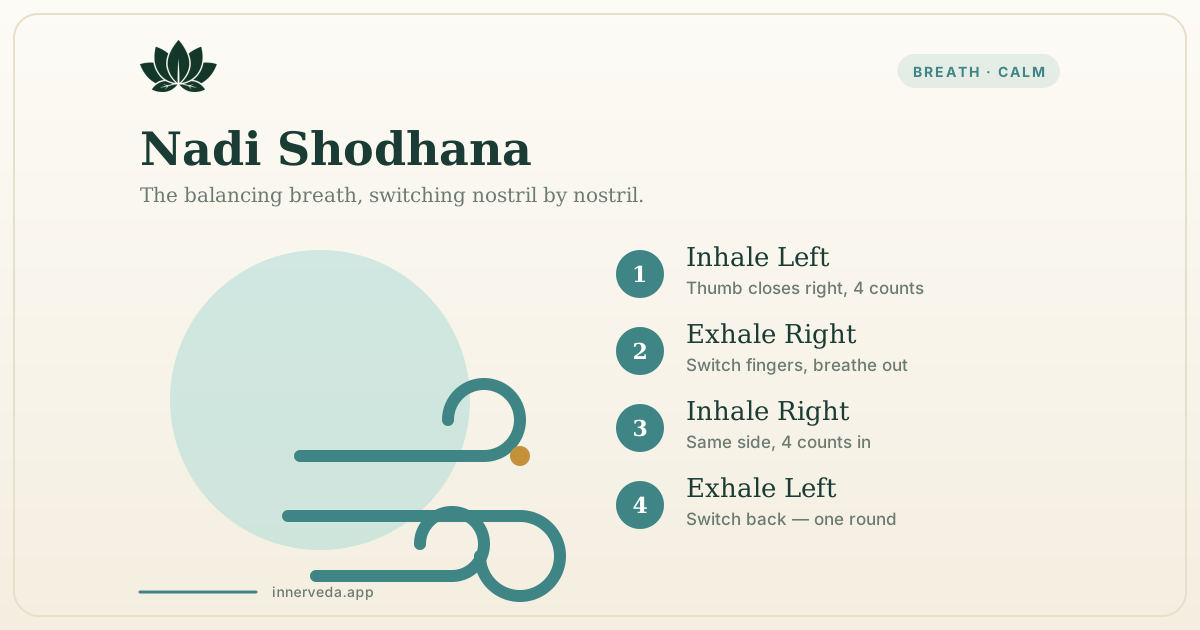
- Nadi Shodhana. Practise box breathing first to settle, then Nadi Shodhana to balance
- Meditation. Use 3 to 4 rounds of box breathing as a transition into seated meditation
- Yoga. Practise between challenging poses to maintain calm
- Walking. Match your steps to the box count for a meditative walk
Find Your Body Type with our free assessment to discover the complete breathing programme for your constitution.
Frequently Asked Questions
Box breathing (also called Sama Vritti or equal-ratio breathing) has four equal phases: inhale for a set count, hold for the same count, exhale for the same count, and hold empty for the same count. This pattern is traditionally used to support nervous system balance and mental clarity.
Start with 4 rounds using a 4-count pattern (4-4-4-4). That takes about 2 minutes and calms you immediately. Build up to 8 to 10 rounds over time. For daily practice, 5 to 10 minutes (8 to 15 rounds) is ideal. Even a single round helps in acute stress.
Box breathing is closely related to Sama Vritti (equal fluctuation) pranayama from the yogic tradition. The modern term 'box breathing' usually includes four equal phases (inhale, hold, exhale, hold), while traditional Sama Vritti may vary. Both share the principle of equal-ratio breathing for nervous system balance.
References & sources
- Effect of alternate nostril breathing on cardiovascular parameters— Indian J Physiol Pharmacol, 2017
- Sudarshan Kriya Yoga: breathing for health— Ann N Y Acad Sci, 2017
- Mindfulness-based stress reduction (MBSR): a systematic review— BMC Complement Altern Med, 2016
Classical sources
- Patanjali Yoga Sutras (Yoga Sutras of Patanjali)— Sadhana Pada (Book 2), Sutra 2.50 2.50
- Sushruta Samhita— Sutrasthana, Chapter 15 (Dosha-Dhatu-Mala-Kshaya-Vriddhi-Vijnaniya Adhyaya) 15.41
- Hatha Yoga Pradipika— Chapter 2 (Pranayama / Dvitiya Upadesha) 2.71-2.72
This article is for educational purposes only and reflects traditional Ayurvedic perspectives alongside selected research. It is not medical advice. Always consult a qualified healthcare provider before acting on any information presented here.
Written by
Ganesh Kompella
Founder, InnerVeda
Research assisted by Vaidya AI
Trained on 500+ classical Ayurvedic texts

Medically reviewed by Dr. Sheetal Rajput
BAMS (Bachelor of Ayurvedic Medicine & Surgery)
Continue Reading
Put this into practice
Take the free body type assessment. Get a personalised wellness plan with nutrition, meditation, and daily routines matched to your body.
Find Your Body Type — Free~3 min · no signup