InnerVeda · Learn
Ayurvedic Daily Routine (Dinacharya): A Day Shaped by the Dosha Clock
Dinacharya, Ayurveda’s daily routine: the dosha clock, a step-by-step morning, meals and sleep and what the classical texts and research say.

Reviewed by Dr Sheetal Rajput
Medical Reviewer, Ayurveda Physician (BAMS)15 March 2026 · Updated 18 October 2026 · 10 min read
Quick answer
Dinacharya is Ayurveda’s daily routine. The classical texts divide the day and the night into thirds ruled by Kapha, Pitta and Vata, and suggest rising before dawn, cleaning the mouth and senses, oil massage, moderate exercise, a main meal around midday and an early night. You do not need every step: a regular wake time, regular meals and a regular bedtime are the core.
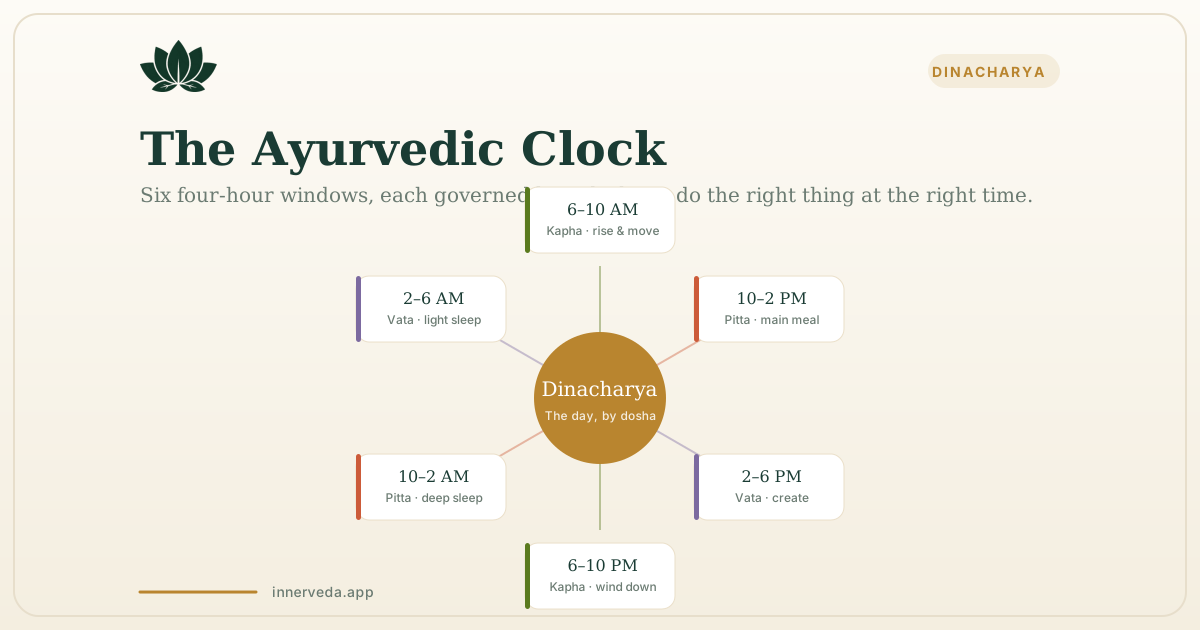
The dosha clock at a glance
| Approximate hours (modern convention) | Classical part of the day | Leading dosha | What Ayurveda suggests |
|---|---|---|---|
| 6 to 10 am and 6 to 10 pm | First third of day and of night | Kapha | Move in the morning; wind down in the evening |
| 10 am to 2 pm and 10 pm to 2 am | Middle third | Pitta | Main meal at midday; be asleep by the night Pitta period |
| 2 to 6 pm and 2 to 6 am | Last third | Vata | Lighter, creative or focused work; rise in the pre-dawn Vata period |
| About 1.5 hours before sunrise | Brahma muhurta | Vata | Traditional time to wake |
Table: The Ayurvedic dosha clock. The classical texts describe thirds of the day and night, not clock hours; the four-hour blocks are a modern convention that assumes sunrise and sunset around 6.
Sources: Ashtanga Hridaya, Sutrasthana 1.8 (Easy Ayurveda); Ashtanga Hridaya, Sutrasthana 2.1 (Easy Ayurveda).
What is Dinacharya?
Dinacharya means “daily conduct”. The Ashtanga Hridaya gives it a whole chapter, starting with waking and moving through cleaning the teeth, care of the eyes, nose and mouth, oil massage, exercise, bathing and conduct through the day (Sutrasthana 2). The idea is that regular habits keep the doshas steady, so small daily choices matter more than occasional big efforts.
You do not need to follow the whole classical sequence. Many people start with three anchors: a fixed wake time, a main meal at a regular time, and a fixed bedtime. Everything else builds on those.
What is the dosha clock?
The Ashtanga Hridaya says the doshas lead at different times: Kapha in the first part of the day and night, Pitta in the middle, and Vata at the end (Sutrasthana 1.8). The text also links the same pattern to the stages of digestion and of life.
The text does not give clock hours. The popular “6 to 10, 10 to 2, 2 to 6” chart is a modern way of applying it, assuming a 12-hour day. If you live far from the equator, or sunrise is at 8 am in winter, the thirds shift with the light. Treat the chart as a guide to the shape of the day:
- Kapha periods: heavier and steadier. A good time to get moving in the morning and to slow down in the evening.
- Pitta periods: sharper and hotter. Digestion is traditionally strongest around midday, which is why lunch is the main meal.
- Vata periods: lighter and more mobile. Good for creative work in the afternoon; the pre-dawn Vata period is when Ayurveda suggests waking.
There is a loose parallel with modern circadian science, which describes roughly 24-hour cycles in sleep, hormones, body temperature and digestion, set mainly by light (NIGMS, circadian rhythms). That does not confirm the dosha clock, but both suggest regular timing helps.
How do you build an Ayurvedic morning routine?
These steps follow the order in Ashtanga Hridaya Sutrasthana 2. Pick the ones that suit you; a short routine done daily beats a long one done rarely.
- Wake before dawn, if you can. The text recommends rising at brahma muhurta, the period before dawn, often explained as about an hour and a half before sunrise (2.1). If that is unrealistic, a consistent wake time matters more than an early one.
- Check in and go to the toilet. The text starts with noticing how your body feels and allowing natural elimination, without forcing it.
- Clean your teeth and tongue. Brush, then gently scrape your tongue from back to front with a tongue scraper.
- Oil pulling (gandusha), if it suits you. Hold a small amount of oil, often sesame or coconut, in your mouth, swish it gently, then spit it out into the bin, not the sink. Never swallow it. Rinse and brush.
- Nasal oiling (nasya), with care. Ayurveda places nasal oil after cleaning the mouth (2.6). It is best learned from a practitioner, and it is not for everyone (see the safety box).
- Warm oil massage (abhyanga). The text recommends daily oil massage, with extra attention to the head, ears and feet, and says to skip it when Kapha is high, when you have indigestion, or straight after cleansing treatments (2.8 to 2.9). Our abhyanga guide walks through it.
- Move. The text advises exercising to about half your capacity, more in the cooler seasons and less in hot weather, and warns against overdoing it (2.10 to 2.13). A brisk walk, yoga or a gym session all count.
- Bathe. Warm water on the body, with cooler water on the head, is the classical advice (2.17).
- Breathe or sit quietly. A few minutes of calm breathing or meditation sets the tone for the day.
- Eat breakfast when you are hungry. A warm, light breakfast suits most people. Our Ayurvedic breakfast ideas are sorted by dosha.
When to see your doctor
- Skip oil pulling (Gandusha) if you cannot reliably hold liquid and spit it out, have trouble swallowing, have mouth ulcers or bleeding, feel very weak or unwell, or feel sick while doing it. Do not swallow the oil.
- Children should try oil pulling only once they can hold and spit without swallowing; it is not for very young children.
- Skip nasal oiling (Nasya) if you have a cold, fever, a nasal infection, a nosebleed, breathing difficulty or recent nose surgery or injury, straight after a heavy meal, or during the monsoon. In pregnancy, use it only if specifically advised.
- For children, older or frail people, or anyone with a significant illness, ask a practitioner before starting Nasya.
- Do a patch test before using a new massage oil: dab a little on the inside of your forearm and wait 48 hours. Do not use it if your skin becomes red, itchy or swollen, and keep oil away from your eyes and any broken, raw or infected skin.
- See a doctor if poor sleep lasts more than 4 weeks or is affecting your day, or sooner if you snore loudly, gasp or stop breathing in your sleep. If you feel very low or have thoughts of harming yourself, speak to a doctor or a crisis line today.
When should you eat in an Ayurvedic day?
Ayurveda times the main meal for the middle of the day, when Pitta, and with it digestion, is said to be strongest. Breakfast and dinner are lighter.
- Breakfast: warm and simple, eaten when you feel hungry rather than by the clock.
- Lunch: the largest meal, eaten sitting down and without rushing. A short, easy walk afterwards is a common Ayurvedic habit.
- Afternoon: if you need a snack, keep it light, such as fruit or a few nuts.
- Dinner: lighter and earlier, ideally a few hours before bed, so digestion is not working hard as you fall asleep.
The most useful habit is consistency. Eating at roughly the same times each day is one of the simplest ways Ayurveda suggests to steady Vata in particular.
Will evening showers aggravate Kapha?
Not on their own. The Ashtanga Hridaya praises bathing for appetite, energy and freshness, and lists the times to avoid it, which include straight after eating, during indigestion and with a cold or blocked nose (Sutrasthana 2.16 to 2.18). It does not say to avoid an evening bath.
For someone with a lot of Kapha, practical tips are to shower before dinner rather than after, to use warm rather than cold water, and to dry your hair properly before bed, especially in cold, damp weather. A warm evening shower can also be a useful wind-down signal for sleep.
How should you sleep according to Ayurveda?
Ayurveda treats sleep as one of the three pillars of health, alongside food and balanced living. Its main points are an early, regular bedtime and waking before or around dawn.
The Charaka Samhita discusses day-time naps in detail. It says naps suit summer, when nights are short and the heat dries the body, and suit people who are exhausted, elderly, very young, weak or unwell; in other seasons, regular day sleep is said to increase Kapha and Pitta (Sutrasthana 21.39 to 44). In practice, that means a short nap is fine when you are run down or the summer nights are short, but a long afternoon sleep most days may leave you heavier and groggier.
Simple evening habits that fit Ayurveda and ordinary sleep advice include dimming lights and screens in the last hour, a warm drink without caffeine, a short foot massage with a little oil, and going to bed at the same time each night. Our guide to Ayurveda for sleep goes further.
What does research say about daily routine practices?
Most dinacharya steps have little direct research, and the studies that exist are small. Here is an honest summary:
- Oil pulling: a 2024 review of 25 trials with 1,184 participants found a probable benefit for gum health compared with non-chlorhexidine mouthwashes, but rated the evidence very low quality; chlorhexidine mouthwash reduced plaque more (Jong et al., 2024). It is not a replacement for brushing or dental care.
- Tongue scraping: a 2006 Cochrane review found tongue scrapers reduced bad breath in the short term, based on limited evidence (Outhouse et al., 2006). Cochrane has since withdrawn that review (2016 notice), so treat the evidence as limited.
- Oil massage: a pilot study of 20 healthy adults found lower self-rated stress and heart rate after a single one-hour abhyanga session, with no control group (Basler, 2011).
- Meditation: a review of 47 trials found meditation programmes produced small to moderate improvements in anxiety (Goyal et al., 2014).
The strongest case for dinacharya is the general one: regular sleep and meal times, daily movement and time to unwind are widely recommended habits, and Ayurveda gives them a structure.
How do you adapt the routine to your dosha?
The steps stay the same; the emphasis changes.
- Vata-led: prioritise regularity and warmth. Fixed meal and bedtimes, warm oil massage, gentle movement, warm cooked breakfasts, and not over-scheduling.
- Pitta-led: prioritise moderation and cooling. Exercise in the cooler parts of the day, avoid skipping lunch, use cooling oils such as coconut, and leave space to unwind in the evening.
- Kapha-led: prioritise lightness and stimulation. Wake early, move briskly first thing, keep breakfast light or skip it if you are not hungry, and avoid long naps.
If you are not sure which dosha leads, the quiz is a good first step; the routine then becomes much easier to tailor. If your routine leaves you persistently tired or unsettled, our guide to signs of dosha imbalance can help you read the pattern, and a doctor should check anything that persists.
How we wrote this: routine steps follow the classical chapter cited; clock times are a modern guide. Updated 18 October 2026.
Frequently asked questions
The Ashtanga Hridaya recommends waking at brahma muhurta, the period before dawn, often explained as about an hour and a half before sunrise. For many people, especially in winter or with late work, that is not realistic. Ayurveda’s deeper point is regularity, so a consistent wake time, ideally around dawn, matters more than an exact hour. Going to bed earlier makes earlier waking easier.
A dosha clock chart shows which dosha is said to lead at each part of the day: Kapha in the first third of the day and night, Pitta in the middle third, and Vata in the last third. It comes from Ashtanga Hridaya Sutrasthana 1.8. The four-hour clock blocks often shown are a modern convention; the classical text describes parts of the day, not hours.
No. The classical routine is long and was written for a different way of life. Most practitioners suggest starting with a few steps you can keep up daily, such as a regular wake time, tongue scraping, a warm breakfast and a regular bedtime. You can add oil massage or other practices later. A short routine done every day is more useful than a long one done occasionally.
Not always. The Charaka Samhita says day-time sleep suits summer, when nights are short, and suits people who are exhausted, elderly, very young or unwell. In other seasons, regular long naps are said to increase Kapha, leaving you heavy or groggy. A short rest when you genuinely need it is fine. If you need daytime sleep every day, mention it to your doctor.
There is no set length. A basic routine of waking at a regular time, cleaning your teeth and tongue, a glass of warm water and some movement can fit into a normal morning. Adding oil massage and a bath takes longer, and many people save that for days with more time. Choose a version you can repeat, then build on it as it becomes a habit.
References & sources
- Ashtanga Hridaya, Sutrasthana, Chapter 1 (Ayushkamiya Adhyaya), verse 8. Easy Ayurveda translation.
- Ashtanga Hridaya, Sutrasthana, Chapter 2 (Dinacharya Adhyaya), verses 1, 6, 8 to 13 and 16 to 18. Easy Ayurveda translation.
- Charaka Samhita, Sutrasthana, Chapter 21 (Ashtauninditiya Adhyaya), verses 39 to 44. Wisdom Library translation.
- National Institute of General Medical Sciences. Circadian rhythms. nigms.nih.gov
- Jong FJX, et al. Oil pulling compared with chlorhexidine and other mouthwashes: systematic review and meta-analysis. Int J Dent Hyg. 2024;22:78-94. PubMed 37635453
- Outhouse TL, et al. A Cochrane systematic review finds tongue scrapers have short-term efficacy in controlling halitosis. Gen Dent. 2006. PubMed 17004573
- Outhouse TL, et al. A Cochrane systematic review finds tongue scrapers have short-term efficacy in controlling halitosis. Gen Dent. 2006, withdrawn by Cochrane 2016. PubMed 27227886
- Basler AJ. Pilot study investigating the effects of Ayurvedic Abhyanga massage on subjective stress experience. J Altern Complement Med. 2011;17:435-40. PubMed 21568717
- Goyal M, et al. Meditation programs for psychological stress and well-being. JAMA Intern Med. 2014;174:357-68. PubMed 24395196
Your dosha is the balance of Vata, Pitta and Kapha you were born with. Take the dosha quiz — free, about 4 minutes.
Three questions towards your dosha
These are the first three questions of the full dosha quiz. Answer them here and carry on where you left off.
Prefer to start from the beginning? Take the full dosha quiz.
This article is for educational purposes only and reflects traditional Ayurvedic perspectives alongside selected research. It is not medical advice. Always consult a qualified healthcare provider before acting on any information presented here.
Written by
Ganesh Kompella
Founder, InnerVeda
Research assisted by Vaidya AI
Trained on 500+ classical Ayurvedic texts

Medically reviewed by Dr Sheetal Rajput
BAMS (Bachelor of Ayurvedic Medicine & Surgery)
Practise this
Guided sessions that put this article into practice.
Continue reading
Put this into practice
Take the free dosha assessment. Get a personalised wellness plan with nutrition, meditation, and daily routines matched to your body.
Find Your Dosha: FreeAbout 4 minutes