Understanding the Ego (Ahamkara) in Vedantic Philosophy
Explore Ahamkara, the Vedantic concept of ego, and discover how understanding this powerful force may help you reduce suffering and cultivate inner peace.

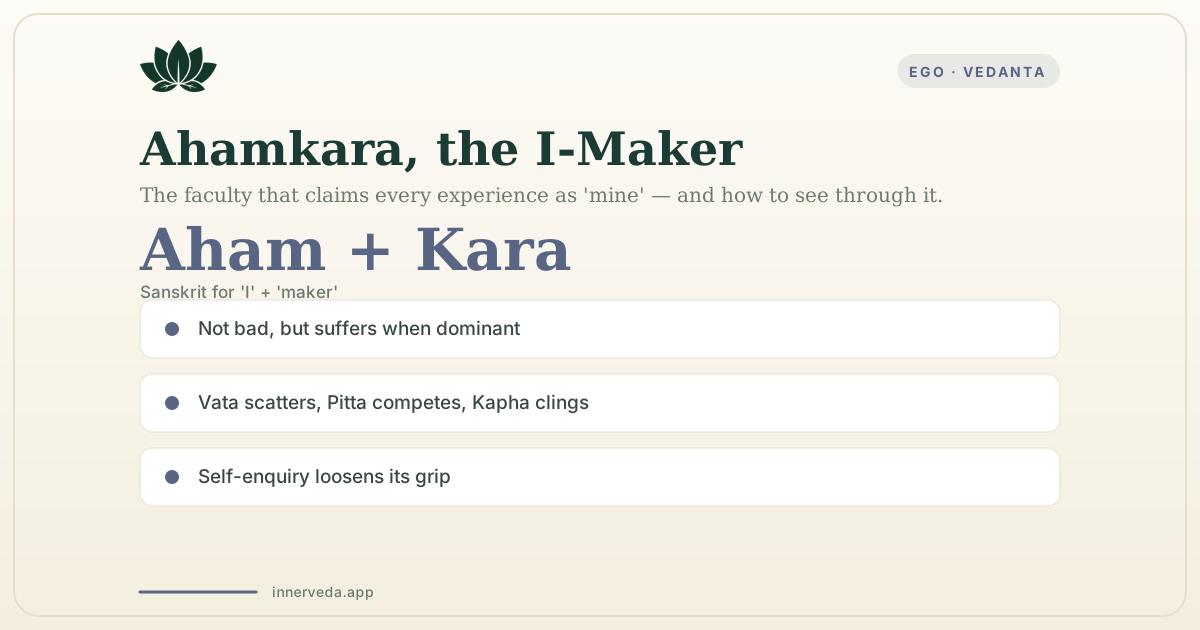
Ahamkara is the Vedantic concept of ego, the 'I-maker' that creates a sense of separate self. In Ayurvedic and Vedantic thought, it's one of four aspects of the inner mind. Understanding Ahamkara may help reduce attachment, ease mental suffering, and support a more balanced, centred life.
What Is Ahamkara?
In the rich philosophical tradition of Vedanta, Ahamkara (Sanskrit: अहंकार) is one of the most profound and practically relevant concepts. Translated literally, aham means "I" and kara means "maker". Ahamkara is the I-maker, the faculty of the mind that generates our sense of individual selfhood.
Unlike the Western psychological concept of ego, Ahamkara isn't merely a personality structure. In Vedantic thought, it's a cosmic principle. One of the fundamental evolutes of consciousness described in the Samkhya and Vedanta traditions. The mechanism through which pure, undifferentiated awareness appears to become a separate, bounded individual.
Ahamkara Within the Antahkarana
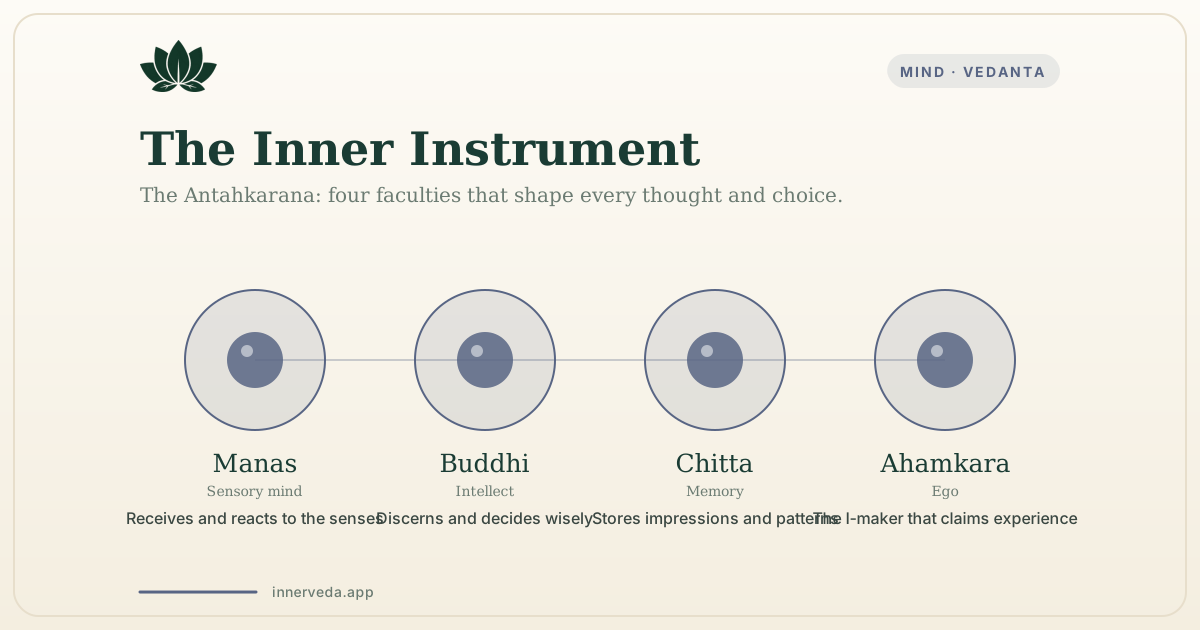
Vedantic psychology describes the Antahkarana, the "inner instrument", as having four interconnected aspects:
- Manas, the sensory, processing mind
- Buddhi, the intellect and faculty of discrimination
- Chitta, the storehouse of memory and subconscious impressions
- Ahamkara, the ego or I-sense
These four don't exist as separate organs but as functions of one unified inner awareness. Ahamkara's specific role is to claim experience as personal. When you see a sunset, Manas processes the sensory input, Buddhi evaluates it, Chitta compares it with past memories. Ahamkara says, "I am seeing this. I find it beautiful. This is my experience."
This claiming function isn't inherently problematic. Without it, you couldn't function as a person, make decisions, or navigate the world. The difficulty arises when Ahamkara becomes the dominant lens through which all experience is filtered.
How the Ego Creates Suffering
The Upanishads and the Bhagavad Gita repeatedly point to misidentification as the root cause of suffering. When Ahamkara becomes inflated or distorted, we begin to confuse who we truly are with the roles we play, the possessions we accumulate, and the stories we tell about ourselves.
This misidentification traditionally shows up in several ways:
Attachment and Possessiveness
Ahamkara extends the sense of "I" into "mine". My body, my reputation, my family, my success. When any of these are threatened, we experience fear and anxiety. Not because of the external event itself, but because the ego perceives a threat to its constructed identity.
Comparison and Competition
A strongly conditioned Ahamkara constantly measures itself against others. This may lead to pride when we feel superior and shame or envy when we feel inferior. A ceaseless oscillation that traditional texts describe as a source of great restlessness.
Resistance to Change
Because Ahamkara is invested in maintaining a fixed sense of self, it naturally resists change, growth, and the dissolution of familiar patterns. This rigidity is recognised in Ayurveda as a factor that may aggravate Vata dosha (through anxiety about the unknown) and Pitta dosha (through the need to control outcomes).
Ahamkara and Ayurvedic Wellbeing
In the Ayurvedic framework, the state of Ahamkara directly influences one's Sattva (clarity), Rajas (agitation), and Tamas (inertia). The three Gunas or qualities of the mind.
- A Sattvic Ahamkara supports a healthy sense of self. Confident but not arrogant, grounded but not rigid. Traditionally associated with balanced doshas and good mental health.
- A Rajasic Ahamkara is driven, competitive, restless. It may aggravate Pitta dosha and contribute to inflammation, irritability, burnout.
- A Tamasic Ahamkara is dull, stubborn, resistant. It may contribute to Kapha imbalance, lethargy, depression.
The Charaka Samhita recognises that Prajnaparadha, crimes against wisdom or knowingly acting against one's better judgement, is a primary cause of disease. An unchecked Ahamkara is often what drives Prajnaparadha. We know what's good for us, but the ego's desires, fears, and habits override our deeper intelligence.
Practical Methods for Working With Ahamkara
Vedantic philosophy isn't merely theoretical. It offers practical methods for loosening the grip of ego-identification. These practices are traditionally understood to support both spiritual growth and everyday wellbeing.
Self-Enquiry (Atma Vichara)
Made widely known by the sage Ramana Maharshi, self-enquiry involves asking "Who am I?". Not as an intellectual exercise, but as a direct investigation into the nature of the one who claims to be the experiencer. This practice may help create a gap between awareness and the ego's narratives.
Witness Consciousness (Sakshi Bhava)
This practice involves cultivating the capacity to observe thoughts, emotions, and sensations without identifying with them. Rather than thinking "I am angry," one learns to notice "anger is arising." Over time, this may weaken Ahamkara's automatic claim on every experience.
Karma Yoga (Selfless Action)
The Bhagavad Gita (Chapter 3) recommends performing one's duties without attachment to the fruits of action. This directly addresses the ego's habit of making everything about personal gain or loss. Practised consistently, Karma Yoga is traditionally said to purify the mind and reduce the dominance of Ahamkara.
Meditation and Pranayama
Regular meditation practice, particularly practices that cultivate stillness and inner observation, is traditionally recommended for creating space between the true Self and the ego's activity. Pranayama (breathwork) may support this by calming Vata dosha and steadying the mind.
Living Beyond the Ego
Vedantic philosophy doesn't ask us to annihilate the ego. An impossible and unnecessary task. Instead, it invites us to see through the ego's constructions, recognising that our deepest identity isn't the anxious, grasping "I" of Ahamkara, but the vast, unchanging awareness (Atman) that witnesses all experience.
This understanding, traditionally called Viveka (discrimination between the real and the unreal), is considered the foundation of lasting peace. When we no longer depend on external circumstances to validate our sense of self, we may discover a freedom and ease that no amount of worldly achievement can provide.
As the Bhagavad Gita (Chapter 2, Verse 71) beautifully expresses: "A person who has given up all desires and moves free from attachment, ego, and the feeling of possessiveness attains peace."
Disclaimer: This article explores traditional Vedantic and Ayurvedic concepts for educational purposes. It isn't a substitute for professional mental health advice. If you're experiencing psychological distress, please consult a qualified healthcare provider.
Frequently Asked Questions
Ahamkara literally means 'I-maker' in Sanskrit. It's the aspect of the inner mind (Antahkarana) responsible for creating a sense of individual identity and separateness. It isn't the ego in the Freudian sense, but the faculty that claims ownership: 'I am,' 'I do,' 'this is mine.'
Vedanta doesn't view Ahamkara as inherently bad. It's a necessary function that lets us operate in the world. The problem arises when we over-identify with it, mistaking the ego for our true Self (Atman). The goal isn't to destroy the ego but to see through its illusions.
In Ayurveda, an imbalanced Ahamkara may show up as excessive pride, rigidity, anxiety, or identity-driven stress. These mental patterns can aggravate doshas, particularly Vata and Pitta, contributing to both psychological and physical imbalance. Practices like meditation and self-enquiry are traditionally recommended to restore harmony.
References & sources
- Meditation programmes for psychological stress and wellbeing— JAMA Intern Med, 2014
- Ayurvedic medicine and yoga-based interventions for mental health— BMC Complement Altern Med, 2016
- Genomic basis of Prakriti (Ayurvedic constitution) and its clinical relevance— J Ayurveda Integr Med, 2014
Classical sources
- Bhagavad Gita— Chapter 7 Verse 4
- Katha Upanishad— Adhyaya 1, Valli 3 (Canto 3) Verses 3-4
- Bhagavad Gita— Chapter 3 (Karma Yoga) Verse 19
- Bhagavad Gita— Chapter 2 Verse 71
This article is for educational purposes only and reflects traditional Ayurvedic perspectives alongside selected research. It is not medical advice. Always consult a qualified healthcare provider before acting on any information presented here.
Written by
Ganesh Kompella
Founder, InnerVeda
Research assisted by Vaidya AI
Trained on 500+ classical Ayurvedic texts

Medically reviewed by Dr. Sheetal Rajput
BAMS (Bachelor of Ayurvedic Medicine & Surgery)
Practise this
Guided sessions that put this article into practice.
Continue Reading
Dynamics of the Mind: Understanding Manas, Buddhi & Chitta
The Law of Karma: How Actions Shape Your Wellbeing
Triphala: Ayurveda's Three-Fruit Formula
Abhyanga: The Ayurvedic Self-Massage Practice
Abhyanga: Ayurvedic Self-Massage Guide
Put this into practice
Take the free dosha assessment. Get a personalised wellness plan with nutrition, meditation, and daily routines matched to your body.
Find Your Dosha — Free~3 min · no signup