Cumin: Benefits & Dosha Effects
Sanskrit: Jiraka (जीरक)
Cumin is especially balancing for Vata and Kapha. With pungent and bitter rasa (taste), hot virya (potency) and pungent vipaka, it is light and dry in quality and a source of iron.

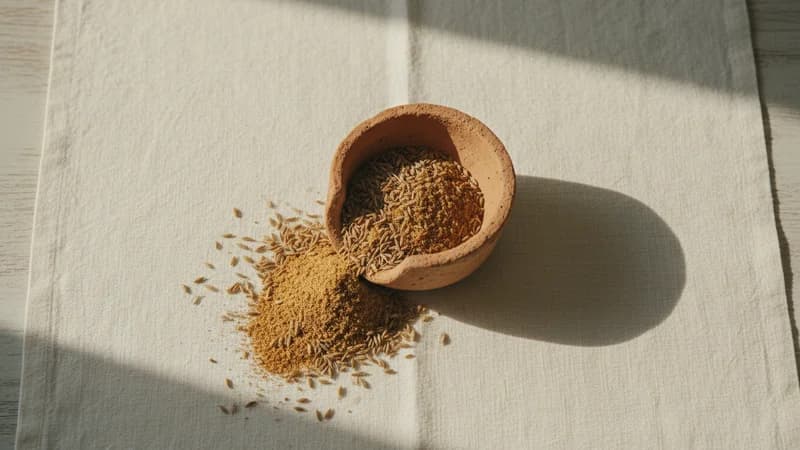
Cumin is best suited to Vata and Kapha, which it helps pacify. Cumin (Jiraka) is Ayurveda's classic Agni-kindler: its pungent rasa and hot virya gently stoke the digestive fire, so it is traditionally used to ease the heaviness, bloating and sluggishness that follow a slow, heavy meal.. Suitable year-round.
Ayurvedic Profile
Cumin, or Jiraka in Sanskrit, derives its name from the root 'Jir,' meaning digestion, signifying its primary role in Ayurvedic medicine as one of the foremost Deepana (appetizer) and Pachana (digestive) herbs. The Bhavaprakasha Nighantu categorizes Jiraka among the Haritakyadi Varga and attributes to it properties that are fundamental to maintaining healthy Agni (digestive fire). The text describes three varieties: Shveta Jiraka (white cumin), Krishna Jiraka (black cumin), and Karavi, each with distinct therapeutic applications.
According to the Charaka Samhita, cumin is one of the most important spices for Vata and Kapha pacification. Its Katu (pungent) rasa combined with Ushna (hot) virya and Laghu-Ruksha (light and dry) gunas make it exceptionally effective at kindling Agni without excessively aggravating Pitta dosha, a quality that distinguishes it from many other heating spices. This balanced nature is why Ayurvedic practitioners frequently recommend cumin as a first-line digestive support even for Pitta-type individuals.
The Ashtanga Hridaya praises Jiraka for its Grahi property, meaning it absorbs excess moisture in the digestive tract while promoting healthy elimination. This makes it invaluable for addressing conditions of Mandagni (weak digestive fire) and Ama (undigested metabolic toxins). Classical formulations like Jeerakadyarishta, an Ayurvedic fermented preparation, leverage cumin's digestive potency for postpartum recovery and chronic digestive weakness.
In traditional Ayurvedic cooking, cumin is considered Sandhana Karma (catalytic), meaning it enhances the therapeutic properties of other ingredients it is combined with. The practice of tempering (Tadka) cumin seeds in ghee or oil at the beginning of cooking is not merely culinary tradition but a sophisticated method of extracting and delivering its fat-soluble active compounds. When combined with coriander and fennel in the classical CCF tea, cumin creates a synergistic blend that gently detoxifies while supporting all three doshas.
Cumin is also classified as Shukrala (beneficial for reproductive tissue) in classical texts, supporting the health of Shukra Dhatu. For lactating mothers, Jiraka is traditionally prescribed to enhance breast milk quality and quantity, a practice documented in the Kashyapa Samhita.
Ayurvedic Properties
Rasa (Taste)
pungent, bitter
Virya (Potency)
hot
Vipaka (Post-digestive)
pungent
Guna (Qualities)
light, dry
How Cumin Affects Vata, Pitta & Kapha
Ayurveda reads every food through the three doshas. Here is how cumin’s qualities interact with each: Not sure which is yours? Take the free dosha quiz — about 3 minutes, no signup.
Cumin helps pacify Vata. Its hot virya (potency) and light and dry qualities, with its pungent and bitter rasa (taste), counterbalance Vata's tendencies — which is why it traditionally suits Vata dosha in regular use.
Cumin has a broadly neutral effect on Pitta. Its pungent and bitter rasa and light and dry qualities neither strongly aggravate nor pacify Pitta, so those with Pitta dosha can enjoy it in moderation within a varied diet.
Cumin helps pacify Kapha. Its hot virya (potency) and light and dry qualities, with its pungent and bitter rasa (taste), counterbalance Kapha's tendencies — which is why it traditionally suits Kapha dosha in regular use.
Nutrition Facts (per 100g)
375kcal
Calories
17.8g
Protein
44.2g
Carbs
22.3g
Fat
10.5g
Fiber
Ayurvedic Benefits
- Cumin (Jiraka) is Ayurveda's classic Agni-kindler: its pungent rasa and hot virya gently stoke the digestive fire, so it is traditionally used to ease the heaviness, bloating and sluggishness that follow a slow, heavy meal.
- Because its light, dry guna helps clear Ama (undigested residue) from the gut channels, cumin is a mainstay in formulas that support comfortable digestion and regular, well-formed elimination.
- Its warming, drying nature makes it a friend to both Vata and Kapha (V↓ K↓), so it may help settle the gas and cold-natured cramping of a Vata gut while cutting the dullness and heaviness of a Kapha one.
- Being Pitta-neutral (P=) despite its heat, cumin can be used year-round and by most constitutions without stoking excess warmth, which is why it seasons everyday food rather than being reserved as a medicine.
- Nutritionally cumin is notably rich in iron and manganese, minerals that support healthy energy metabolism and the ongoing renewal of the body's tissues (dhatu).
How to Use
- As cumin is heating (ushna virya), balance it with cooling accompaniments such as coriander, fennel or a little ghee — especially through the warmer months.
- Make the everyday digestive tea (jeera water): simmer 1 tsp seeds in 2 cups water for 5 minutes, strain, and sip warm through the day or after meals to settle a heavy stomach.
- Dry-roast the seeds in a pan until fragrant and grind them; a pinch of this warm brown powder over dals, raitas and roasted vegetables both flavours the dish and lightens it.
- Temper (tadka) whole seeds in warm ghee at the very start of cooking until they sizzle and darken a shade, then build your dal or sabzi on that base so the fat carries the spice into the food.
- Stir a pinch of roasted cumin powder with a little rock salt into buttermilk or plain yoghurt to make a light, digestive drink alongside a rich lunch.
- Keep a small jar of whole seeds rather than pre-ground powder; grind small batches, as the volatile aromatic oils that do the digestive work fade quickly once the seed is broken.
Contraindications
- Those with high Pitta showing as acidity, heartburn or a burning gut should keep to modest culinary amounts, as the hot virya can add to internal heat if overused.
- In pregnancy, ordinary food-level seasoning is fine, but concentrated cumin preparations or supplements should only be taken on the advice of a qualified practitioner.
- Its drying quality can aggravate an already very dry (high-Vata) or dehydrated gut if taken in large medicinal doses; pair it with ghee or warm water and do not overdo it.
“Ayurveda classifies Cumin by its pungent, bitter rasa (taste), hot virya (thermal potency), and pungent vipaka (post-digestive effect). InnerVeda reads these three lenses together to map Cumin to your dosha and season.”
Cumin by Dosha
See how cumin interacts with each dosha and get personalised guidance.
Frequently Asked Questions
Classically, yes. Cumin's pungent rasa and hot virya are described as directly kindling Agni (digestive fire) and clearing Ama, so warm jeera water is traditionally used to ease bloating and heaviness after eating. It supports comfortable digestion rather than curing any condition, and works best as a gentle daily habit.
They are different plants. Ordinary cumin (Cuminum cyminum) is the warm, earthy jeera of everyday Indian tadka; caraway (Carum carvi), often called Krishna Jiraka or black cumin here, is sharper and more penetrating, favoured in winter and in rye breads. Both reduce Vata and Kapha, but caraway's added sharp (tikshna) quality makes it the more penetrating of the two.
Yes. Because cumin is Pitta-neutral despite its warmth, it is one of the few heating spices suited to daily, year-round use in food-level amounts. Only those prone to strong acidity or heartburn need to keep the quantity modest, as its hot virya can add to internal heat when overused.
Dietary information provided is for educational purposes only and is rooted in Ayurvedic tradition. It is not a substitute for professional nutritional or medical advice. Consult a qualified healthcare provider before making significant changes to your diet, especially if you have food allergies, intolerances, or a medical condition.
Want a meal plan matched to your dosha?
Take the free 3-minute dosha assessment and get a personalised nutrition plan with 300 foods rated for your body.
Find Your Dosha — Free~3 min · no signup