Fennel: Benefits & Dosha Effects
Sanskrit: Shatapushpa (शतपुष्पा)
Fennel is especially balancing for Vata and Pitta. With sweet, bitter and pungent rasa (taste), cold virya (potency) and sweet vipaka, it is light and oily in quality and a source of iron.

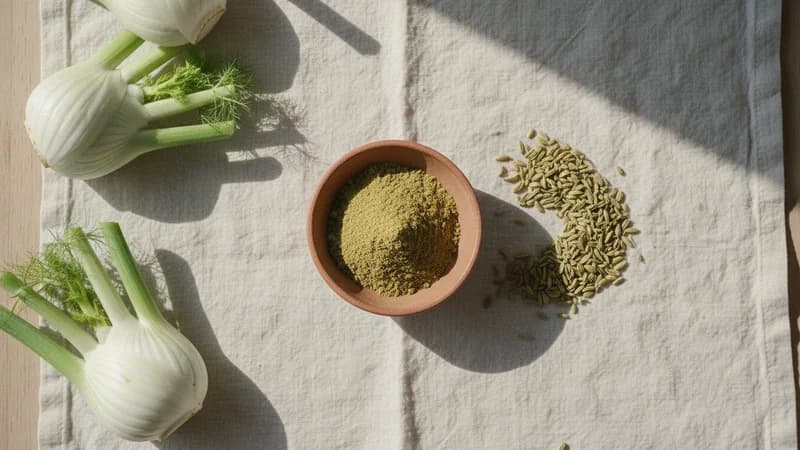
Fennel is best suited to Vata and Pitta, which it helps pacify. Tridoshic digestive spice safe for all constitution types including children. Suitable year-round.
Ayurvedic Profile
Fennel, known as Shatapushpa in Sanskrit (meaning 'hundred flowers'), is one of the most versatile and universally beneficial spices in the Ayurvedic pharmacopoeia. The Charaka Samhita classifies it among the Shukra Shodhana (seminal purifying) and Anuvasanopaga (enema-supportive) groups, while the Bhavaprakasha Nighantu extols it as a supreme digestive that calms Vata and Pitta simultaneously without disturbing Kapha, making it one of the truly tridoshic spices in practice.
Shatapushpa possesses Madhura (sweet) and Tikta (bitter) rasa with Sheeta (cold) virya and Madhura (sweet) vipaka. This profile is remarkably similar to coriander, and indeed the two are often paired in classical formulations. However, fennel has a stronger affinity for the Artavavaha Srotas (menstrual/reproductive channels) and the Stanyavaha Srotas (lactation channels), making it particularly important in women's health.
The Ashtanga Hridaya describes Shatapushpa as Dipana (digestive fire-stimulating), Ruchya (taste-enhancing), Hridya (cardiac tonic), and Medhya (intellect-promoting). Its ability to stimulate digestion while maintaining a cooling virya is shared with very few herbs, a quality that makes it invaluable for Pitta-dominant individuals who need digestive support. The volatile oils, primarily anethole and fenchone, are responsible for its carminative action that relieves gas and bloating.
In the classical CCF tea, fennel plays the role of the harmoniser, bridging cumin's pungency and coriander's astringency into a cohesive, pleasant-tasting formula. The Kashyapa Samhita specifically recommends Shatapushpa for infants and children, as its gentle nature makes it safe for even the most sensitive constitutions. Fennel water (Gripe water in its original form) has been used for centuries to soothe infant colic.
Fennel is also classified as Chakshushya (beneficial for the eyes) in several classical texts. The practice of chewing fennel seeds after meals serves multiple purposes: it freshens the breath, initiates the post-meal digestive process, and provides a gentle conclusion to eating that signals satisfaction to the body and mind. This simple ritual embodies Ayurveda's integration of therapeutic action into daily routines.
Ayurvedic Properties
Rasa (Taste)
sweet, bitter, pungent
Virya (Potency)
cold
Vipaka (Post-digestive)
sweet
Guna (Qualities)
light, oily
How Fennel Affects Vata, Pitta & Kapha
Ayurveda reads every food through the three doshas. Here is how fennel’s qualities interact with each: Not sure which is yours? Take the free dosha quiz — about 4 minutes.
Fennel helps pacify Vata. Its cold virya (potency) and light and oily qualities, with its sweet, bitter and pungent rasa (taste), counterbalance Vata's tendencies — which is why it traditionally suits Vata dosha in regular use. Vata meal plan
Fennel helps pacify Pitta. Its cold virya (potency) and light and oily qualities, with its sweet, bitter and pungent rasa (taste), counterbalance Pitta's tendencies — which is why it traditionally suits Pitta dosha in regular use. Pitta meal plan
Fennel has a broadly neutral effect on Kapha. Its sweet, bitter and pungent rasa and light and oily qualities neither strongly aggravate nor pacify Kapha, so those with Kapha dosha can enjoy it in moderation within a varied diet. Kapha meal plan
Nutrition Facts (per 100g)
345kcal
Calories
15.8g
Protein
52.3g
Carbs
14.9g
Fat
39.8g
Fibre
Ayurvedic Benefits
- Tridoshic digestive spice safe for all constitution types including children
- Supports women's reproductive health and enhances lactation
- Cooling carminative that relieves gas and bloating without increasing heat
- Chakshushya (eye-beneficial) properties support visual health
- Medhya (intellect-promoting) action supports mental clarity
- Gentle enough for daily use as an after-meal digestive aid
How to Use
- As fennel is cooling (shita virya), favour it in warmer weather and pair it with warming spices like ginger or black pepper when the seasons turn cold.
- Chew 1/2 tsp of fennel seeds after each meal for natural digestion and breath freshening
- Brew CCF tea with equal parts cumin, coriander, and fennel seeds
- Make fennel water for infants by simmering 1/2 tsp seeds in a cup of water and cooling
- Add to vegetable dishes and rice for subtle sweetness and digestive support
- Steep crushed seeds in warm water as a soothing evening tea to calm Vata and Pitta
Contraindications
- Generally extremely safe; one of the few herbs with almost no common contraindications
- Those with oestrogen-sensitive conditions should consult a practitioner about regular high-dose use
- Very high doses may slightly increase Kapha due to sweet taste and oily guna
“Ayurveda classifies Fennel by its sweet, bitter, pungent rasa (taste), cold virya (thermal potency), and sweet vipaka (post-digestive effect). InnerVeda reads these three lenses together to map Fennel to your dosha and season.”
Fennel by Dosha
See how fennel interacts with each dosha and get personalised guidance.
Frequently Asked Questions
Yes, fennel has been used for centuries to soothe infant colic and digestive discomfort. Simmer a small amount of seeds in water, cool completely, and offer in very small sips. The Kashyapa Samhita specifically recommends it for infants. Always consult your paediatrician first.
Fennel supports healthy metabolism by gently stimulating Agni without creating excess heat. Chewing seeds between meals can help curb cravings. While not a magic weight-loss remedy, it supports the digestive health that is foundational to maintaining a healthy weight in Ayurveda.
Absolutely. Fennel tea is one of the safest herbal teas for daily consumption. It is tridoshic, gentle, and provides consistent digestive support. You can drink it plain or as part of CCF tea. Most people can safely enjoy 2-3 cups daily without any issues.
Your dosha is the balance of Vata, Pitta and Kapha you were born with. Take the dosha quiz — free, about 4 minutes.
Three questions towards your dosha
These are the first three questions of the full dosha quiz. Answer them here and carry on where you left off.
Prefer to start from the beginning? Take the full dosha quiz.
Dietary information provided is for educational purposes only and is rooted in Ayurvedic tradition. It is not a substitute for professional nutritional or medical advice. Consult a qualified healthcare provider before making significant changes to your diet, especially if you have food allergies, intolerances, or a medical condition.
Want a meal plan matched to your dosha?
Take the free dosha assessment (about 4 minutes) and get a personalised nutrition plan with nearly 300 foods in the app, rated for your body.
Find Your Dosha: FreeAbout 4 minutes