Drumstick (Moringa): Benefits & Dosha Effects
Sanskrit: Shigru (शिग्रु)
Drumstick (Moringa) is especially balancing for Kapha but can raise Pitta when eaten in excess. With pungent and bitter rasa (taste), hot virya (potency) and pungent vipaka, it is light, dry and sharp in quality and a source of vitamin c.

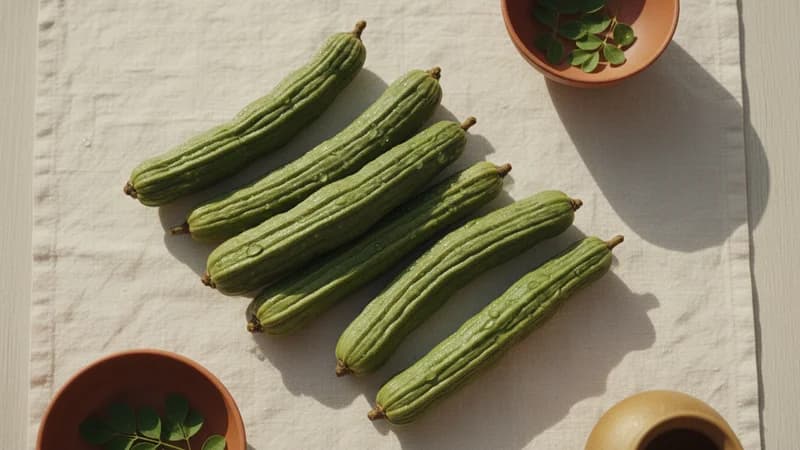
Drumstick (Moringa) is best suited to Kapha, which it helps pacify. In excess it can raise Pitta. Shigru is prized in classical texts as a deeply Kapha-clearing food; its pungent, bitter and sharp qualities traditionally support the loosening of Ama and the free movement of the channels, which is why drumstick features in warming South Indian sambars.. Suitable year-round.
Ayurvedic Profile
Drumstick (Moringa) (Shigru (शिग्रु)) is a nourishing vegetables treasured in Ayurvedic nutrition. Referenced in Sushruta Samhita, it is characterised by pungent and bitter rasa (taste), heating virya (potency), and pungent vipaka (post-digestive effect). Shigru is one of the most praised plants in Ayurveda, with Charaka calling it Katushreshtha (best among pungent substances); its pods clear Kapha from joints and sinuses while its Tikshna guna penetrates deep into Asthivaha srotas. Its light and dry and sharp gunas make it particularly suited for specific constitutional types. It has a neutral effect on Vata, can aggravate Pitta when consumed in excess, and pacifies Kapha. From a nutritional standpoint, drumstick (moringa) provides approximately 37 calories per 100g, with 2.1g protein, 8.5g carbohydrates, and is a valuable source of Vitamin C, Iron, Calcium. Best enjoyed during all-seasons, drumstick (moringa) supports healthy Agni (digestive fire) when prepared according to Ayurvedic principles, helping prevent Ama (toxin) accumulation and nourish the dhatus (body tissues).
Ayurvedic Properties
Rasa (Taste)
pungent, bitter
Virya (Potency)
hot
Vipaka (Post-digestive)
pungent
Guna (Qualities)
light, dry, sharp
How Drumstick (Moringa) Affects Vata, Pitta & Kapha
Ayurveda reads every food through the three doshas. Here is how drumstick (moringa)’s qualities interact with each: Not sure which is yours? Take the free dosha quiz — about 4 minutes.
Drumstick (Moringa) has a broadly neutral effect on Vata. Its pungent and bitter rasa and light, dry and sharp qualities neither strongly aggravate nor pacify Vata, so those with Vata dosha can enjoy it in moderation within a varied diet. Vata meal plan
Drumstick (Moringa) is well tolerated by those with Pitta dosha in normal amounts, but its hot virya and light, dry and sharp qualities may aggravate Pitta in excess — so people with Pitta as their leading dosha are best keeping to measured portions. Pitta meal plan
Drumstick (Moringa) helps pacify Kapha. Its hot virya (potency) and light, dry and sharp qualities, with its pungent and bitter rasa (taste), counterbalance Kapha's tendencies — which is why it traditionally suits Kapha dosha in regular use. Kapha meal plan
Nutrition Facts (per 100g)
37kcal
Calories
2.1g
Protein
8.5g
Carbs
0.2g
Fat
2g
Fibre
Ayurvedic Benefits
- Shigru is prized in classical texts as a deeply Kapha-clearing food; its pungent, bitter and sharp qualities traditionally support the loosening of Ama and the free movement of the channels, which is why drumstick features in warming South Indian sambars.
- The tender pods and leaves are an exceptional plant source of iron alongside vitamin C, a pairing that supports the body's absorption of iron and traditionally nourishes the blood-building rakta dhatu.
- Moringa leaves are notably rich in bioavailable calcium, so drumstick supports the strength of bone and connective tissue in a way that sets it apart from most leafy greens.
- Its hot virya and light, dry nature help kindle Agni and support the clearing of a congested, mucous-heavy chest, a quality classical Ayurveda values through the cooler and damp parts of the year.
- As an all-season vegetable carrying vitamin C, iron and a broad spread of micronutrients, moringa supports everyday immunity and steady energy, making it a genuinely year-round nourishing food rather than a seasonal one.
How to Use
- As drumstick (moringa) is heating (ushna virya), balance it with cooling accompaniments such as coriander, fennel or a little ghee — especially through the warmer months.
- Simmer the long fibrous pods in a South Indian sambar or drumstick dal until tender, then scoop the soft inner pulp from the pod with a spoon; the woody skin is left on the plate.
- Cook the fresh leaves into a quick poriyal or thoran with grated coconut, mustard seeds and a little turmeric to make the most of their iron and calcium in an everyday side.
- Stir a spoon of moringa leaf powder into warm dal, soup or buttermilk rather than cold drinks, as its hot, sharp nature works best with warm, cooked food.
- Add drumstick pieces to a light vegetable rasam or clear broth when you want its channel-clearing warmth in an easily digestible form during a cold or congested spell.
- Blanch the leaves briefly before cooking to soften their sharp bitterness, and pair them with a little ghee or coconut to temper the dryness and carry the fat-soluble nutrients.
Contraindications
- Those with a Pitta constitution or active heat such as acidity, loose stools or skin inflammation should limit moringa, as its hot virya and pungent vipaka can aggravate Pitta.
- Pregnant women should avoid moringa bark and root entirely and keep leaf and pod intake modest and food-based only, as the bark and root are traditionally considered unsafe in pregnancy.
- Because moringa may lower blood sugar and blood pressure, those on medication for diabetes or hypertension should keep portions moderate and consult their clinician to avoid an excessive effect.
“Ayurveda classifies Drumstick (Moringa) by its pungent, bitter rasa (taste), hot virya (thermal potency), and pungent vipaka (post-digestive effect). InnerVeda reads these three lenses together to map Drumstick (Moringa) to your dosha and season.”
Frequently Asked Questions
They come from the same Shigru tree but are used differently. The long pods are cooked in sambar and dal for their gentle warmth and soft inner pulp, while the leaves are far richer in iron and calcium and are made into poriyal, thoran or dried into powder. The leaves are the more concentrated nourishment.
As a cooked food, tender pods and leaves are suited to daily use across seasons for most constitutions. Because moringa is heating and sharp, a Pitta person or anyone with acidity should keep portions modest. Leaf powder is potent, so a small warm spoonful is enough; more is not better.
Moringa leaves are one of the better plant sources of iron, and their natural vitamin C supports the body's absorption of that iron, which is why Ayurveda regards Shigru as nourishing to the blood. It supports healthy iron intake as part of a varied diet, but is not a substitute for medical treatment of anaemia.
Your dosha is the balance of Vata, Pitta and Kapha you were born with. Take the dosha quiz — free, about 4 minutes.
Three questions towards your dosha
These are the first three questions of the full dosha quiz. Answer them here and carry on where you left off.
Prefer to start from the beginning? Take the full dosha quiz.
Dietary information provided is for educational purposes only and is rooted in Ayurvedic tradition. It is not a substitute for professional nutritional or medical advice. Consult a qualified healthcare provider before making significant changes to your diet, especially if you have food allergies, intolerances, or a medical condition.
Want a meal plan matched to your dosha?
Take the free dosha assessment (about 4 minutes) and get a personalised nutrition plan with nearly 300 foods in the app, rated for your body.
Find Your Dosha: FreeAbout 4 minutes