Black Pepper: Benefits & Dosha Effects
Sanskrit: Maricha (मरिच)
Black Pepper is especially balancing for Vata and Kapha and tends to aggravate Pitta. With pungent rasa (taste), hot virya (potency) and pungent vipaka, it is light, dry and sharp in quality and a source of piperine.

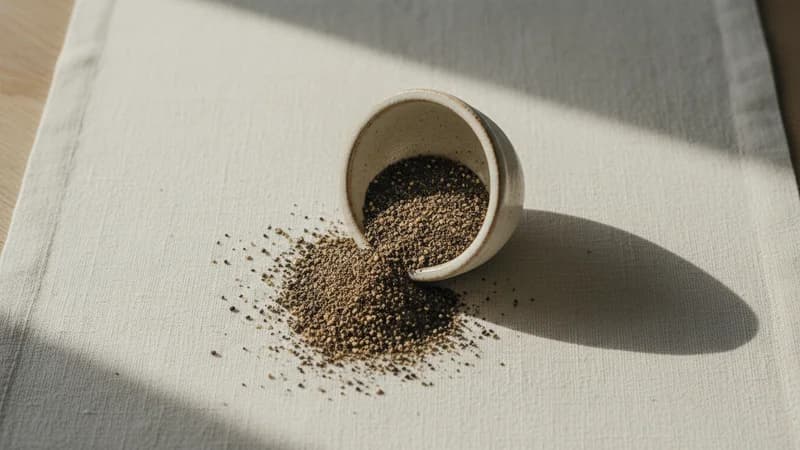
Black Pepper is best suited to Vata and Kapha, which it helps pacify. It can aggravate Pitta, so people with Pitta as their leading dosha should use it sparingly. Acts as a classical Yogavahi (bioenhancer): its piperine helps the body take up companion nutrients, which is why a pinch is traditionally added to turmeric-rich dishes.. Best enjoyed during winter.
Ayurvedic Profile
Black pepper, known as Maricha in Sanskrit, derives its name from the root word 'Marich,' which also refers to the sun, indicating its intense, fiery, and illuminating nature. The Charaka Samhita classifies Maricha among the Shiro Virechana Dravya (substances that cleanse the head and sinuses) and the Krimighna Gana (anti-parasitic group), highlighting its powerful penetrating and purifying qualities. It is the most pungent of the three components of Trikatu.
The Bhavaprakasha Nighantu describes Maricha as possessing Katu (pungent) rasa, Ushna (hot) virya, and Katu (pungent) vipaka with Laghu (light), Ruksha (dry), and Tikshna (sharp) gunas. This combination of qualities makes it exceptionally effective at breaking through Ama (metabolic toxins) and Kapha accumulations, particularly in the Pranavaha Srotas (respiratory channels) and Annavaha Srotas (digestive channels).
Perhaps the most clinically significant property of Maricha in modern times is its Yogavahi nature, meaning it acts as a bioenhancer that increases the absorption and efficacy of other herbs and foods. The compound piperine, responsible for this effect, can increase the bioavailability of curcumin by up to 2000 percent. Classical Ayurvedic Vaidyas understood this principle intuitively, which is why Maricha appears in countless compound formulations designed to enhance the delivery of primary therapeutic agents.
The Ashtanga Hridaya recommends Maricha for Pinasa (chronic rhinitis), Kasa (cough), and Shwasa (respiratory distress). When combined with honey, it creates a powerful Kapha-dissolving preparation traditionally administered during the early morning hours when Kapha is naturally dominant. The Sushruta Samhita includes it in formulations for Garavisha (slow-acting poisons and environmental toxins), reflecting its broad detoxification capabilities.
Despite its intensity, Maricha used judiciously in cooking serves as a daily health-promoting addition. The tradition of adding freshly cracked black pepper to food is not merely for flavour but serves as a Deepana (digestive stimulant) that ensures optimal extraction of nutrients from meals. A few peppercorns in buttermilk or rasam create therapeutic preparations that address Agnimandya (weak digestion) efficiently.
Ayurvedic Properties
Rasa (Taste)
pungent
Virya (Potency)
hot
Vipaka (Post-digestive)
pungent
Guna (Qualities)
light, dry, sharp
How Black Pepper Affects Vata, Pitta & Kapha
Ayurveda reads every food through the three doshas. Here is how black pepper’s qualities interact with each: Not sure which is yours? Take the free dosha quiz — about 4 minutes.
Black Pepper helps pacify Vata. Its hot virya (potency) and light, dry and sharp qualities, with its pungent rasa (taste), counterbalance Vata's tendencies — which is why it traditionally suits Vata dosha in regular use. Vata meal plan
Black Pepper tends to increase Pitta. Its hot virya and light, dry and sharp qualities, with its pungent rasa, align with Pitta's own nature, so those with Pitta dosha are best using it sparingly and pairing it with Pitta-pacifying foods. Pitta meal plan
Black Pepper helps pacify Kapha. Its hot virya (potency) and light, dry and sharp qualities, with its pungent rasa (taste), counterbalance Kapha's tendencies — which is why it traditionally suits Kapha dosha in regular use. Kapha meal plan
Nutrition Facts (per 100g)
251kcal
Calories
10.4g
Protein
63.9g
Carbs
3.3g
Fat
25.3g
Fibre
Ayurvedic Benefits
- Acts as a classical Yogavahi (bioenhancer): its piperine helps the body take up companion nutrients, which is why a pinch is traditionally added to turmeric-rich dishes.
- Its dry, sharp, hot qualities make it strongly Kapha-reducing, so it is traditionally used to clear a heavy, blocked feeling in the chest and sinuses during damp winter weather.
- A potent Deepana spice that kindles a sluggish Agni, supporting appetite and lighter digestion after heavy or cold meals.
- Supplies manganese and vitamin K alongside piperine, nutrients that contribute to normal bone and connective-tissue metabolism.
- Its light, penetrating nature is valued in Ayurveda as Shirovirechana, gently helping to shift stagnant mucus from the head and throat.
How to Use
- As black pepper is heating (ushna virya), balance it with cooling accompaniments such as coriander, fennel or a little ghee — especially through the warmer months.
- Black Pepper is at its best during winter — eating it in season keeps its Prana (vital energy) and benefit at their peak.
- Grind it fresh over the finished dish rather than cooking it long: peppercorns lose their volatile aroma with prolonged heat, so it works best as a last-moment finishing spice.
- Add a small pinch to any turmeric preparation, warm milk, or dal so the two spices work together as they are classically paired.
- Crush 2-3 peppercorns into a teaspoon of raw honey and take slowly for a scratchy, congested throat on a cold morning.
- Blend equal parts black pepper, long pepper (pippali) and dry ginger to make Trikatu, a pinch of which can be stirred into warm water before a heavy winter meal.
- Buy whole peppercorns and grind as needed; pre-ground pepper goes flat quickly and loses much of its pungency and piperine.
Contraindications
- Being hot and pungent it raises Pitta, so use only sparingly if you have acid reflux, gastritis, Amlapitta (hyperacidity) or inflamed skin.
- Best limited by anyone with an active peptic ulcer, as its sharp quality can aggravate the gastric lining.
- Keep to normal culinary amounts in pregnancy rather than concentrated therapeutic doses; a pinch in cooking is fine.
“Ayurveda classifies Black Pepper by its pungent rasa (taste), hot virya (thermal potency), and pungent vipaka (post-digestive effect). InnerVeda reads these three lenses together to map Black Pepper to your dosha and season.”
Black Pepper by Dosha
See how black pepper interacts with each dosha and get personalised guidance.
Frequently Asked Questions
Black pepper's piperine markedly improves how well the body absorbs turmeric's curcumin, which is otherwise poorly taken up. Ayurveda described this centuries ago as the Yogavahi principle, and modern nutrition agrees: even a small pinch of freshly ground pepper in a turmeric dish or golden-milk makes the turmeric considerably more useful to you.
Whole peppercorns ground fresh are far better. Piperine and the aromatic oils are volatile and fade fast once the pepper is ground, so a jar of old pre-ground pepper is both less pungent and less effective as a bioenhancer. Keep a small grinder and crack it over food just before eating.
Yes, but as a light garnish rather than a main seasoning. Its hot, sharp nature increases Pitta, so a tiny pinch on cooked food is usually comfortable while heavy use in hot weather, or during any flare of heartburn or skin heat, is best avoided. Pair it with cooling foods like coriander, fennel or coconut to soften the effect.
Your dosha is the balance of Vata, Pitta and Kapha you were born with. Take the dosha quiz — free, about 4 minutes.
Three questions towards your dosha
These are the first three questions of the full dosha quiz. Answer them here and carry on where you left off.
Prefer to start from the beginning? Take the full dosha quiz.
Dietary information provided is for educational purposes only and is rooted in Ayurvedic tradition. It is not a substitute for professional nutritional or medical advice. Consult a qualified healthcare provider before making significant changes to your diet, especially if you have food allergies, intolerances, or a medical condition.
Want a meal plan matched to your dosha?
Take the free dosha assessment (about 4 minutes) and get a personalised nutrition plan with nearly 300 foods in the app, rated for your body.
Find Your Dosha: FreeAbout 4 minutes