Oil Pulling: The Ayurvedic Morning Practice Backed by Research
Learn oil pulling (gandusha), the Ayurvedic oral health practice. Step-by-step guide, best oils by dosha, research findings, and common mistakes.

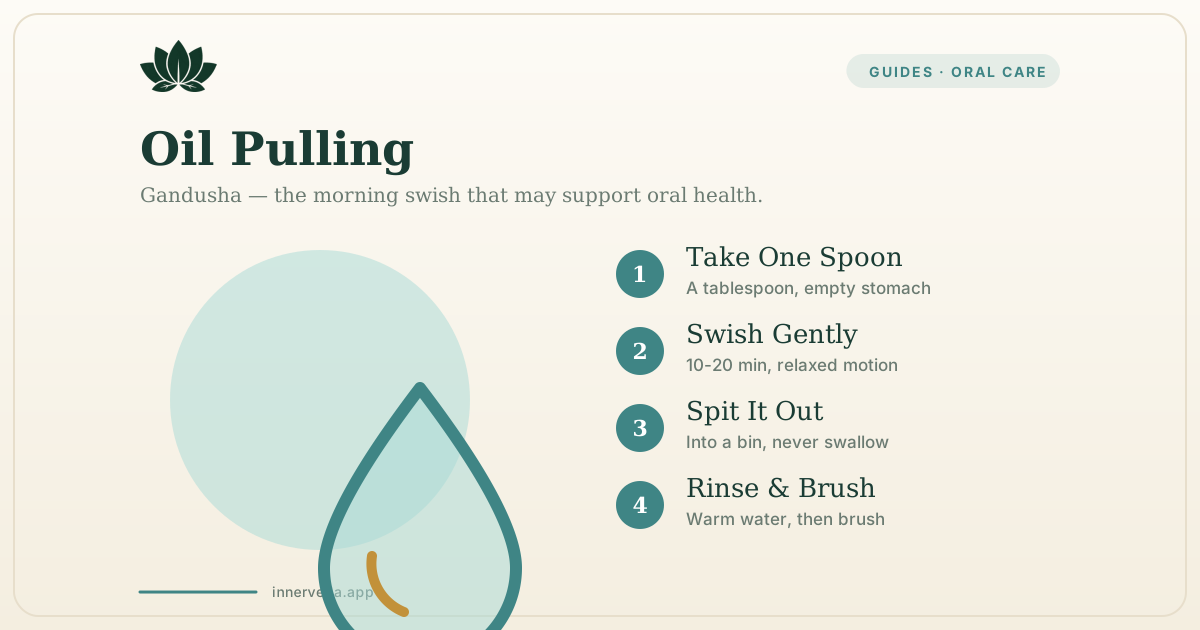
Oil pulling (gandusha) involves swishing a tablespoon of oil in the mouth for 10-20 minutes each morning. This Ayurvedic practice may support oral health by reducing harmful bacteria. Research suggests it can reduce plaque and gingivitis comparably to chlorhexidine mouthwash.
What Is Oil Pulling?
Oil pulling, known as Gandusha or Kavala Graha in Sanskrit, is one of the oldest documented oral health practices in the world. Described in the Charaka Samhita and the Sushruta Samhita, it involves holding or swishing oil in the mouth for an extended period to draw out impurities and support oral and systemic health.
In modern terms, oil pulling is a form of oral detoxification. The lipid-based oil attracts and traps bacteria, toxins, and debris in the mouth, which are then expelled when you spit out the oil.
Two Traditional Methods
Gandusha (Oil Holding)
The full classical practice: fill the mouth completely with oil and hold it without swishing. The mouth is held so full that swishing is impossible. Hold for as long as comfortable, then spit out. Best for: Therapeutic use, specific oral conditions
Kavala Graha (Oil Swishing)
The more commonly practised version: take a comfortable amount of oil (about 1 tablespoon) and swish it actively around the mouth. This is what most people mean by "oil pulling."
Best for: Daily maintenance, general oral health
How to Oil Pull: Step-by-Step Guide
What You Need
- 1 tablespoon of high-quality, organic oil
- A timer (optional but helpful)
- A bin or paper towel for spitting (do not spit oil down the drain. It can clog pipes.)
The Practice
- Timing: First thing in the morning, before eating, drinking, or brushing
- Measure: Place 1 tablespoon of oil in your mouth
- Swish gently: Move the oil around your mouth, between teeth, around gums, over the tongue. Use a relaxed, gentle motion, not vigorous
- Duration: Maintain for 10-20 minutes. If your jaw gets tired, you are swishing too vigorously
- Observe: The oil will become thinner, increase in volume (mixing with saliva), and turn milky-white
- Spit: Spit the oil into a bin or onto a paper towel. Never swallow it. By now it contains bacteria and debris.
- Rinse: Rinse your mouth thoroughly with warm water. Some people add a pinch of salt
- Brush: Follow with your normal brushing and flossing routine
Tips for Success
- Multitask: Oil pull while showering, making breakfast, or doing gentle morning activities
- Start short: Begin with 5 minutes and add 2-3 minutes each week until you reach 15-20
- Use warm oil: Slightly warming the oil makes it more comfortable, especially in winter
- Do not gargle: Keep the oil in the front of the mouth; avoid tilting your head back
- If you feel nauseous: Use less oil and reduce the duration
Best Oils by Dosha
Sesame Oil: Best for Vata
- Properties: Warming, heavy, nourishing
- Benefits: The traditionally preferred oil with the most research. Excellent for Vata's tendency toward dry gums, receding gumlines, and sensitivity
- Taste: Mild, slightly nutty
Coconut Oil: Best for Pitta
- Properties: Cooling, light, antimicrobial
- Benefits: Contains lauric acid, which has documented antimicrobial properties. Ideal for Pitta's tendency toward gum inflammation and bleeding
- Taste: Mild, pleasant for most people
Sunflower Oil: Best for Kapha
- Properties: Light, slightly warming, drying
- Benefits: Lighter than sesame, less sweet than coconut. Good for Kapha's tendency toward excess oral mucus and plaque buildup
- Taste: Neutral, minimal flavour
What the Research Says
Oil pulling has attracted increasing scientific attention, with several published studies:
Plaque and Gingivitis Reduction
A 2009 study in the Indian Journal of Dental Research found that oil pulling with sesame oil reduced plaque and gingivitis scores comparably to chlorhexidine mouthwash after 10 days of use.
Streptococcus mutans Reduction
Multiple studies have shown that oil pulling significantly reduces the count of Streptococcus mutans, the primary bacterium responsible for tooth decay, in saliva and plaque.
Halitosis (Bad Breath)
A 2011 study found that oil pulling was as effective as chlorhexidine in reducing the organisms that cause halitosis, with the added benefit of no taste disturbance or staining.
Mechanism of Action
Researchers propose several mechanisms:
- Saponification: The oil interacts with saliva to create a soap-like cleansing action
- Emulsification: Oil traps fat-soluble bacteria and toxins
- Mechanical cleaning: The swishing action physically dislodges debris from surfaces that brushing may miss
Beyond Oral Health: Traditional Benefits
Ayurvedic texts describe benefits that extend beyond the mouth:
- Jaw and facial muscle strength: The gentle exercise of swishing strengthens the muscles of the jaw and face
- Voice quality: Traditional texts associate oil pulling with improved vocal strength and clarity
- Skin clarity: The Ayurvedic connection between oral health and skin health
- Headache reduction: Some practitioners report fewer tension headaches
- Sinus support: The oral-nasal connection means oral health may influence sinus comfort
While these broader benefits have less research support, they are consistent with the Ayurvedic understanding of the mouth as a gateway to systemic health.
Common Mistakes to Avoid
- Swallowing the oil: The oil is now loaded with bacteria. Always spit it out.
- Using too much oil: 1 tablespoon is enough. More makes swishing difficult.
- Swishing too vigorously: Gentle is key. Aggressive swishing causes jaw fatigue.
- Not doing it long enough: Under 5 minutes gives minimal benefit. Aim for 10-20.
- Oil pulling after eating: Must be done on an empty stomach for maximum effect
- Replacing brushing: Oil pulling complements brushing. It does not replace mechanical cleaning.
- Spitting in the sink: Oil can solidify and clog drains. Use a bin.
Integrating Oil Pulling Into Your Morning
A practical morning sequence:
- Wake. Splash water on face.
- Tongue scraping. 7-14 strokes.
- Oil pulling. Begin swishing, then enter the shower.
- Shower (with abhyanga if time permits)
- Spit oil into a bin after exiting the shower
- Rinse and brush teeth
- Continue morning routine
Total added time to your morning: essentially zero, since it overlaps with showering.
Next Steps
- Start tomorrow morning. All you need is a tablespoon of sesame or coconut oil.
- Build the full routine. Read the complete Ayurvedic daily routine guide.
- Begin your journey. Follow our Start Ayurveda Today 7-day plan.
Frequently Asked Questions
Start with 5 minutes and gradually build to 15-20 minutes. The oil should become thin and milky-white when you are done, indicating it has mixed with saliva and drawn out impurities. Never swallow the oil. Always spit it out.
Sesame oil is the traditionally recommended oil in Ayurvedic texts and has the most research behind it. Coconut oil is a popular modern alternative with antimicrobial properties and a milder taste. Choose based on your dosha: sesame for Vata, coconut for Pitta, sunflower for Kapha.
Oil pull first thing in the morning on an empty stomach, before brushing your teeth and before drinking water. After spitting out the oil, rinse with warm water and then brush as normal.
No. Oil pulling is a complementary practice, not a replacement for brushing, flossing, or regular dental check-ups. Think of it as an additional layer of oral care that supports overall mouth health.
References & sources
- Effect of oil pulling on plaque and gingivitis— Journal of Indian Society of Periodontology, 2015
- Tongue cleaning and halitosis— Journal of Periodontology, 2005
- Asokan S et al. Effect of oil pulling on plaque induced gingivitis: a randomized, controlled, triple-blind study. Indian J Dent Res. 2009;20(1):47-51.— Indian Journal of Dental Research, 2009 (PMID 19336860)
- Asokan S et al. Effect of oil pulling on Streptococcus mutans count in plaque and saliva using Dentocult SM Strip mutans test: a randomized, controlled, triple-blind study. J Indian Soc Pedod Prev Dent. 2008;26(1):12-17.— Journal of Indian Society of Pedodontics and Preventive Dentistry, 2008 (PMID 18408265)
- Asokan S et al. Effect of oil pulling on halitosis and microorganisms causing halitosis: a randomized controlled pilot trial. J Indian Soc Pedod Prev Dent. 2011;29(2):90-94.— Journal of Indian Society of Pedodontics and Preventive Dentistry, 2011 (PMID 21911944)
- Peedikayil FC et al. Comparison of antibacterial efficacy of coconut oil and chlorhexidine on Streptococcus mutans: An in vivo study. J Int Soc Prev Community Dent. 2016;6(5):447-452.— Journal of International Society of Preventive & Community Dentistry, 2016 (PMC5109859)
Classical sources
- Charaka Samhita— Sutrasthana 5 (Matrashiteeya Adhyaya) 78-80
- Ashtanga Hridaya— Sutrasthana 22 (Gandushadi Vidhi) 11
- Sushruta Samhita— Chikitsasthana 24 (Anagatabadha Pratisedha — Prevention of Future Diseases) —
This article is for educational purposes only and reflects traditional Ayurvedic perspectives alongside selected research. It is not medical advice. Always consult a qualified healthcare provider before acting on any information presented here.
Written by
Ganesh Kompella
Founder, InnerVeda
Research assisted by Vaidya AI
Trained on 500+ classical Ayurvedic texts

Medically reviewed by Dr. Sheetal Rajput
BAMS (Bachelor of Ayurvedic Medicine & Surgery)
Practise this
Guided sessions that put this article into practice.
On the plate: Sesame Oil — how it affects Vata, Pitta and Kapha, and how to use it.
Continue Reading

Put this into practice
Take the free dosha assessment. Get a personalised wellness plan with nutrition, meditation, and daily routines matched to your body.
Find Your Dosha — Free~3 min · no signup