Start Ayurveda Today: Your First 7 Days, Step by Step
Begin your Ayurvedic journey with this practical 7-day plan. One simple daily practice builds into a foundational Ayurvedic routine by week's end.

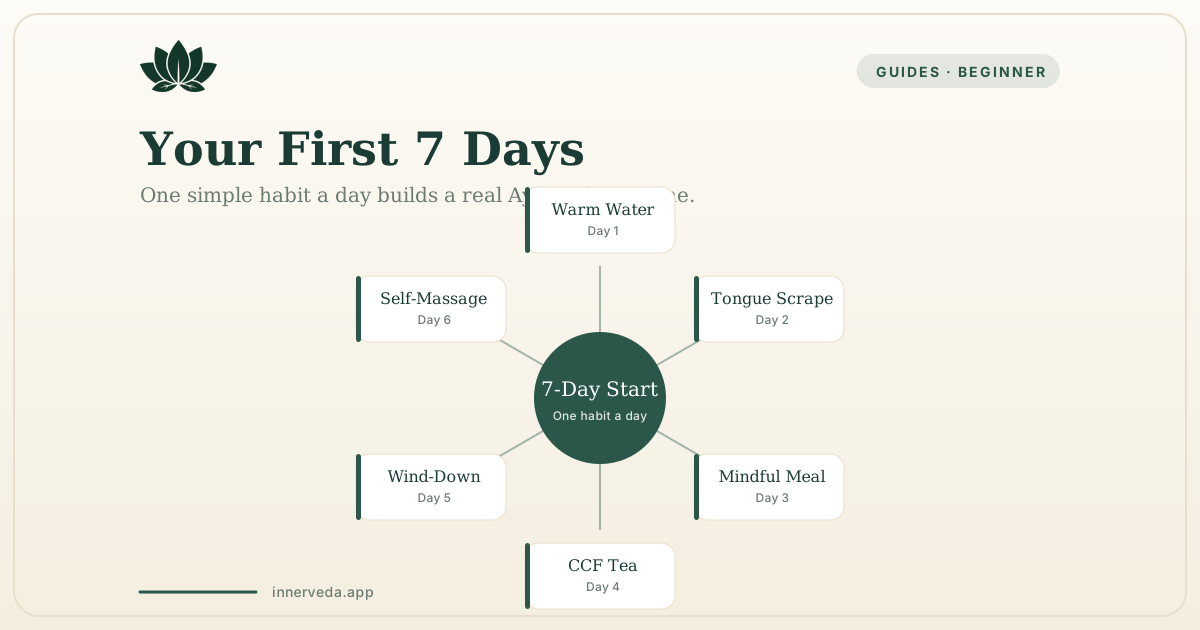
Start Ayurveda with one simple practice per day over seven days: warm water on day one, tongue scraping on day two, mindful eating on day three, and so on. By the end of the week, you will have built a foundational Ayurvedic routine without overwhelm.
Why Start Now?
Ayurveda can feel overwhelming at first. Ancient terminology, complex doshas, detailed dietary guidelines, elaborate daily routines. At its heart, though, Ayurveda is profoundly practical. It was designed to be lived, not just studied.
This 7-day plan strips Ayurveda down to its most accessible, most impactful practices. Each day introduces one new habit. By the end of the week, you will have a simple but genuine Ayurvedic foundation. And you will likely feel the difference.
Before You Begin
You will need:
- A copper or stainless steel tongue scraper (approximately 3-5 pounds)
- Organic sesame oil or coconut oil
- Common kitchen spices: cumin, coriander, fennel, ginger, turmeric
- A timer or clock
- An open mind
You do not need:
- To know your dosha (though it helps. Take our free quiz any time.)
- Special foods or supplements
- To make any dramatic lifestyle changes
- Prior knowledge of Ayurveda
Day 1: Warm Water
The practice: Upon waking, before doing anything else, drink a full glass of warm (not hot) water.
How to do it: Boil water the night before and leave it to cool to a comfortable drinking temperature in a thermos, or simply warm water in the morning. Drink it slowly, sitting down.
Why it matters: Warm water gently stimulates the digestive system after hours of rest, supports natural elimination, hydrates tissues, and flushes overnight toxins. It is the simplest yet most universally recommended Ayurvedic practice.
What you might notice: Many people experience improved bowel regularity within 2-3 days. You may also notice reduced morning grogginess.
Time required: 2 minutes
Day 2: Tongue Scraping
The practice: After warm water, scrape your tongue from back to front 7-14 times using a tongue scraper.
How to do it: Extend your tongue. Hold both ends of the scraper, place it at the back of the tongue, and draw forward with gentle pressure. Rinse the scraper between strokes. Follow with brushing your teeth as normal.
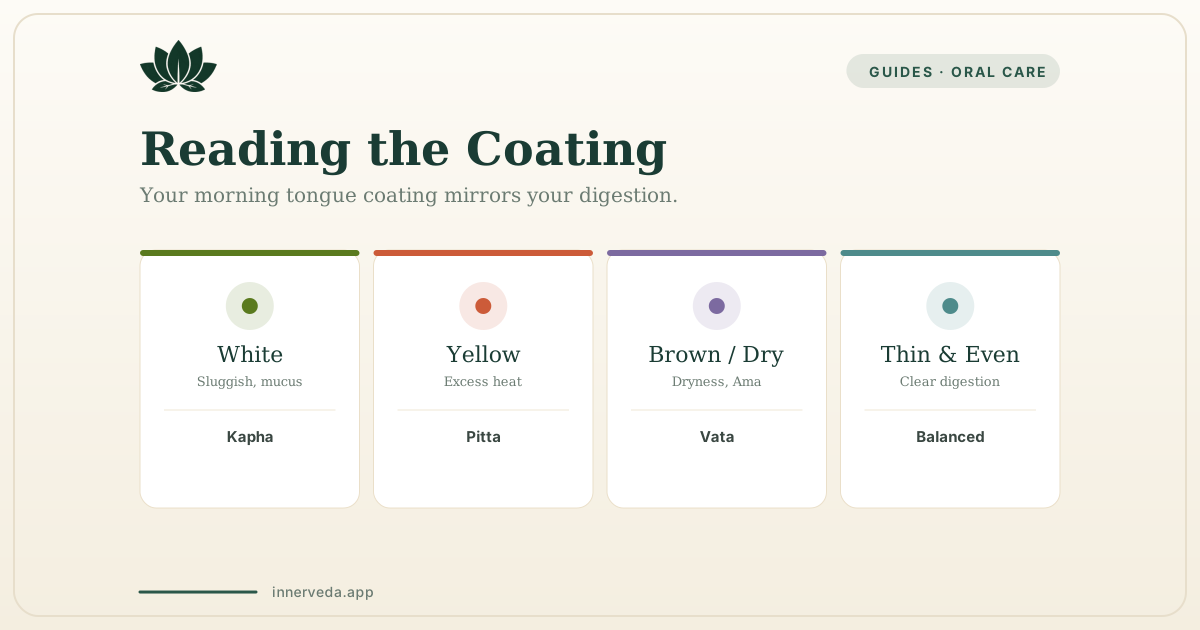
Why it matters: During sleep, your body deposits toxins (ama) on the tongue as part of its natural detoxification process. The morning tongue coating is a visible sign of this. Scraping removes these toxins before you swallow them back into your system.
What you might notice: Fresher breath, a cleaner mouth feel, and over time, you may notice that the amount and colour of the coating tells you about your digestive health.
Time required: 1 minute
Day 3: Mindful Eating at One Meal
The practice: Choose one meal (lunch is ideal) and eat it with full attention. No phone, no screen, no reading, no conversation about stressful topics.
How to do it:
- Sit down at a table
- Take one breath before your first bite
- Chew each bite thoroughly (aim for 15-20 chews)
- Put your utensil down between bites
- Notice the flavour, texture, and temperature of your food
- Stop eating when you feel about 75% full
Why it matters: Ayurveda teaches that how you eat is as important as what you eat. Distracted eating weakens agni (digestive fire), leading to incomplete digestion and ama production. Mindful eating is one of the most powerful digestive upgrades you can make.
What you might notice: You may feel more satisfied with less food. Bloating and heaviness after meals often decrease. You may also discover that you have been eating past fullness without realising it.
Time required: 0 extra minutes (you are eating anyway)
Day 4: Warm Spice Tea
The practice: Brew and sip CCF tea (cumin-coriander-fennel) throughout the day.
How to do it: In the morning, simmer 1/2 teaspoon each of cumin seeds, coriander seeds, and fennel seeds in 3-4 cups of water for 10 minutes. Strain into a thermos and sip warm throughout the day between meals.
Why it matters: CCF tea is the most universally recommended digestive tea in Ayurveda. It gently kindles agni, may reduce bloating and gas, and supports natural detoxification. All without aggravating any dosha.
What you might notice: Reduced bloating, more comfortable digestion, and a pleasant feeling of warmth and hydration throughout the day.
Time required: 5 minutes to prepare in the morning
Day 5: Evening Wind-Down
The practice: Begin a conscious wind-down routine starting 1 hour before your intended bedtime.
How to do it:
- Dim the lights in your home after 8 PM
- Reduce or eliminate screen exposure (phone, TV, computer) for the final hour
- Instead, choose: gentle stretching, reading a physical book, journaling, warm bath, or quiet conversation
- If desired, drink warm milk with a pinch of nutmeg and cardamom 30 minutes before bed
- Aim to be in bed by 10 PM
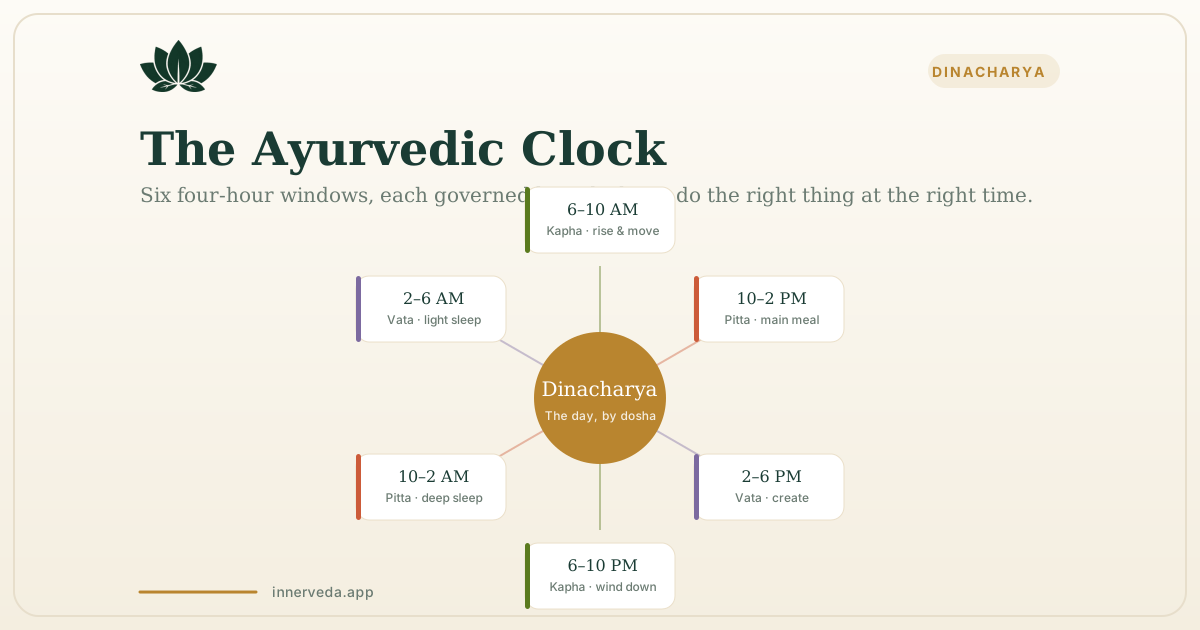
Why it matters: Ayurveda places enormous emphasis on sleep quality. The period between 6-10 PM is Kapha time, naturally calming and grounding. Working with this energy by winding down supports deeper sleep. The 10 PM bedtime prevents the "second wind" of Pitta energy (10 PM - 2 AM) that makes falling asleep difficult.
What you might notice: Faster time to fall asleep, fewer middle-of-the-night wakings, and a more refreshed feeling in the morning.
Time required: 0 extra minutes (replacing screen time with restful activities)
Day 6: Self-Massage (Abhyanga)
The practice: Before your morning shower, massage warm oil into your skin for 5-10 minutes.
How to do it:
- Warm 2-3 tablespoons of sesame oil (or coconut oil if you run warm) by placing the bottle in hot water for a few minutes
- Sit on an old towel
- Starting from the head (if washing hair) or the feet (if not), apply warm oil with long strokes on limbs and circular strokes on joints
- Massage gently but firmly for 5-10 minutes
- Let the oil sit for 5-10 minutes if time permits
- Shower as normal (the water will rinse most oil away while a nourishing layer remains)
Why it matters: Abhyanga (self-massage with oil) is considered one of the most powerful daily practices in Ayurveda. The Charaka Samhita states it delays ageing, relieves fatigue, pacifies Vata, nourishes the body, and improves sleep. The skin absorbs the oil, delivering nourishment to deeper tissues.
What you might notice: Softer skin, calmer nervous system, better sleep, and a general feeling of being more "held" and grounded. Many people report this becomes their favourite practice.
Time required: 10-15 minutes
Day 7: Bring It All Together
The practice: Combine all six practices into a single morning-to-evening routine.
Your Day 7 routine:
Morning (15-20 minutes):
- Wake before 6:30 AM
- Drink warm water
- Tongue scraping
- Self-massage with warm oil (5-10 minutes)
- Shower
- Prepare CCF tea for the day
Midday: 7. Eat lunch mindfully. No screens, chew well, stop at 75%. 8. Sip CCF tea between meals
Evening: 9. Light dinner by 7 PM 10. Begin wind-down at 9 PM. Dim lights, no screens. 11. Optional: warm spiced milk 12. In bed by 10 PM
What you might notice: A sense of rhythm and flow to your day. More energy in the morning, better digestion, calmer evenings, and improved sleep. You may also notice you are more aware of your body's signals: hunger, fatigue, thirst, emotion.
Week 2 and Beyond
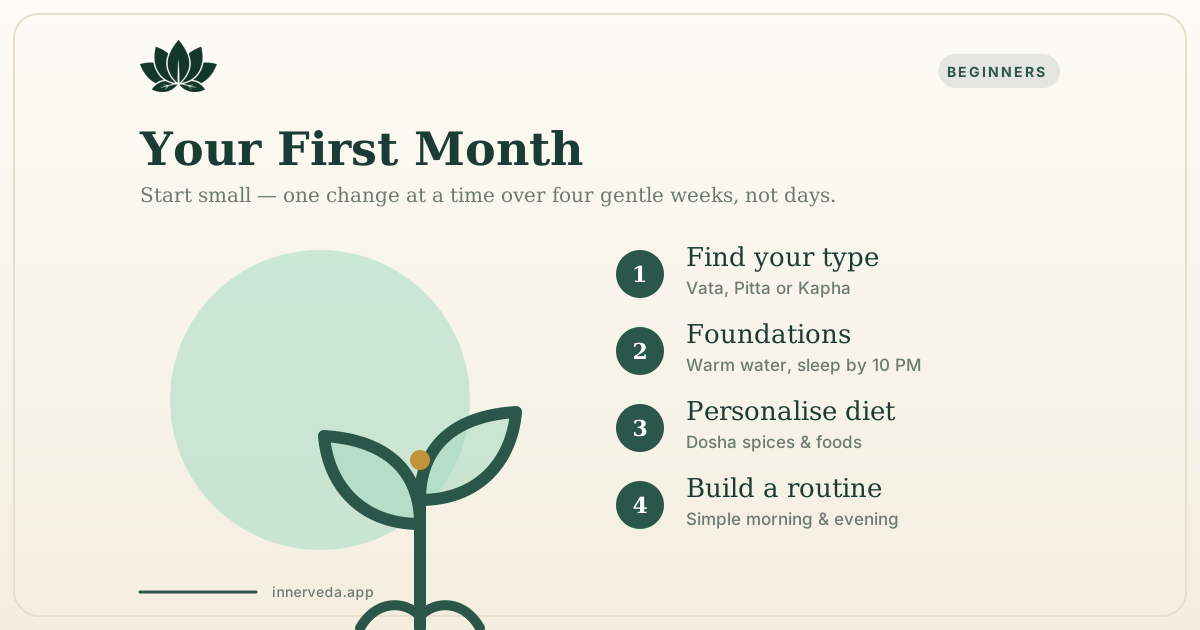
Once the seven foundational practices feel natural (give it 2-3 weeks), consider adding:
Level 2 Practices
- Oil pulling: Swish sesame or coconut oil in your mouth for 10 minutes during your shower. Read our oil pulling guide
- Gentle morning movement: 10 minutes of yoga stretches or sun salutations before breakfast
- Dosha-specific eating: Take the dosha quiz and begin adjusting your food choices
Level 3 Practices
- Full morning meditation: 10-15 minutes of seated meditation after movement
- Pranayama: Dosha-appropriate breathing exercises. See our pranayama guide
- Seasonal adjustments: Begin modifying your routine with the seasons
Level 4 Practices
- Nasya (nasal oiling): 2 drops of sesame oil in each nostril
- Seasonal cleansing: A 3-day kitchari cleanse at each seasonal transition
- Ayurvedic herbal support: With guidance from a qualified practitioner
Common Questions in the First Week
"I do not like warm water first thing." Start with room temperature and gradually increase warmth. Add a thin slice of lemon or ginger if plain water is unappealing.
"I cannot wake before 6:30." Start where you are and adjust by 10-15 minutes each week. Practising these habits at 7 AM is far better than not practising them at all.
"My schedule is different every day." Focus on consistency in the practices you can control. Even 3-4 of the seven practices done regularly will produce noticeable benefits.
"I forgot to practise." Simply resume the next day. Guilt is not Ayurvedic. Consistency over months and years is what transforms health.
Next Steps
- Discover your dosha. Take our free dosha quiz to personalise everything you have learned.
- Deepen your routine. Read the complete Ayurvedic daily routine guide.
- Learn the foundations. Explore Understanding Your Dosha for the complete beginner's guide.
Frequently Asked Questions
No. The practices in this 7-day plan are universally beneficial for all dosha types. Knowing your dosha helps you refine and personalise later, but you can begin experiencing Ayurveda's benefits immediately with these foundational practices.
The starter routine in this guide adds approximately 15-20 minutes to your morning. As you deepen your practice, a full Ayurvedic morning routine can take 45-90 minutes, but you can always adjust based on your schedule.
Simply continue where you left off. Ayurveda is a lifelong practice, not a 7-day challenge. Consistency over time matters more than perfection. Even practising 4-5 days per week yields significant benefits.
Very little. A tongue scraper (available at most chemists or online for a few pounds), a bottle of sesame or coconut oil, and some common kitchen spices are all you need for the first week.
References & sources
- Tongue cleaning and halitosis— Journal of Periodontology, 2005
- Effect of oil pulling on plaque and gingivitis— Journal of Indian Society of Periodontology, 2015
- Mindfulness meditation for chronic pain: systematic review and meta-analysis— JAMA Internal Medicine, 2014
Classical sources
- Charaka Samhita— Sutrasthana, Chapter 7 (Naveganadharaniya Adhyaya) 36-38
- Charaka Samhita— Sutrasthana, Chapter 5 (Matrashiteeya Adhyaya) 88-89
- Charaka Samhita— Sutrasthana, Chapter 5 (Matrashiteeya Adhyaya) (sthana-level only, verse unconfirmed) — likely 5/74-75
This article is for educational purposes only and reflects traditional Ayurvedic perspectives alongside selected research. It is not medical advice. Always consult a qualified healthcare provider before acting on any information presented here.
Written by
Ganesh Kompella
Founder, InnerVeda
Research assisted by Vaidya AI
Trained on 500+ classical Ayurvedic texts

Medically reviewed by Dr. Sheetal Rajput
BAMS (Bachelor of Ayurvedic Medicine & Surgery)
Practise this
Guided sessions that put this article into practice.
Continue Reading

Put this into practice
Take the free dosha assessment. Get a personalised wellness plan with nutrition, meditation, and daily routines matched to your body.
Find Your Dosha — Free~3 min · no signup