Tongue Scraping: A Daily Ayurvedic Practice
The Ayurvedic practice of tongue scraping: benefits for oral hygiene and digestion, how to use a copper scraper, and what your coating reveals.

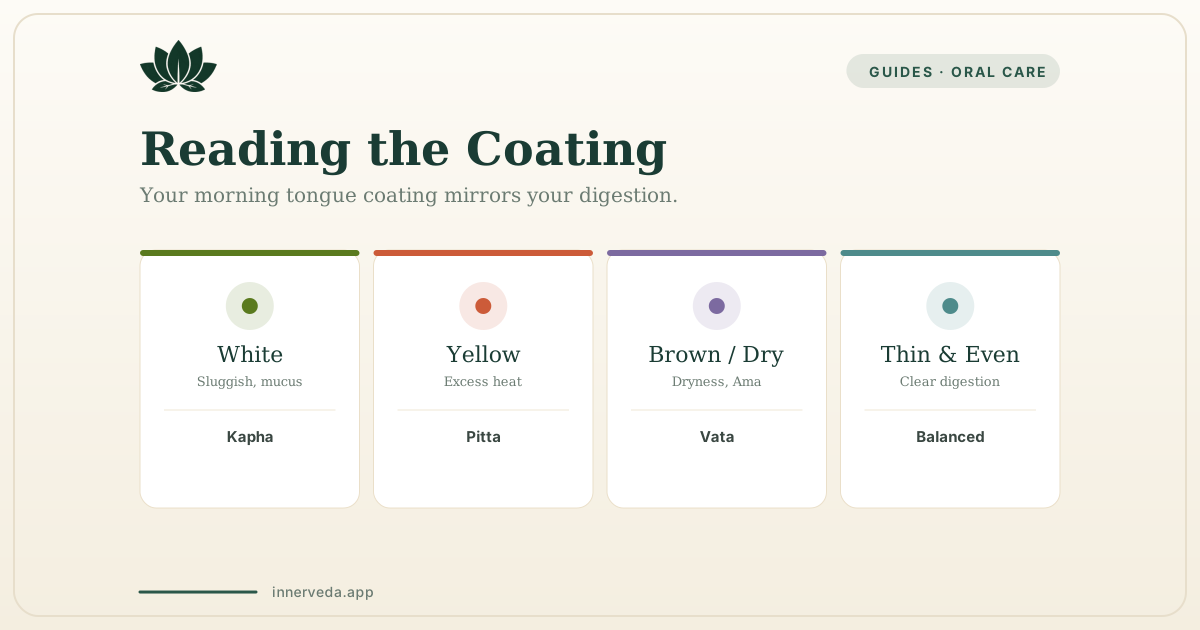
Tongue scraping (Jihwa Prakshalana) is a simple Ayurvedic morning practice that involves gently removing the coating from your tongue using a curved metal scraper. Traditionally performed with copper, it is believed to support oral hygiene, freshen breath, and stimulate digestive function.
What Is Tongue Scraping?
Tongue scraping, known as Jihwa Prakshalana or Jihwa Nirlekhana in Sanskrit, is one of the foundational practices of Ayurvedic daily self-care (Dinacharya). It involves using a thin, curved metal tool to gently remove the layer of coating that accumulates on the tongue overnight.
Referenced in classical texts including the Charaka Samhita and Sushruta Samhita, tongue scraping has been practised for thousands of years across the Indian subcontinent. The Charaka Samhita specifically recommends that the tongue cleaner be made of gold, silver, copper, tin, or brass, with a smooth, flexible design that does not injure the tongue.
While it may seem like a small addition to your morning routine, Ayurveda considers tongue scraping an important act of daily hygiene that may support both oral health and overall digestive function.
The Ayurvedic Reasoning: Ama on the Tongue
Central to understanding tongue scraping is the Ayurvedic concept of Ama, a term that broadly refers to undigested or incompletely processed metabolic waste. According to Ayurvedic theory, when digestion (Agni) is weak or impaired, Ama accumulates in the body and may manifest in various ways, including as a coating on the tongue.
Ayurveda teaches that the tongue is a mirror of the digestive system. The coating you see upon waking is traditionally understood as a visible sign of Ama that the body has processed and brought to the surface overnight. By removing this coating each morning, you are thought to be:
- Preventing the reabsorption of waste material that the body is trying to eliminate
- Stimulating the digestive organs through gentle activation of tongue nerve endings
- Supporting the sense of taste, which Ayurveda considers essential for proper digestion
- Encouraging mindful awareness of your body's daily condition
Modern dental research has also noted that the tongue harbours a significant portion of oral bacteria. A study in the Journal of Periodontology found that mechanical cleaning of the tongue surface significantly reduces bacterial load and volatile sulphur compounds associated with bad breath.
How to Scrape Your Tongue: Step-by-Step
What You Need
A dedicated tongue scraper is the preferred tool. Ayurveda traditionally recommends copper for its natural antimicrobial properties, though stainless steel is also widely used and effective. Look for a U-shaped or curved design with smooth, rounded edges.
The Technique
- Practice first thing in the morning, before eating, drinking, or brushing your teeth
- Stand in front of a mirror and open your mouth wide, extending your tongue comfortably
- Place the scraper at the back of your tongue, as far back as is comfortable without triggering a gag reflex
- Apply gentle, even pressure and draw the scraper forward in one long stroke from back to front
- Rinse the scraper under running water after each stroke to remove the collected debris
- Repeat 5-10 times, or until the tongue appears clean and the scraper comes away without significant residue
- Rinse your mouth with warm water when finished
- Clean your scraper thoroughly and store it in a dry place
Important Guidelines
- Never scrape so hard that it hurts. The pressure should be firm but gentle, similar to spreading butter on soft bread
- Work from back to front only. Do not scrape side to side or front to back
- If you gag easily, start with strokes from the middle of the tongue and gradually work further back as you become more comfortable over days and weeks
- Replace your scraper if it becomes bent, corroded, or develops rough edges
When to Practice Tongue Scraping
Ayurveda is quite specific about timing. Tongue scraping should be performed every morning upon waking, ideally before consuming anything, even water. This timing is considered important because:
- The overnight accumulation of coating is at its peak
- The body has completed its natural overnight detoxification cycle
- Removing the coating before eating prevents it from being reintroduced into the digestive system
Morning is the primary recommended time. Some practitioners also suggest a gentle scrape before bed, particularly if you notice significant coating after your evening meal. The morning practice is the most important.
Consistency is key. Like most Ayurvedic daily practices, the benefits of tongue scraping are thought to be cumulative. A daily 30-second practice is considered far more valuable than occasional deep cleaning sessions.
What Your Tongue Coating May Indicate
In Ayurvedic assessment (Jihwa Pariksha), the tongue is examined for colour, coating, shape, and moisture as part of a holistic health evaluation. While formal tongue diagnosis should be left to trained Ayurvedic practitioners, being aware of general patterns can help you tune into your body's signals.
Coating Colour
- White or pale coating: Traditionally associated with Kapha imbalance. May suggest sluggish digestion, excess mucus, or accumulation of Ama.
- Yellow or greenish coating: Often linked to Pitta imbalance. May indicate excess heat in the digestive system or liver.
- Brown or dark coating: Sometimes associated with Vata imbalance. May suggest dryness or the presence of accumulated toxins.
Coating Location
Ayurveda maps the tongue to different organs and systems:
- Back of the tongue: associated with the colon and kidneys
- Middle of the tongue: associated with the stomach and spleen
- Front/tip of the tongue: associated with the lungs and heart
- Sides of the tongue: associated with the liver and gallbladder
Coating Thickness
- Thin, even coating: generally considered normal and healthy
- Thick, heavy coating: may suggest stronger Ama accumulation or digestive sluggishness
- No coating at all: it may seem ideal, but a completely dry tongue with no moisture can indicate Vata imbalance or dehydration
Dosha Considerations
While tongue scraping is recommended for all doshas, Ayurveda suggests subtle adjustments based on your dosha.
Vata Types
Vata individuals may notice a thin, dry, or brownish coating, particularly during cold, dry seasons or periods of stress. If your tongue feels dry or sensitive:
- Use a copper scraper with particularly smooth edges
- Apply very light pressure
- Follow scraping with a sip of warm water or warm sesame oil swishing (Gandusha)
- Be consistent. Vata types benefit most from routine.
Pitta Types
Pitta individuals may observe a yellowish or reddish coating, especially during summer or after spicy foods. The tongue may also appear more red than usual:
- Use gentle pressure to avoid irritating sensitive tissue
- A silver or stainless steel scraper may feel more cooling than copper
- Follow with cool or room-temperature water
- Notice if the coating increases after particular foods. That can guide dietary adjustments.
Kapha Types
Kapha individuals tend to produce the most noticeable tongue coating. Often thick and white, particularly in the morning or during spring:
- You may need a few extra strokes compared to other types
- Copper is particularly well suited for Kapha types due to its warming, stimulating quality
- Follow with warm water with a squeeze of lemon to further support digestion
- Tongue scraping is especially important for Kapha types as part of their morning activation routine
Potential Benefits of Tongue Scraping
While more rigorous clinical research is needed, both traditional Ayurvedic texts and preliminary modern studies suggest several potential benefits:
- Fresher breath: Research confirms that removing bacteria and debris from the tongue surface helps reduce the volatile sulphur compounds that contribute to halitosis
- Improved taste perception: Clearing the coating from taste buds may enhance your ability to perceive the six tastes (sweet, sour, salty, pungent, bitter, astringent) that Ayurveda considers essential for balanced eating
- Digestive stimulation: Ayurveda teaches that gently stimulating the tongue activates saliva production and signals the digestive organs to prepare for food
- Oral hygiene support: Studies have shown that tongue cleaning can reduce the overall bacterial count in the mouth
- Daily self-awareness: Observing your tongue each morning creates a simple feedback loop about your digestive health and general wellbeing
Common Mistakes to Avoid
- Using a toothbrush instead of a scraper. While better than nothing, toothbrush bristles tend to redistribute bacteria rather than remove it. A flat metal scraper is significantly more effective at clearing the tongue surface
- Scraping too aggressively. The tongue is sensitive tissue. If you see blood or feel pain, you are pressing too hard
- Skipping it when the tongue looks clean. Even a tongue that appears coating-free can benefit from gentle scraping as part of your daily routine
- Using a dirty scraper. Always rinse your scraper thoroughly after each use and allow it to dry completely. Periodically sterilise it with boiling water
- Forgetting to follow up with oral care. Tongue scraping works best as part of a complete oral hygiene routine that includes brushing, flossing, and optionally oil pulling
Getting Started
Tongue scraping is one of the simplest and most accessible Ayurvedic practices to adopt. Here is a minimal approach to begin:
- Purchase a copper or stainless steel tongue scraper. Widely available online and at health stores for a modest cost.
- Place it next to your toothbrush so you see it each morning
- Start with 5 gentle strokes each morning before brushing
- Observe your tongue briefly each day. Notice patterns in colour and coating.
- Build from there. Once the habit is established (usually 1-2 weeks), you can integrate it into a fuller Ayurvedic morning routine.
Like many Ayurvedic practices, tongue scraping is deceptively simple. Its value lies not in complexity but in consistency. A small daily act of self-care that connects you to the ancient wisdom of listening to your body's signals.
References & Sources
Clinical Research
- Pedrazzi V, Sato S, de Mattos Mda G, Lara EH, Panzeri H. "Tongue-cleaning methods: a comparative clinical trial employing a toothbrush and a tongue scraper." Journal of Periodontology, 2004. PubMed
- Outhouse TL, Al-Alawi R, Fedorowicz Z, Keenan JV. "Tongue scraping for treating halitosis." Cochrane Database of Systematic Reviews, 2006. PubMed
- Acar B, Ozcelik F, Turgut S, et al. "Tongue cleaning and its relation to halitosis and oral hygiene." International Journal of Dental Hygiene, 2013. PubMed
Classical Texts
- Charaka Samhita, Sutra Sthana, Chapter 5 (Matrashiteeya Adhyaya, on daily hygiene practices). Available at Wisdom Library
The information in this article is intended for educational purposes and reflects traditional Ayurvedic perspectives. It is not a substitute for professional medical or dental advice, diagnosis, or treatment. If you have persistent oral health concerns, unusual tongue coatings, or any medical condition, please consult a qualified healthcare provider. Always seek the advice of your dentist or physician with any questions you may have regarding a medical condition.
Frequently Asked Questions
Ayurveda recommends tongue scraping every morning as part of your Dinacharya (daily routine), ideally first thing after waking and before drinking water. Most practitioners suggest 5-10 gentle strokes from back to front. Consistency matters more than duration. Even a quick 30-second session may support oral freshness throughout the day.
Ayurveda traditionally favours copper for tongue scraping because copper has natural antimicrobial properties that have been validated by modern research. Stainless steel is also a good option and is more affordable. Both are considered superior to plastic scrapers, which may harbour bacteria more easily and lack the smooth edge needed for effective, gentle scraping.
No. Tongue scraping is meant to complement your oral hygiene routine, not replace brushing or flossing. It targets the tongue surface specifically, where bacteria and debris accumulate overnight. For best results, scrape your tongue first thing in the morning, then follow with brushing and flossing as normal.
In Ayurvedic tradition, a white coating on the tongue is generally associated with Kapha imbalance and the accumulation of Ama (metabolic waste). It may suggest sluggish digestion or excess mucus in the system. However, tongue coatings can have many causes, and persistent or unusual coatings should be discussed with a healthcare professional.
Tongue scraping is generally considered safe for most adults when done gently. If you have oral sores, cuts on your tongue, or any active oral health condition, it is best to wait until healing is complete or consult your dentist. Children should be supervised, and the practice should always be gentle, never forceful enough to cause discomfort or bleeding.
References & sources
- Tongue cleaning and halitosis— Journal of Periodontology, 2005
- Prakriti and its associations with metabolism, chronic diseases, and genotypes— Journal of Ayurveda and Integrative Medicine, 2014
- Pedrazzi V, Sato S, de Mattos MdG, Lara EHG, Panzeri H. Tongue-cleaning methods: a comparative clinical trial employing a toothbrush and a tongue scraper.— Journal of Periodontology, 2004; 75(7):1009-1012
- Outhouse TL, Fedorowicz Z, Keenan JV, Al-Alawi R. A Cochrane systematic review finds tongue scrapers have short-term efficacy in controlling halitosis.— General Dentistry, 2006; 54(5):352-359 (summarising Cochrane Database Syst Rev CD005519)
- Almas K, Al-Sanawi E, Al-Shahrani B. The effect of tongue scraper on mutans streptococci and lactobacilli in patients with caries and periodontal disease.— Odonto-Stomatologie Tropicale (Tropical Dental Journal), 2005; 28(109):5-10
- Acar B, Berker E, Tan Ç, İlarslan YD, Tekçiçek M, Tezcan İ. Effects of oral prophylaxis including tongue cleaning on halitosis and gingival inflammation in gingivitis patients—a randomized controlled clinical trial.— Clinical Oral Investigations, 2019; 23(4):1829-1836
Classical sources
- Charaka Samhita— Sutrasthana, Chapter 5 (Matrashiteeya Adhyaya), verses 74-75 5.74-75
- Ashtanga Hridaya— Sutrasthana, Chapter 2 (Dinacharya Adhyaya), verse 4 2.4
This article is for educational purposes only and reflects traditional Ayurvedic perspectives alongside selected research. It is not medical advice. Always consult a qualified healthcare provider before acting on any information presented here.
Written by
Ganesh Kompella
Founder, InnerVeda
Research assisted by Vaidya AI
Trained on 500+ classical Ayurvedic texts

Medically reviewed by Dr. Sheetal Rajput
BAMS (Bachelor of Ayurvedic Medicine & Surgery)
Practise this
Guided sessions that put this article into practice.
Continue Reading
Oil Pulling: The Ayurvedic Morning Practice Backed by Research
The Complete Ayurvedic Daily Routine (Dinacharya) Guide

Ayurvedic Morning Routine (Dinacharya): Your Daily Foundation
Ayurveda for Beginners: Where to Start (2026 Guide)
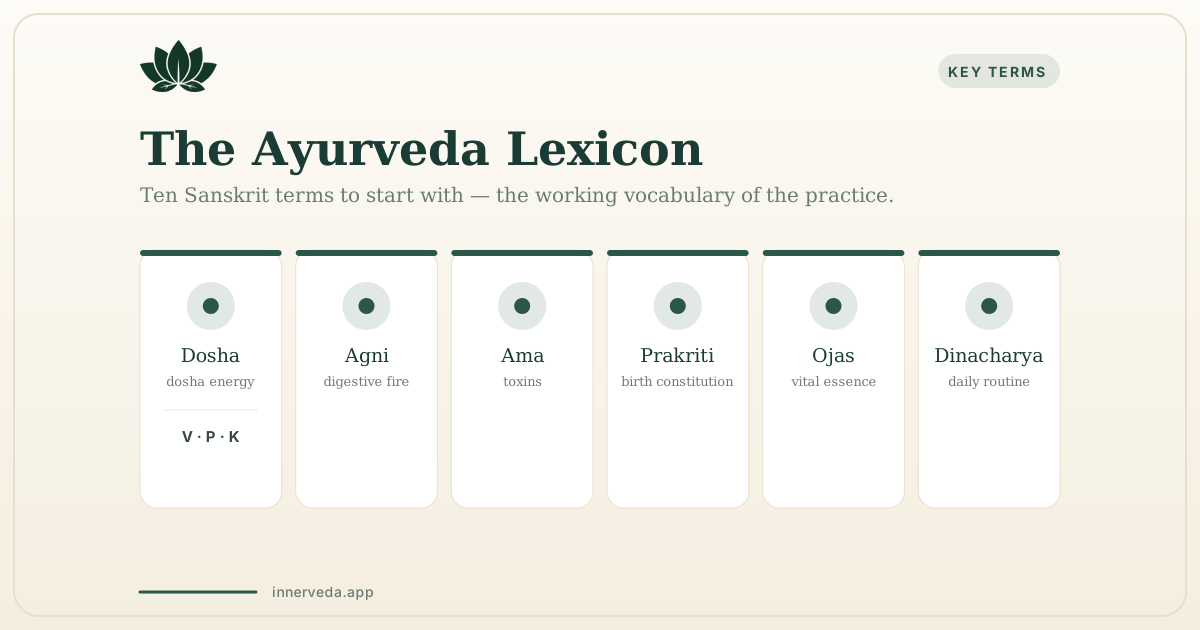
Ayurveda Glossary: 50 Key Terms Explained Simply
Put this into practice
Take the free dosha assessment. Get a personalised wellness plan with nutrition, meditation, and daily routines matched to your body.
Find Your Dosha — Free~3 min · no signup