InnerVeda · Learn
Sattvic diet: the satvic food list, what to avoid and how to start
A sattvic (satvic) diet is fresh, light vegetarian food said to support a calm mind. Full food list, rajasic and tamasic foods to avoid, and coffee.

Reviewed by Dr Sheetal Rajput
Medical Reviewer, Ayurveda Physician (BAMS)4 March 2026 · Updated 19 October 2026 · 8 min read
Quick answer
A sattvic diet (also spelt satvic) is a way of eating built on fresh, light, wholesome vegetarian food, such as fruit, vegetables, whole grains, moong dal, nuts, milk and ghee, prepared simply and eaten calmly. In yoga and Ayurveda it is said to support a clear, steady mind. It limits rajasic foods that overstimulate, like very spicy food and coffee, and tamasic foods that dull, like stale, processed food and alcohol.
Find your dosha — a free wellness quiz, about three minutes.
What Ayurveda and yoga mean by sattvic food, a clear list of what to eat and what to limit, and how to adapt it to your dosha.
What are Sattvic, rajasic and tamasic foods?
Table 1. The three gunas of food at a glance
| Guna | Qualities | Example foods | Traditional effect on the mind |
|---|---|---|---|
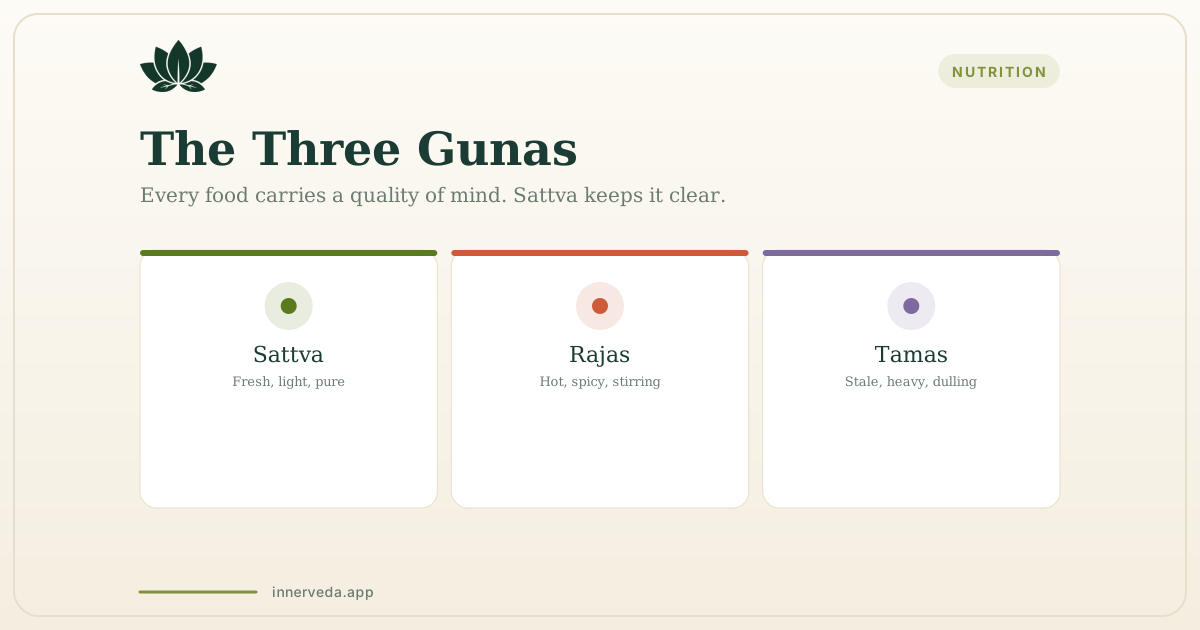
| Sattvic (sattva) | Fresh, light, nourishing, naturally tasty | Fresh fruit, vegetables, whole grains, moong dal, nuts, milk, ghee | Clarity, calm, contentment |
| Rajasic (rajas) | Very hot, spicy, sour, salty, dry, stimulating | Chilli-heavy dishes, coffee, strong tea, excess onion and garlic, fried snacks | Restlessness, drive, agitation |
| Tamasic (tamas) | Stale, heavy, overcooked, processed, decomposed | Leftovers kept too long, reheated and processed food, alcohol, meat | Dullness, heaviness, low motivation |
Sources: Bhagavad Gita 17.8, 17.9 and 17.10. The placement of coffee, tea, onion, garlic and meat follows later yogic and Ayurvedic tradition, not the Gita’s text.
What is a Sattvic diet?
In Indian philosophy, everything in nature, food included, carries three qualities called gunas. Sattva is clarity and balance. Rajas is movement and stimulation. Tamas is heaviness and inertia. A sattvic diet favours foods with more sattva.
The idea is old. The Bhagavad Gita says people drawn to sattva prefer foods that promote life span, virtue, strength, health, happiness and satisfaction, and describes them as juicy, nourishing and naturally tasty (Bhagavad Gita 17.8). It describes rajasic foods as too bitter, sour, salty, hot, pungent, dry or burning (17.9), and tamasic foods as stale, tasteless, decomposed or left over (17.10).
You will see it spelt both "sattvic" and "satvic". They mean the same thing; "sattvic" is closer to the Sanskrit sāttvika.
A sattvic diet is vegetarian, but not all vegetarian food is sattvic. A packet of crisps or a reheated, day-old curry is vegetarian, yet in this tradition it counts as tamasic. Freshness, simplicity and the way food is cooked and eaten matter as much as the ingredients.
What is on the satvic food list?
Table 2. Satvic food list by group
| Food group | Favour | Notes |
|---|---|---|
| Fruit | Mango, pomegranate, figs, apples, pears, bananas, grapes, berries | Fresh and in season |
| Vegetables | Most fresh vegetables: gourds, leafy greens, carrots, sweet potato, courgette | Lightly cooked and freshly made |
| Grains | Rice (especially basmati), wheat, oats, barley, millet | Freshly cooked |
| Pulses | Moong dal above all; also masoor and other easy-to-digest dals | Charaka names moong the best of pulses |
| Dairy | Fresh milk, ghee, fresh curd or buttermilk, paneer | Fresh, and suited to your digestion |
| Nuts and seeds | Soaked almonds, cashews, walnuts, sesame, sunflower and pumpkin seeds | In moderation |
| Sweeteners | Jaggery, honey (never heated), dates | In moderation |
| Spices and herbs | Cumin, coriander, fennel, cardamom, turmeric, ginger, saffron, fresh herbs | Gentle amounts |
Sources: Bhagavad Gita 17.8; Charaka Samhita, Sutrasthana 25 (moong, or green gram, as the most wholesome pulse); Charaka Samhita, Sutrasthana 27.246 (heated honey).
A few notes on the list:
- Moong dal has a special place. The Charaka Samhita names green gram (mudga) as the most wholesome of all pulses (Charaka Samhita, Sutrasthana 25). That is why kitchari, rice and moong cooked together, is the classic sattvic meal. Try our kitchari recipe.
- Ghee is treated as the most sattvic fat. Read more in our ghee guide.
- Milk is traditionally taken warm and on its own, rather than with a full meal.
Which foods should you avoid on a Sattvic diet?
The sattvic approach is about leaning away from these, not banning them outright:
- Very spicy, sour or salty food. Rajasic: stimulating in excess.
- Excess onion and garlic. Classed as rajasic in many yogic and Hindu traditions. Many people on a sattvic diet leave them out altogether; others simply use less.
- Coffee, strong tea and energy drinks. Rajasic: see the coffee question below.
- Stale food and long-kept leftovers. Tamasic. Ayurveda prefers food cooked and eaten the same day.
- Ultra-processed and packaged foods. Tamasic in this tradition, and modern research also links high intake with poorer health (see below).
- Deep-fried food. Heavy and dulling.
- Alcohol. Tamasic.
- Meat, fish and eggs. Traditionally excluded from a sattvic diet.
- Refined sugar in large amounts. Heavy and dulling in excess.
Is coffee Sattvic?
No. In yogic and Ayurvedic tradition coffee is considered rajasic, because it is stimulating, heating and drying. It sharpens the mind briefly but can leave you restless, which is the opposite of the steady clarity sattva describes. A cup of milky tea is often treated the same way, though milder.
That does not mean you have to give it up overnight. If you are moving towards a sattvic diet, many people:
- keep coffee to the morning only, and after food rather than on an empty stomach;
- swap one cup for a herbal tea such as fennel, mint or tulsi, or for warm water with a little ginger;
- notice how they feel on days with less coffee.
By dosha, Pitta and Vata often feel the downsides of coffee most (heat, acidity, jitters), while Kapha tends to tolerate it better. Our Ayurvedic teas guide has caffeine-free ideas.
How do you eat Sattvically, beyond the food itself?
A sattvic diet is as much about how you eat as what you eat.
- Cook fresh. Make meals the same day where you can.
- Keep it simple. One-pot meals and a few well-chosen spices.
- Eat calmly. Sit down, no screens, no rushing, no arguments at the table.
- Pause before eating. Many traditions take a moment of thanks before a meal.
- Eat at regular times. Consistency supports digestion (agni).
- Stop before you are stuffed. Leave room in the stomach.
- Cook with a settled mind. Ayurveda holds that the cook's state of mind goes into the food.
How do you adapt a Sattvic diet to your dosha?
Sattvic eating suits all three doshas, but each leans on different parts of the list.
- Vata: favour warm, cooked, slightly oily sattvic foods: cooked grains, root vegetables, ghee, warm milk, soaked nuts. Limit raw salads and dry snacks. See the Vata hub and the Vata meal plan.
- Pitta: favour cooling sattvic foods: sweet fruit, coconut, leafy greens, basmati rice, milk and ghee. Go easy on sour curd and very spicy seasoning. See the Pitta hub and the Pitta meal plan.
- Kapha: favour lighter sattvic foods: moong dal, steamed vegetables, barley, millet, a little honey. Keep heavy dairy, sweets and large portions down. See the Kapha hub and the Kapha meal plan.
What does a simple Sattvic day look like?
- On waking: a glass of warm water.
- Breakfast: stewed apple or pear with cardamom and cinnamon, or a small bowl of porridge.
- Mid-morning: soaked almonds and a piece of seasonal fruit.
- Lunch (the main meal): basmati rice with moong dal, a lightly cooked vegetable, a little ghee and fresh coriander.
- Afternoon: a herbal tea, such as fennel or tulsi.
- Dinner (light and early): vegetable soup or a small bowl of kitchari.
You do not need to change everything at once. Start with one sattvic meal a day, often breakfast or lunch, and build from there. For more morning ideas, see our Ayurvedic breakfast ideas.
What does research say about Sattvic-style eating?
No large studies have tested the sattvic diet as a whole, and research does not measure "sattva". But some of its habits match well-studied ideas.
- Less ultra-processed food: an umbrella review in the BMJ pooled 45 analyses and found that higher intake of ultra-processed food was linked with poorer health on a wide range of measures, with the strongest evidence for deaths from cardiovascular disease (Lane et al., BMJ 2024). These are observational links, not proof of cause.
- Mindful eating: a meta-analysis of mindfulness-based programmes found moderate effects on weight loss and larger effects on problem eating behaviours, mostly from before-and-after comparisons (Carrière et al., Obesity Reviews 2018).
So the parts of a sattvic diet that are easiest to test, fresh whole food, less processed food and calmer eating, line up with mainstream nutrition advice. The claims about the mind come from tradition, not trials.
When to see your doctor
- A sattvic diet is a traditional way of eating, not a treatment. If you have a diagnosed condition such as diabetes, kidney disease or a thyroid condition, your doctor's advice comes first.
- If you cut out food groups, make sure you still get enough protein, for example from dal, tofu, curd or paneer.
- Avoid long fasts and very restrictive eating unless a doctor or qualified practitioner is guiding you. If you take medicines for diabetes, do not fast without checking with your doctor first.
- If you are pregnant or breastfeeding, or planning a big change for a child's diet, check with your doctor or midwife first.
- See a doctor if a digestive problem lasts more than 3 weeks or diarrhoea lasts more than 7 days, or sooner if you notice blood in your stools or vomit, black stools, weight loss you cannot explain, repeated vomiting, difficulty swallowing or severe stomach pain.
How we wrote this
Drafted by the InnerVeda team from the Bhagavad Gita, the Charaka Samhita and the studies linked above.
Updated 19 October 2026: added the satvic spelling, the three gunas, full food lists, the coffee and onion questions and a research section.
Frequently asked questions
Sattvic foods are fresh, light and wholesome: seasonal fruit and vegetables, whole grains such as rice, wheat, oats and millet, moong dal and other easy dals, fresh milk, ghee, curd, soaked nuts and seeds, and gentle spices such as cumin, coriander, fennel and cardamom. They are freshly cooked, simply prepared and eaten calmly, and are traditionally said to support a clear, steady mind.
Lean away from rajasic foods, which overstimulate, such as very spicy, sour or salty dishes, coffee, strong tea and, in many traditions, onion and garlic. Also limit tamasic foods, which dull, such as stale leftovers, reheated and ultra-processed food, deep-fried snacks, alcohol and meat. The aim is to shift the balance gradually, not to be perfect.
Traditionally, coffee is classed as rajasic, so a strict sattvic diet leaves it out. In practice, many people keep one cup in the morning after food and replace the rest with herbal teas such as fennel, mint or tulsi. Pitta and Vata usually feel coffee's heat and jitters most, while Kapha tends to cope with it better.
In many yogic and Hindu traditions onion and garlic are classed as rajasic, and sometimes tamasic, so a strict sattvic diet avoids them. Ayurveda itself values garlic as a warming food in some situations, especially for Vata and Kapha. If you follow a sattvic diet for spiritual practice, leave them out; otherwise, using less is a reasonable middle way.
No. A sattvic diet is vegetarian, but plenty of vegetarian food is not sattvic. Crisps, instant noodles, deep-fried snacks and food reheated several times are vegetarian, yet in this tradition they count as tamasic. A sattvic diet also asks for fresh, simply cooked food eaten calmly. Make sure you still get enough protein from dal, tofu, curd or paneer.
Yes. "Satvic" and "sattvic" are two English spellings of the same Sanskrit word, *sāttvika*, meaning "of the quality of sattva", or clarity and balance. "Sattvic" is closer to the Sanskrit, while "satvic" is common in India and online. Both describe the same fresh, light, vegetarian way of eating.
References & sources
- Bhagavad Gita 17.8
- Bhagavad Gita 17.9
- Bhagavad Gita 17.10
- Charaka Samhita, Sutrasthana, Chapter 25 (Yajjah Purushiya Adhyaya)
- Charaka Samhita, Sutrasthana, Chapter 27 (Annapanavidhi Adhyaya)
- Lane MM et al. Ultra-processed food exposure and adverse health outcomes: umbrella review of epidemiological meta-analyses. BMJ 2024
- Carrière K et al. Mindfulness-based interventions for weight loss: a systematic review and meta-analysis. Obesity Reviews 2018
Your dosha is the balance of Vata, Pitta and Kapha you were born with. Take the dosha quiz — free, about 3 minutes.
Find your dosha — a free wellness quiz, about three minutes.
Three questions towards your dosha
These are the first three questions of the full dosha quiz. Answer them here and carry on where you left off.
Prefer to start from the beginning? Take the full dosha quiz.
This article is for educational purposes only and reflects traditional Ayurvedic perspectives alongside selected research. It is not medical advice. Always consult a qualified healthcare provider before acting on any information presented here.
Written by
Ganesh Kompella
Founder, InnerVeda
Research assisted by Vaidya AI
Trained on 500+ classical Ayurvedic texts

Medically reviewed by Dr Sheetal Rajput
BAMS (Bachelor of Ayurvedic Medicine & Surgery)
Practise this
Guided sessions that put this article into practice.
On the plate: Ghee — how it affects Vata, Pitta and Kapha, and how to use it.
Continue reading
Ayurvedic diet: how to eat for your dosha
Ayurvedic Breakfast Ideas: 15 Warm, Simple Breakfasts by Dosha
The Six Tastes of Ayurveda: What Each Does and How to Use Them
Vata Diet: Best Foods, Recipes & 7-Day Meal Plan
Anti-Inflammatory Foods in Ayurveda: A Dosha Guide
Put this into practice
Take the free dosha assessment. Get a personalised wellness plan with nutrition, meditation, and daily routines matched to your body.
Find Your Dosha — Free~3 min · no sign-up