InnerVeda · Learn
The Six Tastes of Ayurveda: What Each Does and How to Use Them
Ayurveda’s six tastes (shad rasa): sweet, sour, salty, pungent, bitter and astringent. A chart of elements, dosha effects and foods, plus the verse.

Reviewed by Dr Sheetal Rajput
Medical Reviewer, Ayurveda Physician (BAMS)30 January 2026 · Updated 18 October 2026 · 7 min read
Quick answer
Ayurveda names six tastes, or shad rasa: sweet, sour, salty, pungent, bitter and astringent. Sweet, sour and salty settle Vata and build Kapha. Bitter, pungent and astringent settle Kapha and raise Vata. Sweet, bitter and astringent cool Pitta, while sour, salty and pungent heat it. A balanced Ayurvedic meal leans on the tastes that suit your dosha and includes a little of the rest.
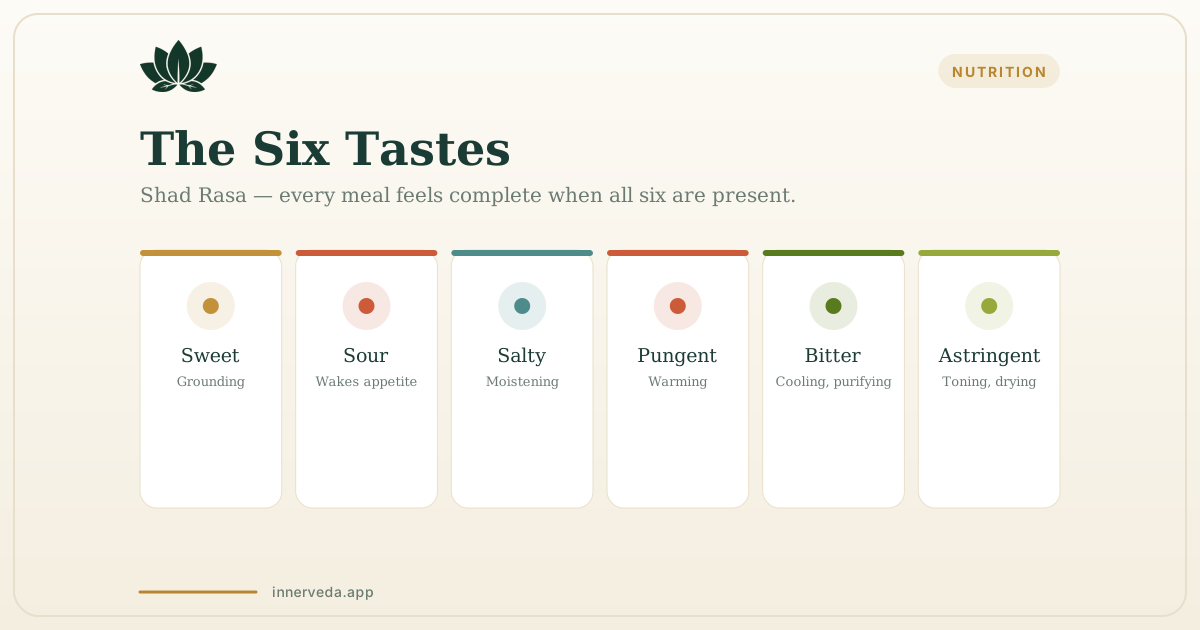
The six tastes at a glance
| Taste (Sanskrit) | Elements, per Charaka | Effect on the doshas | Everyday examples |
|---|---|---|---|
| Sweet (madhura) | Mainly water (often taught as earth and water) | Lowers Vata and Pitta, raises Kapha | Rice, wheat, milk, ghee, dates, sweet potato |
| Sour (amla) | Earth and fire | Lowers Vata, raises Pitta and Kapha | Lemon, yoghurt, tamarind, tomato, vinegar |
| Salty (lavana) | Water and fire | Lowers Vata, raises Pitta and Kapha | Rock salt, sea salt, seaweed, olives |
| Pungent (katu) | Air and fire | Lowers Kapha, raises Vata and Pitta | Ginger, black pepper, chilli, garlic, mustard |
| Bitter (tikta) | Air and ether | Lowers Pitta and Kapha, raises Vata | Bitter gourd, fenugreek, leafy greens, turmeric |
| Astringent (kashaya) | Air and earth | Lowers Pitta and Kapha, raises Vata | Lentils, pomegranate, green beans, unripe banana |
Table: Ayurveda’s six tastes with their elements, dosha effects and common foods. Elements from Charaka Samhita Sutrasthana 26.40; dosha effects from Ashtanga Hridaya Sutrasthana 1.15 to 1.16.
Sources: Charaka Samhita, Sutrasthana 26 (Wisdom Library translation); Ashtanga Hridaya, Sutrasthana 1.14 to 1.16 (text and translation, Easy Ayurveda).
What are the six tastes in Ayurveda?
In Ayurveda, rasa (taste) is the first clue to what a food will do. The Charaka Samhita opens its chapter on taste with a debate: one sage says taste is one, others argue for two, three, four or more, and Atreya, the teacher, settles on six (Sutrasthana 26.8 to 26.9). Each taste is described as arising from a mix of the five elements, which is why taste predicts how a food will shift Vata, Pitta and Kapha.
The same chapter works out that the six tastes can combine into 63 groups, and that the number becomes countless once after-tastes and degrees of intensity are included (26.22 to 26.24). In other words, the six are building blocks. Most real foods carry more than one, which matters for the classical rules on food combining.
Is there a shloka that describes the six tastes?
Yes. The Ashtanga Hridaya, one of Ayurveda’s three main texts, lists them in its first chapter (Sutrasthana 1.14):
रसाः स्वाद्वम्ललवणतिक्तोषणकषायकाः । षड् द्रव्यमाश्रितास्ते च यथापूर्वं बलावहाः ॥ Rasāḥ svādv-amla-lavaṇa-tikta-ūṣaṇa-kaṣāyakāḥ, ṣaḍ dravyam āśritās te ca yathā-pūrvaṃ balāvahāḥ.
It means: “The tastes are sweet, sour, salty, bitter, pungent and astringent. These six reside in substances, and each gives more strength than the one after it.” So sweet is the most nourishing and astringent the least. The next two verses give the dosha effects summarised in the table above.
What does each taste do?
Sweet (Madhura)
Sweet is grounding and nourishing. Ayurveda counts most staple foods as sweet, not just sugar: rice, wheat, milk, ghee, root vegetables and ripe fruit. It settles Vata and Pitta and builds Kapha, so it suits someone depleted or overheated and is the taste to keep moderate when you feel heavy or sluggish.
Sour (Amla)
Sour wakes up the appetite. Lemon, yoghurt, tamarind and fermented foods belong here. It settles Vata but heats Pitta and adds to Kapha, so a squeeze of lemon helps a dry, poor appetite while a lot of sour food can leave a Pitta-led person feeling hot or acidic.
Salty (Lavana)
Salty moistens and adds flavour. It settles Vata and raises Pitta and Kapha. A little salt helps food go down; too much feeds heat and water retention in Ayurvedic terms, and high salt is a familiar concern in modern nutrition too.
Pungent (Katu)
Pungent is the heat of ginger, pepper, chilli, garlic and mustard. It is warming and drying, lowers Kapha and raises Vata and Pitta. It is the go-to taste when you feel heavy or congested, and the one to ease back on if you run hot.
Bitter (Tikta)
Bitter is cooling and lightening: bitter gourd, fenugreek, many leafy greens and turmeric. It lowers Pitta and Kapha and raises Vata. Most modern diets have little of it, which is one reason Ayurvedic cooking adds bitter greens and spices.
Astringent (Kashaya)
Astringent is the drying, puckering feel of lentils, pomegranate, unripe banana and strong tea. It lowers Pitta and Kapha and raises Vata, so beans and pulses suit Kapha well but need warming spices and good cooking for a Vata-led digestion.
Which tastes suit each dosha?
The rule of thumb from the Ashtanga Hridaya is “like increases like, opposites balance”. Lean on the tastes that calm your leading dosha and keep a little of the others:
- Vata (dry, light, cool): favour sweet, sour and salty. Warm, moist, well-seasoned food. Our Vata meal plan puts this into a week.
- Pitta (hot, sharp): favour sweet, bitter and astringent. Cooling grains, greens and pulses, with gentle spice. See the Pitta meal plan.
- Kapha (heavy, steady, cool): favour pungent, bitter and astringent. Lighter, spiced food with plenty of vegetables and pulses. See the Kapha meal plan.
If you are not sure which dosha leads for you, the quiz is the place to start.
Which taste is tahini, coffee or chocolate?
Most foods carry more than one taste.
- Tahini (sesame paste): sesame is traditionally described as mainly sweet, with bitter and astringent notes, and heating. That makes tahini grounding for Vata, best in moderation for Pitta, and an occasional food for Kapha.
- Coffee: bitter and astringent, and stimulating. It can feel useful to a sluggish Kapha morning and too sharp for a Pitta or Vata who is already wired.
- Dark chocolate: bitter and astringent from the cocoa, sweet from the sugar.
- Lemon: sour first, with a sweet after-taste in many varieties.
When a food is hard to place, notice its first taste in your mouth and how you feel afterwards. Our food guide lists the taste and dosha effects of hundreds of everyday foods.
How do you get all six tastes in one meal?
You do not need equal amounts. Build the plate around your dosha’s tastes, then add small touches of the rest:
- Sweet: rice, bread, root vegetables, a little ghee.
- Sour: a squeeze of lemon or lime, a little yoghurt.
- Salty: seasoning, or a little pickle.
- Pungent: fresh ginger, black pepper, a tempering of mustard seeds.
- Bitter: a handful of greens, fenugreek leaves, turmeric in cooking.
- Astringent: dal or beans, a few pomegranate seeds.
A simple Indian thali, with rice, dal, a vegetable, a little yoghurt, pickle and greens, often covers all six without trying. Many people find a meal with a fuller range of tastes more satisfying, though that is a traditional observation rather than something research has measured.
When to see your doctor
- Taste guidance is general. If you have diabetes, high blood pressure or kidney disease, your doctor’s advice on sugar, salt and potassium comes first.
- Sweet foods such as honey, jaggery and dates still count as sugar; they are not “diabetic-safe”.
- If you have high blood pressure, go easy on salty pickles and papad, and avoid salt-water remedies unless your doctor advises them.
- If pungent or sour food brings on burning, acidity or reflux, cut back on it.
- See a doctor if a digestive problem lasts more than 3 weeks or diarrhoea lasts more than 7 days, or sooner if you notice blood in your stools or vomit, black stools, weight loss you cannot explain, repeated vomiting, difficulty swallowing or severe stomach pain.
How do the six tastes compare with modern taste science?
They overlap, but they are not the same list. Modern taste science describes basic tastes detected on the tongue: sweet, sour, salty, bitter and umami. Ayurveda’s pungent is the burning heat of chilli and pepper, which science treats as a heat-and-pain signal rather than a taste: capsaicin from chilli acts on a heat-sensitive receptor called TRPV1 (Caterina et al., 1997). Astringency, the dry, puckering feel of tea or unripe fruit, comes largely from tannins in food (Cosme et al., 2025) and is usually described as a mouthfeel rather than a basic taste. Umami, the savoury taste of broths and fermented foods, has no separate place in the Ayurvedic six.
That difference does not make one system right and the other wrong. Ayurveda’s rasa describes what a food does in the body as well as how it tastes, which is a different question from which receptors fire.
How we wrote this: tastes and dosha effects are taken from the classical texts cited. Updated 18 October 2026.
Frequently asked questions
The six tastes, or shad rasa, are sweet (madhura), sour (amla), salty (lavana), pungent (katu), bitter (tikta) and astringent (kashaya). Each is described as a mix of two of the five elements, and each shifts Vata, Pitta and Kapha in a predictable direction. Most foods carry more than one taste, so Ayurveda looks at the main taste and the after-taste together.
Ayurveda counts six tastes. The “nine rasas” (navarasa) usually come from Indian aesthetics, where rasa means the emotional flavour of a performance, such as love, courage or wonder, rather than a food taste. The word rasa is shared, which causes the confusion. In Ayurvedic cooking and nutrition the classical texts settle on six, after a debate recorded in the Charaka Samhita.
Vata does best with more sweet, sour and salty. Pitta does best with more sweet, bitter and astringent. Kapha does best with more pungent, bitter and astringent. This comes from Ashtanga Hridaya Sutrasthana 1.15 to 1.16. It is a guide to emphasis, not a list of banned tastes, and a little of every taste is usually part of a balanced Ayurvedic meal.
In Ayurveda turmeric is usually described as bitter and pungent together, which is why it appears in both columns of many charts. Its bitterness is linked with cooling Pitta and its pungency with warming and drying. In cooking it is used in small amounts for colour and flavour, so its taste effect on a whole meal is modest.
Ayurveda suggests including all six over a meal or a day, with more of the tastes that suit your dosha. It is a helpful habit rather than a strict rule. If a meal regularly leaves you unsatisfied, checking which tastes are missing, often bitter or astringent, is a simple experiment. Any medical diet your doctor has given you comes first.
References & sources
- Charaka Samhita, Sutrasthana, Chapter 26 (Atreyabhadrakapyiya Adhyaya), verses 8 to 9, 22 to 24 and 40. Wisdom Library translation.
- Ashtanga Hridaya, Sutrasthana, Chapter 1 (Ayushkamiya Adhyaya), verses 14 to 16. Easy Ayurveda translation.
- Caterina MJ, et al. The capsaicin receptor: a heat-activated ion channel in the pain pathway. Nature. 1997;389:816-24. PubMed 9349813
- Cosme F, et al. A comprehensive review of bioactive tannins in foods and beverages. Molecules. 2025. PMC11858154
Your dosha is the balance of Vata, Pitta and Kapha you were born with. Take the dosha quiz — free, about 3 minutes.
Three questions towards your dosha
These are the first three questions of the full dosha quiz. Answer them here and carry on where you left off.
Prefer to start from the beginning? Take the full dosha quiz.
This article is for educational purposes only and reflects traditional Ayurvedic perspectives alongside selected research. It is not medical advice. Always consult a qualified healthcare provider before acting on any information presented here.
Written by
Ganesh Kompella
Founder, InnerVeda
Research assisted by Vaidya AI
Trained on 500+ classical Ayurvedic texts

Medically reviewed by Dr Sheetal Rajput
BAMS (Bachelor of Ayurvedic Medicine & Surgery)
Practise this
Guided sessions that put this article into practice.
On the plate: Amla (Indian Gooseberry) — how it affects Vata, Pitta and Kapha, and how to use it.
Continue reading
Ayurvedic diet: how to eat for your dosha
Ayurvedic Food Combining Rules: What the Texts Actually Say
Vata Diet: Best Foods, Recipes & 7-Day Meal Plan
Anti-Inflammatory Foods in Ayurveda: A Dosha Guide
Ayurvedic Breakfast Ideas: 15 Warm, Simple Breakfasts by Dosha
Put this into practice
Take the free dosha assessment. Get a personalised wellness plan with nutrition, meditation, and daily routines matched to your body.
Find Your Dosha — Free~3 min · no sign-up