Abhyanga: Ayurvedic Self-Massage Guide
How to practise Abhyanga, the Ayurvedic art of self-massage with warm oil. Which oils suit your dosha, the technique, and its traditional benefits.

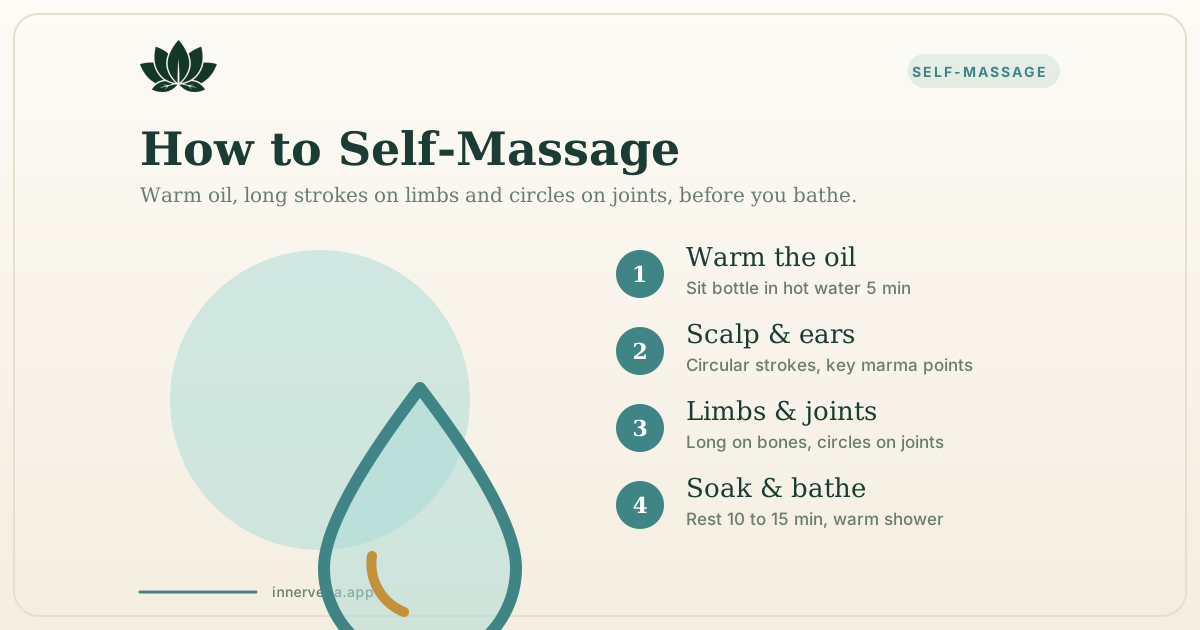
Abhyanga is the Ayurvedic practice of warm oil self-massage, traditionally performed daily as part of the morning routine. Oil choice depends on your dosha. Warm sesame for Vata, cooling coconut for Pitta, and stimulating mustard or sunflower for Kapha. Find Your Dosha to discover your ideal Abhyanga practice.
What Is Abhyanga?
Abhyanga (pronounced ah-bee-YAHN-gah) is the ancient Ayurvedic practice of self-massage with warm oil. The word comes from the Sanskrit prefix abhi (towards, into) and anga (limb or body), literally "to anoint the limbs." It's one of the most valued daily practices in Ayurvedic self-care, traditionally performed each morning as part of Dinacharya, the Ayurvedic daily routine.
The Charaka Samhita describes Abhyanga as a practice that may nourish the tissues, promote longevity, support healthy sleep, strengthen the skin, and improve overall vitality. In the Ashtanga Hridaya, another foundational Ayurvedic text, Acharya Vagbhata writes that Abhyanga should be practised daily (abhyangam acharet nityam), placing it among the most important of all daily health practices.
In Ayurvedic theory, the skin isn't merely a barrier but a vital organ of absorption. Oil applied to the skin is believed to nourish the deeper tissue layers (dhatus), calm the nervous system, and support the flow of prana (vital energy) throughout the body. A 2011 study published in the Journal of Ayurveda and Integrative Medicine found that Abhyanga with sesame oil may reduce subjective stress and improve markers of cardiovascular health.
The Role of Oil in Ayurveda
Oil holds a special place in Ayurvedic medicine. The Sanskrit word for oil is sneha, which also means love and tenderness. This linguistic connection isn't a coincidence. Ayurvedic tradition teaches that applying oil to the body is an act of self-nourishment that mirrors the quality of love. Warming, softening, deeply comforting.
According to Ayurvedic theory, oil has the following qualities:
- Heavy (guru), provides grounding, particularly good for Vata
- Smooth (snigdha), counteracts dryness and roughness
- Slow (manda), promotes calm and steadiness
- Warm (ushna), supports circulation and tissue penetration
These qualities make oil a natural antidote to many of the imbalances modern life creates. Dryness, restlessness, depletion, disconnection from the body.
Choosing Your Oil by Dosha
Selecting the right oil is central to Abhyanga practice. Each dosha has traditionally recommended oils that complement its unique qualities:
Vata Dosha: Warm Sesame Oil
Vata's cold, dry, light, and mobile qualities call for an oil that's warming, heavy, and deeply nourishing.
Primary oil: Organic, cold-pressed sesame oil (not the toasted variety used in cooking)
Why sesame suits Vata:
- Naturally warming, counteracts Vata's cold quality
- Heavy and nourishing, balances Vata's lightness
- Deeply penetrating, traditionally believed to reach all seven tissue layers
- Rich in natural antioxidants
Herbal enhancements: Sesame oil infused with ashwagandha, bala, or dashamula may offer extra grounding support for Vata types.
Alternative oils: Almond oil or avocado oil may also suit Vata, particularly for those who find sesame too heavy.
Pitta Dosha: Cooling Coconut Oil
Pitta's hot, sharp, and oily qualities benefit from oils that are cooling, soothing, and calming.
Primary oil: Organic, cold-pressed coconut oil
Why coconut suits Pitta:
- Naturally cooling, pacifies Pitta's heat
- Light yet nourishing, doesn't add excess oiliness
- Sweet in taste and post-digestive effect. Both are Pitta-balancing
- Traditionally considered soothing for the skin
Herbal enhancements: Coconut oil infused with brahmi, neem, or sandalwood may provide additional cooling benefit for Pitta types.
Alternative oils: Sunflower oil or ghee (for very inflamed skin) may also suit Pitta, especially during warmer months.
Seasonal note: During cooler months, Pitta types may switch to sunflower oil, which is less cooling than coconut but still appropriate for their constitution.
Kapha Dosha: Stimulating Mustard Oil
Kapha's cool, heavy, slow, and oily qualities benefit from oils that are warming, light, and stimulating.
Primary oil: Organic mustard oil or safflower oil
Why mustard suits Kapha:
- Strongly warming, counteracts Kapha's cold quality
- Light and penetrating, doesn't add heaviness
- Stimulating, promotes circulation and energy movement
- Traditionally considered detoxifying
Herbal enhancements: Mustard oil infused with calamus, ginger, or eucalyptus may amplify the warming, stimulating effects.
Alternative oils: Safflower oil, corn oil, or a light sesame oil may suit Kapha types who find mustard too intense. Some Kapha types may also benefit from dry brushing (garshana) before a light oil application.
Important note: Kapha types may not need as much oil as Vata or Pitta types. A lighter application, or dry brushing on some days instead of oil massage, is a traditional approach.
Step-by-Step Abhyanga Technique
Preparation
- Warm the oil: Place your bottle in a mug of hot water for 5 to 10 minutes until comfortably warm (not hot). You can also use an oil warmer. Test on your inner wrist before applying.
- Set up your space: Lay an old towel on the bathroom floor (oil can make surfaces slippery). Make sure the room is warm and free from draughts.
- Allow time: Set aside 15 to 20 minutes for the full practice, or 5 minutes for a shortened version.
The Massage Sequence
Scalp and Head (2 to 3 minutes)
- Start with a small amount of warm oil on the crown of the head
- Use your fingertips to massage in circular motions across the entire scalp
- The head is one of the most important areas in Ayurvedic tradition, home to many vital energy points (marma points)
Face and Ears (1 to 2 minutes)
- Gently massage oil into the forehead, temples, cheeks, jaw
- Pay special attention to the ears. Massage inside and behind the ear lobes
- The ears are connected to Vata dosha in Ayurvedic theory, and oiling them is traditionally considered deeply calming
Neck and Shoulders (1 to 2 minutes)
- Use upward strokes on the neck
- Knead the shoulder muscles with firm but comfortable pressure
- This area traditionally holds accumulated tension and stress
Arms (2 to 3 minutes)
- Use long, sweeping strokes on the long bones (upper arm, forearm)
- Use circular motions around the joints (shoulder, elbow, wrist)
- This directional approach is a distinctive feature of Ayurvedic massage technique
- Work from the shoulder down to the fingertips on each arm
Chest and Abdomen (2 to 3 minutes)
- Use broad, gentle circular motions over the heart area
- On the abdomen, massage in a clockwise direction (following the direction of the large intestine)
- This is traditionally considered particularly good for Vata types and for supporting healthy digestion
Back (1 to 2 minutes)
- Reach what you can comfortably, using up-and-down strokes along the spine
- A long-handled brush or a partner can help
Legs (2 to 3 minutes per leg)
- Again, long strokes on the long bones (thigh, shin)
- Circular motions on the joints (hip, knee, ankle)
- Work from the hip down to the toes
Feet (2 to 3 minutes)
- The feet are considered extremely important in Ayurvedic tradition
- Massage the soles thoroughly using your thumbs
- Press into the centre of the sole. This area corresponds to a key marma point (kshipra marma)
- Massage each toe individually
- In Ayurvedic tradition, oiling the feet before bed is said to promote restful sleep and calm the entire nervous system
After the Massage
- Allow the oil to absorb for 10 to 20 minutes. This resting period is an important part of the practice. You can meditate, practise breathing exercises, or simply sit quietly.
- Bathe with warm water. Gently wash with a mild soap only where needed (underarms, groin). Allow the residual oil to remain on the skin as a protective layer.
- Pat dry rather than rubbing vigorously.
When to Practise Abhyanga
Ideal Timing
Morning (traditional recommendation): Abhyanga before the morning bath is the classical approach. It sets a grounded, nourishing tone for the day.
Evening: For those with very busy mornings, an evening Abhyanga before bed may work well, particularly for Vata types seeking better sleep. A foot-only massage with warm sesame oil is a wonderful abbreviated evening practice.
Seasonal Adjustments
- Autumn and Winter (Vata season): Increase frequency and use more oil. Warming oils like sesame are particularly appropriate.
- Spring (Kapha season): Lighter application or substitute dry brushing on some days. Use stimulating oils.
- Summer (Pitta season): Use cooling oils like coconut. A lighter application may be more comfortable.
When to Avoid Abhyanga
Traditional guidelines suggest refraining from Abhyanga during:
- Acute illness, especially with fever
- Periods of indigestion or after heavy meals
- Active skin infections, rashes, or open wounds
- Some traditions recommend avoiding during menstruation
- When feeling excessively congested (consider dry brushing instead)
Traditional Benefits in Ayurvedic Literature
The Charaka Samhita and Ashtanga Hridaya describe numerous traditional benefits attributed to regular Abhyanga practice:
- Jarahara, may help maintain youthful tissue quality
- Shramahara, traditionally used to relieve fatigue
- Vatahara, considered one of the primary practices for balancing Vata dosha
- Drishti prasadakara, traditionally believed to support clear vision
- Pushti, said to nourish the body tissues
- Ayushkara, traditionally associated with promoting longevity
- Swapnakara, traditionally valued for supporting healthy sleep
- Twak dardyakara, said to strengthen and beautify the skin
These are traditional attributions from classical texts. Modern research on Abhyanga is limited, though some studies suggest self-massage with oil may help reduce subjective feelings of stress and support skin health. The practice of touch itself, particularly intentional, mindful self-touch, is increasingly recognised in wellness research for its potential to activate the parasympathetic nervous system and promote feelings of well-being.
A Shortened Practice for Busy Days
When a full Abhyanga isn't possible, even a brief practice may help. Focus on the three most important areas according to Ayurvedic tradition:
- Scalp: One minute of circular massage with warm oil
- Ears: Thirty seconds of gentle massage inside and around the ears
- Feet: Two minutes of thorough sole massage
This abbreviated routine can be done in under five minutes and is traditionally considered far better than skipping the practice entirely. In Ayurveda, consistency matters more than duration.
Building Your Abhyanga Practice
If you're new to Abhyanga, a gradual approach works well:
Week 1 to 2: Start with a foot-only massage before bed using warm oil appropriate for your dosha. This simple practice introduces you to the ritual without requiring significant time.
Week 3 to 4: Add the abbreviated practice (scalp, ears, feet) on mornings when you have a few extra minutes.
Week 5 onwards: Gradually expand to the full-body practice on days when time allows, keeping at minimum the abbreviated practice on busier days.
The goal is to build a sustainable habit, not an elaborate ritual you abandon after a few attempts. Ayurveda teaches that practices performed with regularity and presence, even if brief, create deeper transformation than occasional intensive efforts.
References & Sources
Clinical Research
- Tripathi R, Dwivedi SN. "Effect of Abhyanga (oil massage) on physiological parameters." Journal of Ayurveda and Integrative Medicine, 2011. PubMed
- Field T. "Massage therapy research review." Complementary Therapies in Clinical Practice, 2016. PubMed
- Moyer CA, Rounds J, Hannum JW. "A meta-analysis of massage therapy research." Psychological Bulletin, 2004. PubMed
Classical Texts
- Charaka Samhita, Sutra Sthana, Chapter 5 (on daily self-care practices including Abhyanga). Available at Wisdom Library
This article is for educational purposes only and isn't intended as medical advice. The information provided reflects traditional Ayurvedic perspectives and shouldn't be used to diagnose, treat, cure, or prevent any disease. If you have skin conditions, allergies, or health concerns, consult a qualified healthcare provider before beginning an oil massage practice. Always test new oils on a small patch of skin before full-body application.
Frequently Asked Questions
The ideal oil depends on your dosha. Vata types traditionally use warm sesame oil for its grounding, warming properties. Pitta types benefit from cooling coconut or sunflower oil. Kapha types may prefer lighter, warming oils like mustard or safflower. Organic, cold-pressed oils are recommended.
A full Abhyanga practice traditionally takes 15 to 20 minutes. Even a 5-minute version focusing on the feet, scalp, and ears offers meaningful benefits. The key is consistency. A brief daily practice is traditionally more valuable than an occasional lengthy session.
Traditional guidelines suggest avoiding Abhyanga during acute illness with fever, active skin infections or open wounds, during menstruation (some traditions), immediately after eating a heavy meal, or when experiencing severe congestion. If you have skin conditions, consult a healthcare provider first.
Abhyanga is traditionally performed before bathing. The warm oil is applied, allowed to soak in for 10 to 20 minutes, then gently washed off in the shower using warm water and mild soap only where needed. This lets the oil nourish the skin while the warm water helps it penetrate deeper.
Abhyanga differs from conventional massage in several ways. It uses warm herbalised oils selected for your dosha, follows specific directional strokes aligned with Ayurvedic anatomy, and is traditionally a daily self-care ritual rather than an occasional treatment. The focus is on nourishing tissues and balancing energy rather than working on muscular tension.
References & sources
- Genomic basis of Prakriti (Ayurvedic constitution) and its clinical relevance— J Ayurveda Integr Med, 2014
- Therapeutic uses of Triphala in Ayurvedic medicine— Indian J Pharm Sci, 2012
- Recasting the significance of genomic variation in Prakriti-based classification— Scientific Reports, 2017
Classical sources
- Ashtanga Hridaya— Sutrasthana, Chapter 2 (Dinacharya Adhyaya) 8
- Ashtanga Hridaya— Sutrasthana, Chapter 2 (Dinacharya Adhyaya) 8-9
- Charaka Samhita— Sutrasthana, Chapter 5 (Matrashiteeya Adhyaya) 85-89
This article is for educational purposes only and reflects traditional Ayurvedic perspectives alongside selected research. It is not medical advice. Always consult a qualified healthcare provider before acting on any information presented here.
Written by
Ganesh Kompella
Founder, InnerVeda
Research assisted by Vaidya AI
Trained on 500+ classical Ayurvedic texts

Medically reviewed by Dr. Sheetal Rajput
BAMS (Bachelor of Ayurvedic Medicine & Surgery)
Practise this
Guided sessions that put this article into practice.
- Body Restoration Yoga Nidra: Somatic Healing Practice25 min · beginner
- Shaithilya: Bedtime Body Release Practice15 min · beginner
On the plate: Sesame Oil — how it affects Vata, Pitta and Kapha, and how to use it.
Continue Reading
Ayurveda for Skin: A Dosha Approach to Clear Skin

Ayurvedic Morning Routine (Dinacharya): Your Daily Foundation
Ayurveda for Stress Relief: Personalised by Dosha
Ashwagandha: A Complete Guide
Ayurveda for Anxiety: Natural Approaches That Work
Ayurveda for Athletes: Train Smarter by Dosha
Put this into practice
Take the free dosha assessment. Get a personalised wellness plan with nutrition, meditation, and daily routines matched to your body.
Find Your Dosha — Free~3 min · no signup