Almond Milk: Benefits & Dosha Effects
Sanskrit: Badam Ksheera (बादाम क्षीर)
Almond Milk is especially balancing for Vata and Pitta but can raise Kapha when eaten in excess. With sweet rasa (taste), cold virya (potency) and sweet vipaka, it is light, oily and smooth in quality and a source of vitamin e.

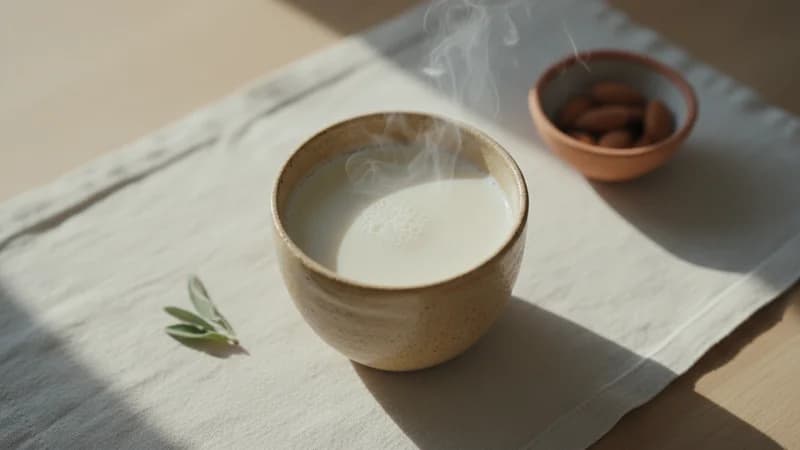
Almond Milk is best suited to Vata and Pitta, which it helps pacify. In excess it can raise Kapha. Made from soaked, peeled almonds ground with water, this smooth milk carries a sweet rasa and cold virya, making it a nourishing, Sattvic drink that calms Vata and Pitta while remaining lighter than dairy milk.. Suitable year-round.
Ayurvedic Profile
Almond Milk (Badam Ksheera (बादाम क्षीर)) is a hydrating beverages treasured in Ayurvedic nutrition. Referenced in Bhavaprakasha Nighantu, it is characterised by sweet rasa (taste), cooling virya (potency), and sweet vipaka (post-digestive effect). Badam Ksheera is a traditional Ayurvedic Rasayana preparation where soaked and peeled almonds are blended with warm milk and saffron. It is classified as Medhya (brain tonic) and Balya (strength-giving), nourishing Majja dhatu and building Ojas, making it an excellent Vata-Pitta pacifying tonic. Its light and oily and smooth gunas make it particularly suited for specific constitutional types. It pacifies Vata, pacifies Pitta, and can aggravate Kapha when consumed in excess. From a nutritional standpoint, almond milk provides approximately 17 calories per 100g, with 0.6g protein, 0.6g carbohydrates, and is a valuable source of Vitamin E, Calcium, Vitamin D. Best enjoyed during all-seasons, almond milk supports healthy Agni (digestive fire) when prepared according to Ayurvedic principles, helping prevent Ama (toxin) accumulation and nourish the dhatus (body tissues).
Ayurvedic Properties
Rasa (Taste)
sweet
Virya (Potency)
cold
Vipaka (Post-digestive)
sweet
Guna (Qualities)
light, oily, smooth
How Almond Milk Affects Vata, Pitta & Kapha
Ayurveda reads every food through the three doshas. Here is how almond milk’s qualities interact with each: Not sure which is yours? Take the free dosha quiz — about 4 minutes.
Almond Milk helps pacify Vata. Its cold virya (potency) and light, oily and smooth qualities, with its sweet rasa (taste), counterbalance Vata's tendencies — which is why it traditionally suits Vata dosha in regular use. Vata meal plan
Almond Milk helps pacify Pitta. Its cold virya (potency) and light, oily and smooth qualities, with its sweet rasa (taste), counterbalance Pitta's tendencies — which is why it traditionally suits Pitta dosha in regular use. Pitta meal plan
Almond Milk is well tolerated by those with Kapha dosha in normal amounts, but its cold virya and light, oily and smooth qualities may aggravate Kapha in excess — so people with Kapha as their leading dosha are best keeping to measured portions. Kapha meal plan
Nutrition Facts (per 100g)
17kcal
Calories
0.6g
Protein
0.6g
Carbs
1.4g
Fat
0.5g
Fibre
Ayurvedic Benefits
- Made from soaked, peeled almonds ground with water, this smooth milk carries a sweet rasa and cold virya, making it a nourishing, Sattvic drink that calms Vata and Pitta while remaining lighter than dairy milk.
- Its unctuous yet smooth (Snigdha, Slakshna) quality gently lubricates the tissues and is traditionally used to build Ojas (vital essence) and steady the mind, which is why warm almond milk is a classic bedtime drink for restless, over-active thoughts.
- Almonds are a natural source of vitamin E and healthy fats, and this milk offers a light, plant-based way to nourish the skin and support the smooth, supple quality Ayurveda associates with well-oiled Rasa and Rakta dhatus.
- Fortified versions add calcium and vitamin D, making it a useful dairy-free option for those looking to support bone health, while its sweet vipaka keeps it gentle and easy on the system when Agni is reasonable.
- Because it is warming to prepare yet cooling in virya, it can be enjoyed year-round: soothing and grounding without the heaviness of cow's milk, and suited to Vata and Pitta types across the seasons.
How to Use
- As almond milk is cooling (shita virya), favour it in warmer weather and pair it with warming spices like ginger or black pepper when the seasons turn cold.
- Soak a handful of almonds overnight, slip off the skins in the morning, then blend with warm water and strain for the freshest, most digestible homemade milk.
- Warm it gently with a pinch of cardamom, a thread of saffron or a little nutmeg and take it before bed as a calming, Vata-settling nightcap.
- Use it as a base for turmeric golden milk or a light morning porridge when you want the nourishment of milk without the mucus-forming heaviness of dairy.
- Avoid boiling it hard or overheating; a gentle warm-through preserves its smooth, soothing quality and its delicate sweetness.
- If buying ready-made, choose an unsweetened, additive-free brand, and shake well, as thin commercial versions offer less of the almond's nourishing oil.
Contraindications
- Anyone with a nut allergy must avoid it entirely, and it should never be given to infants as a replacement for breast milk or proper infant formula.
- Kapha-dominant people, or those with sluggish digestion, congestion or a tendency to gain weight easily, should limit it, since its sweet, oily, cooling nature can increase Kapha and Ama in excess.
- Thin, commercial almond milks are low in protein and, unless fortified, in calcium and vitamin D, so they should not be relied on as a like-for-like nutritional swap for dairy milk without checking the label.
“Ayurveda classifies Almond Milk by its sweet rasa (taste), cold virya (thermal potency), and sweet vipaka (post-digestive effect). InnerVeda reads these three lenses together to map Almond Milk to your dosha and season.”
Frequently Asked Questions
Neither is simply better; they suit different people. Cow's milk is deeply nourishing but heavier and more Kapha-building, while almond milk is lighter, still sweet and cooling, and easier for those who find dairy congesting. For Vata and Pitta types who want nourishment without heaviness, home-made almond milk is a lovely choice, best warmed and spiced.
Ayurveda traditionally recommends soaking almonds overnight and removing the brown skins, which are considered slightly heating and harder to digest. Peeling gives a smoother, cooler, more Pitta-friendly milk and a more Sattvic quality. Soaking also softens the nut so it blends easily and is gentler on Agni.
Yes, warm almond milk is a classic Ayurvedic bedtime drink. Its sweet rasa, smooth quality and calming, Ojas-building nature help settle an over-active Vata mind and encourage restful sleep. Warm it gently with a pinch of cardamom or nutmeg, keep it unsweetened or lightly sweetened, and sip it about an hour before bed.
Your dosha is the balance of Vata, Pitta and Kapha you were born with. Take the dosha quiz — free, about 4 minutes.
Three questions towards your dosha
These are the first three questions of the full dosha quiz. Answer them here and carry on where you left off.
Prefer to start from the beginning? Take the full dosha quiz.
Dietary information provided is for educational purposes only and is rooted in Ayurvedic tradition. It is not a substitute for professional nutritional or medical advice. Consult a qualified healthcare provider before making significant changes to your diet, especially if you have food allergies, intolerances, or a medical condition.
Want a meal plan matched to your dosha?
Take the free dosha assessment (about 4 minutes) and get a personalised nutrition plan with nearly 300 foods in the app, rated for your body.
Find Your Dosha: FreeAbout 4 minutes