Cardamom: Benefits & Dosha Effects
Sanskrit: Ela (एला)
Cardamom is especially balancing for Vata and Kapha. With sweet and pungent rasa (taste), cold virya (potency) and sweet vipaka, it is light and dry in quality and a source of manganese.

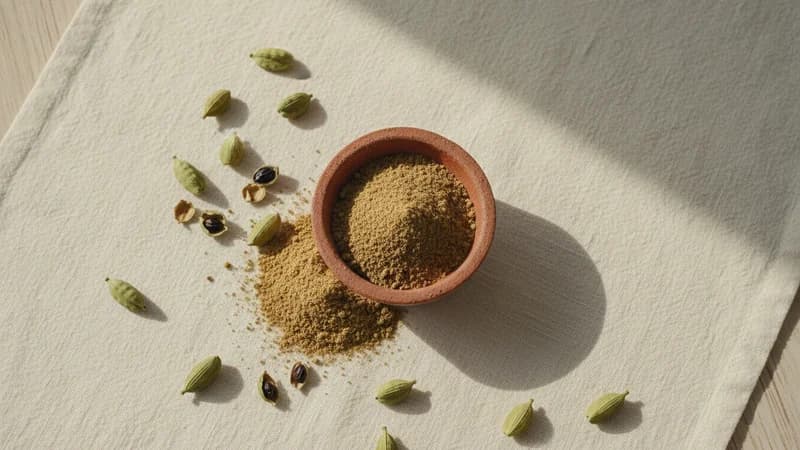
Cardamom is best suited to Vata and Kapha, which it helps pacify. Unique cold-potency digestive spice ideal for Pitta constitutions. Suitable year-round.
Ayurvedic Profile
Cardamom, known as Ela in Sanskrit, holds the distinguished title of 'Queen of Spices' and occupies a prominent place in the Ayurvedic materia medica. The Bhavaprakasha Nighantu describes two varieties: Sukshma Ela (green cardamom, or true cardamom) and Brihat Ela (black cardamom), each with distinct therapeutic profiles. Sukshma Ela is particularly prized for its unique combination of Sheeta (cold) virya with Madhura-Katu (sweet and pungent) rasa, a rare pairing that allows it to stimulate digestion without generating excess heat.
The Charaka Samhita classifies Ela among the Shvasahara (anti-asthmatic) and Angamarda Prashamana (body ache relieving) groups. This dual classification reflects its remarkable ability to work simultaneously on the Pranavaha Srotas (respiratory channels) and Annavaha Srotas (digestive channels). Its cold potency distinguishes it from most other digestive spices, making it an invaluable tool for supporting Agni in Pitta-dominant individuals who cannot tolerate the heat of ginger or black pepper.
According to the Ashtanga Hridaya, Ela is Hridya (cardiac tonic) and Mukha Shodhana (oral purifier). Its traditional use as a mouth freshener after meals is not merely cultural but reflects its capacity to cleanse the oral cavity, support healthy Bodhaka Kapha (the salivary component of Kapha), and initiate the first stage of digestion. The volatile oils in cardamom, primarily 1,8-cineole and alpha-terpinyl acetate, contribute to its Mukha Vaishadya (oral clarity) properties.
In Ayurvedic therapeutics, cardamom is a key ingredient in numerous classical formulations. It appears in Sitopaladi Churna, a cornerstone respiratory formula, and in Eladi Vati, used for nausea and digestive discomfort. The Kashyapa Samhita recommends it for Chardi (vomiting) in children, reflecting its gentle yet effective action on the stomach.
Cardamom's Sattvic nature makes it one of the few spices recommended for meditation practices and spiritual disciplines. Ayurvedic texts note that Ela purifies the mind (Manas) and enhances Medha (intellect), making it suitable for those following a Sattvic lifestyle. When added to chai or warm milk, it transforms a simple beverage into a therapeutic preparation that calms the mind while supporting digestion.
Ayurvedic Properties
Rasa (Taste)
sweet, pungent
Virya (Potency)
cold
Vipaka (Post-digestive)
sweet
Guna (Qualities)
light, dry
How Cardamom Affects Vata, Pitta & Kapha
Ayurveda reads every food through the three doshas. Here is how cardamom’s qualities interact with each: Not sure which is yours? Take the free dosha quiz — about 4 minutes.
Cardamom helps pacify Vata. Its cold virya (potency) and light and dry qualities, with its sweet and pungent rasa (taste), counterbalance Vata's tendencies — which is why it traditionally suits Vata dosha in regular use. Vata meal plan
Cardamom has a broadly neutral effect on Pitta. Its sweet and pungent rasa and light and dry qualities neither strongly aggravate nor pacify Pitta, so those with Pitta dosha can enjoy it in moderation within a varied diet. Pitta meal plan
Cardamom helps pacify Kapha. Its cold virya (potency) and light and dry qualities, with its sweet and pungent rasa (taste), counterbalance Kapha's tendencies — which is why it traditionally suits Kapha dosha in regular use. Kapha meal plan
Nutrition Facts (per 100g)
311kcal
Calories
10.8g
Protein
68.5g
Carbs
6.7g
Fat
28g
Fibre
Ayurvedic Benefits
- Unique cold-potency digestive spice ideal for Pitta constitutions
- Supports respiratory health and helps clear Kapha from the lungs
- Natural Mukha Shodhana (oral purifier) that freshens breath therapeutically
- Hridya (cardiac tonic) properties support cardiovascular wellness
- Sattvic spice that calms the mind and enhances mental clarity
- Traditionally valued for soothing digestive comfort and easing nausea
How to Use
- As cardamom is cooling (shita virya), favour it in warmer weather and pair it with warming spices like ginger or black pepper when the seasons turn cold.
- Crush one pod and add to chai or warm milk for aromatic digestive support
- Chew a whole pod after meals to freshen breath and aid digestion
- Add ground cardamom to rice kheer or oatmeal for a Sattvic breakfast
- Infuse in warm water with fennel seeds for a gentle post-meal digestive tea
- Include in spice blends for baking to add therapeutic value to treats
Contraindications
- Gallstone patients should use cautiously as it may stimulate bile flow
- Very high doses may cause gastric discomfort in sensitive individuals
“Ayurveda classifies Cardamom by its sweet, pungent rasa (taste), cold virya (thermal potency), and sweet vipaka (post-digestive effect). InnerVeda reads these three lenses together to map Cardamom to your dosha and season.”
Cardamom by Dosha
See how cardamom interacts with each dosha and get personalised guidance.
Frequently Asked Questions
Cardamom has a uniquely cold virya (potency), which is rare among spices. This makes it ideal for Pitta types who need digestive support without excess heat. It can kindle Agni gently through its pungent rasa while keeping overall body temperature balanced.
Cardamom in culinary amounts is generally considered safe during pregnancy and is traditionally used to help with morning nausea. Its cold potency and anti-emetic properties make it gentle on the system. However, always consult your healthcare provider for personalised guidance.
Green cardamom (Sukshma Ela) is more refined and cooling, better for Pitta and delicate conditions. Black cardamom (Brihat Ela) is warming and smokier, more suited for Kapha conditions and heavier foods. For daily use and general wellness, green cardamom is preferred.
Your dosha is the balance of Vata, Pitta and Kapha you were born with. Take the dosha quiz — free, about 4 minutes.
Three questions towards your dosha
These are the first three questions of the full dosha quiz. Answer them here and carry on where you left off.
Prefer to start from the beginning? Take the full dosha quiz.
Dietary information provided is for educational purposes only and is rooted in Ayurvedic tradition. It is not a substitute for professional nutritional or medical advice. Consult a qualified healthcare provider before making significant changes to your diet, especially if you have food allergies, intolerances, or a medical condition.
Want a meal plan matched to your dosha?
Take the free dosha assessment (about 4 minutes) and get a personalised nutrition plan with nearly 300 foods in the app, rated for your body.
Find Your Dosha: FreeAbout 4 minutes