Almonds: Benefits & Dosha Effects
Sanskrit: Vatada (वाटद)
Almonds is especially balancing for Vata but can raise Pitta and Kapha when eaten in excess. With sweet rasa (taste), hot virya (potency) and sweet vipaka, it is heavy and oily in quality and a source of vitamin e.

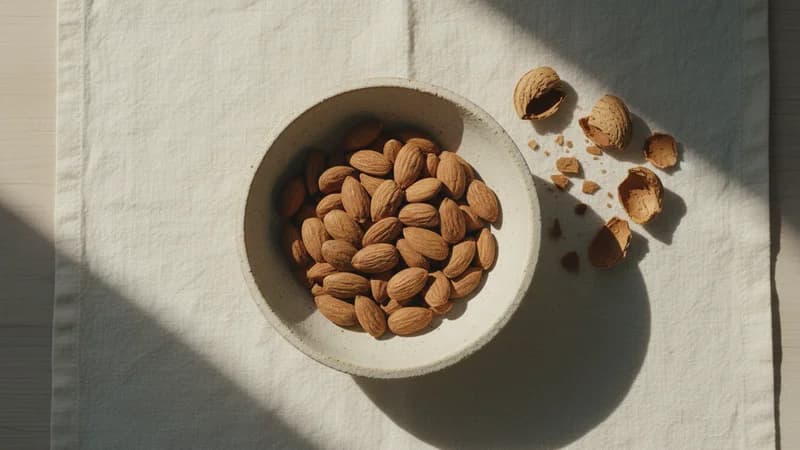
Almonds is best suited to Vata, which it helps pacify. In excess it can raise Pitta and Kapha. Medhya — traditionally valued to nourish the brain, memory and nervous system. Best enjoyed during winter.
Ayurvedic Profile
Almonds, known as Vatada or Vatama in Sanskrit, are among the most valued nuts in Ayurvedic nutrition. The Bhavaprakasha Nighantu describes Vatada as possessing Madhura (sweet) rasa, Ushna (hot) virya, and Madhura (sweet) vipaka with Guru (heavy) and Snigdha (oily) gunas. This profile makes almonds a powerful Brinhana (nourishing) and Vrishya (virility-promoting) food, with particular affinity for Shukra Dhatu (reproductive tissue) and Majja Dhatu (nervous tissue).
The Charaka Samhita classifies nuts broadly as Balya (strength-giving) and Vataghna (Vata-reducing). Almonds exemplify these qualities through their rich protein and healthy fat content, which provides the Snigdha (unctuous) quality essential for counteracting Vata's inherent dryness. The classical practice of soaking almonds overnight and peeling them before consumption is not merely tradition but a precise Samskara (processing technique) described in Ayurvedic texts.
Soaking almonds serves multiple Ayurvedic purposes: it softens the nut, making it more digestible (reducing Guru guna); it activates enzymes that neutralize enzyme inhibitors present in the skin; and the removal of the brown skin reduces the Pitta-aggravating tannins. The Bhavaprakasha notes that the skin of the almond can create Pitta disturbance and recommends its removal for therapeutic preparations. This traditional wisdom has been validated by modern understanding of antinutrients.
Almond milk, prepared by blending soaked and peeled almonds with water, cardamom, and saffron, is a classical Ayurvedic preparation for building Ojas. This Ksheera-paka (milk preparation) provides the nourishing qualities of both milk and almonds in an easily digestible form. For lactose-intolerant individuals seeking the tissue-building benefits traditionally attributed to milk, almond preparations offer an alternative pathway.
The Ashtanga Hridaya's Vajikarana (aphrodisiac) chapter includes almonds in formulations for enhancing reproductive health and vitality. Consuming 5-8 soaked and peeled almonds each morning with warm milk is a traditional Rasayana practice recommended for students, those recovering from illness, and anyone seeking to build strength and vitality. The Vitamin E content supports Bhrajaka Pitta (skin health), adding another dimension to almonds' therapeutic value.
Ayurvedic Properties
Rasa (Taste)
sweet
Virya (Potency)
hot
Vipaka (Post-digestive)
sweet
Guna (Qualities)
heavy, oily
How Almonds Affects Vata, Pitta & Kapha
Ayurveda reads every food through the three doshas. Here is how almonds’s qualities interact with each: Not sure which is yours? Take the free dosha quiz — about 3 minutes, no signup.
Almonds helps pacify Vata. Its hot virya (potency) and heavy and oily qualities, with its sweet rasa (taste), counterbalance Vata's tendencies — which is why it traditionally suits Vata dosha in regular use.
Almonds is well tolerated by those with Pitta dosha in normal amounts, but its hot virya and heavy and oily qualities may aggravate Pitta in excess — so Pitta types are best keeping to measured portions.
Almonds is well tolerated by those with Kapha dosha in normal amounts, but its hot virya and heavy and oily qualities may aggravate Kapha in excess — so Kapha types are best keeping to measured portions.
Nutrition Facts (per 100g)
579kcal
Calories
21.2g
Protein
21.7g
Carbs
49.9g
Fat
12.5g
Fiber
Ayurvedic Benefits
- Medhya — traditionally valued to nourish the brain, memory and nervous system
- Sweet, warming and building, almonds strongly pacify Vata and rebuild strength and Ojas
- Rich in vitamin E, magnesium and healthy fats for the skin, tissues and steady energy
- Soaked and peeled, they become a gentle, deeply nourishing food even for delicate digestions
- A classic winter Rasayana food for the lean, dry, studious or depleted
How to Use
- As almonds is heating (ushna virya), balance it with cooling accompaniments such as coriander, fennel or a little ghee — especially through the warmer months.
- Almonds is at its best during winter — eating it in season keeps its Prana (vital energy) and benefit at their peak.
- Soak 5–10 almonds overnight and peel them in the morning — soaking and removing the heating skin makes them cooler, lighter and more digestible
- Eat soaked, peeled almonds on an empty stomach as a traditional daily brain and Vata tonic
- Blend them into warm milk with saffron and cardamom for a nourishing winter drink
- Favour them in the cold months, their natural season, when their building warmth is welcome
- Keep to a modest handful — they are rich and heavy, and more is not better
Contraindications
- Their skins are heating and can aggravate Pitta — soak and peel almonds, especially for hot constitutions
- Sweet, heavy and oily, they increase Kapha and should be limited by those managing weight
- Eaten dry, unsoaked and in quantity, they are heavy and hard to digest for a weak Agni
“Ayurveda classifies Almonds by its sweet rasa (taste), hot virya (thermal potency), and sweet vipaka (post-digestive effect). InnerVeda reads these three lenses together to map Almonds to your dosha and season.”
Frequently Asked Questions
Yes — Ayurveda recommends soaking almonds overnight and peeling off the skin, which is heating and slightly hard to digest. Soaked, peeled almonds are cooler, lighter and more nourishing, and gentler on Pitta and on digestion.
Almonds are classically Medhya — valued for nourishing the brain, memory and nervous system — and are rich in vitamin E, magnesium and healthy fats. Soaked, peeled almonds eaten in the morning are a traditional daily tonic for the mind, especially for Vata types.
A modest handful — about 5 to 10 soaked, peeled almonds a day — is a wholesome amount for most people. They are rich and building, so more is not better; those managing weight or with a Kapha tendency should keep to the lower end.
Dietary information provided is for educational purposes only and is rooted in Ayurvedic tradition. It is not a substitute for professional nutritional or medical advice. Consult a qualified healthcare provider before making significant changes to your diet, especially if you have food allergies, intolerances, or a medical condition.
Want a meal plan matched to your dosha?
Take the free 3-minute dosha assessment and get a personalised nutrition plan with 300 foods rated for your body.
Find Your Dosha — Free~3 min · no signup