Ginger: Benefits & Dosha Effects
Sanskrit: Shunti / Ardrak (शुण्ठी / आद्रक)
Ginger is especially balancing for Vata and Kapha but can raise Pitta when eaten in excess. With pungent rasa (taste), hot virya (potency) and sweet vipaka, it is light and oily in quality and a source of gingerol.

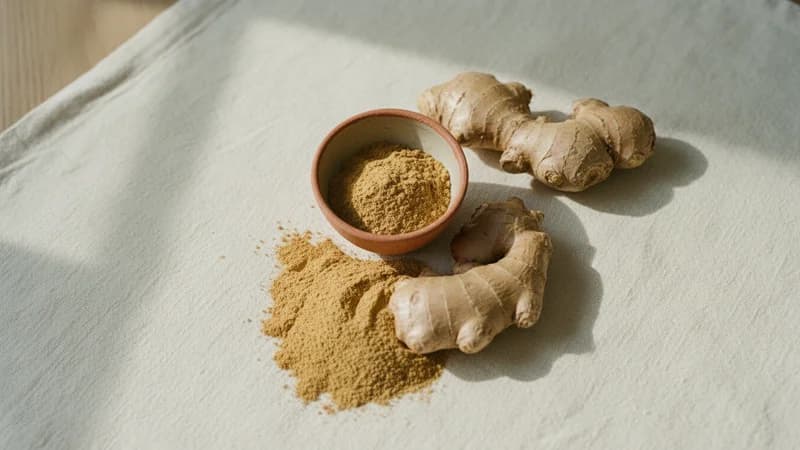
Ginger is best suited to Vata and Kapha, which it helps pacify. In excess it can raise Pitta. Ginger's warming virya kindles Agni, the digestive fire, which Ayurveda holds to be the foundation of good digestion; a little fresh ginger before meals traditionally sharpens appetite and eases the heavy, sluggish feeling of weak digestion.. Best enjoyed during winter.
Ayurvedic Profile
Ginger holds a supreme position in Ayurveda, where it is celebrated as Vishwabheshaja, meaning 'the universal medicine.' The Charaka Samhita distinguishes between two forms: Ardrak (fresh ginger) and Shunti (dry ginger), each with distinct therapeutic properties. Fresh ginger is heavier and more effective for Vata disorders, while dry ginger is lighter, more penetrating, and preferred for Kapha conditions. This distinction is a hallmark of Ayurvedic pharmacological sophistication.
According to the Bhavaprakasha Nighantu, Shunti possesses Katu (pungent) rasa, Ushna (hot) virya, and Madhura (sweet) vipaka. The sweet post-digestive effect is particularly significant as it means ginger ultimately nourishes the tissues rather than depleting them, despite its initial heating quality. This makes it far more sustainable for regular use compared to other pungent spices with a pungent vipaka.
The Ashtanga Hridaya classifies ginger as Deepana (appetite-stimulating), Pachana (digestive), Shula Prashamana (pain-relieving), and Vatanulomana (directing Vata downward). This last property, Vatanulomana, is critical in Ayurvedic therapeutics because the downward movement of Apana Vata governs elimination, menstruation, and delivery. When Apana Vata moves upward (Pratiloma), it causes bloating, constipation, and nausea, all of which ginger effectively addresses.
The classical practice of eating a thin slice of fresh ginger with rock salt and lemon juice before meals (Agni Deepana) is documented in the Ashtanga Hridaya as a method to prepare the digestive system. This simple pre-meal ritual stimulates salivary enzymes, kindles Jatharagni (stomach fire), and ensures optimal nutrient absorption from the food that follows.
Ginger is a cornerstone of Trikatu, the famous three-pungent formula combining it with black pepper and long pepper (Pippali). This formulation is described across multiple classical texts as the supreme Ama Pachana (toxin-digesting) combination. Ginger also features prominently in Shadangapaniya, a classical fever-management decoction, demonstrating its versatility across acute and chronic conditions.
Ayurvedic Properties
Rasa (Taste)
pungent
Virya (Potency)
hot
Vipaka (Post-digestive)
sweet
Guna (Qualities)
light, oily
How Ginger Affects Vata, Pitta & Kapha
Ayurveda reads every food through the three doshas. Here is how ginger’s qualities interact with each: Not sure which is yours? Take the free dosha quiz — about 3 minutes, no signup.
Ginger helps pacify Vata. Its hot virya (potency) and light and oily qualities, with its pungent rasa (taste), counterbalance Vata's tendencies — which is why it traditionally suits Vata dosha in regular use.
Ginger is well tolerated by those with Pitta dosha in normal amounts, but its hot virya and light and oily qualities may aggravate Pitta in excess — so Pitta types are best keeping to measured portions.
Ginger helps pacify Kapha. Its hot virya (potency) and light and oily qualities, with its pungent rasa (taste), counterbalance Kapha's tendencies — which is why it traditionally suits Kapha dosha in regular use.
Nutrition Facts (per 100g)
80kcal
Calories
1.8g
Protein
17.8g
Carbs
0.8g
Fat
2g
Fiber
Ayurvedic Benefits
- Ginger's warming virya kindles Agni, the digestive fire, which Ayurveda holds to be the foundation of good digestion; a little fresh ginger before meals traditionally sharpens appetite and eases the heavy, sluggish feeling of weak digestion.
- As a classic dipana-pachana (appetiser and digestive), dry ginger (shunti) is traditionally used to help the body clear Ama, the sticky metabolic residue that accumulates when digestion is slow, and to lighten a feeling of dullness after rich food.
- Its pungent, light and slightly oily quality moves and thins Kapha in the chest and sinuses, so warm ginger tea is a long-standing winter comfort for a clear throat and an easy, unburdened feeling in the chest during damp, cold weather.
- Ginger is renowned in both classical texts and modern kitchens for settling an unsettled stomach; its gingerol content is the compound most studied for easing nausea and the queasiness of travel or a heavy meal.
- By moving Vata downward and warming the belly, ginger may help ease trapped wind and the cramping bloat of a cold, gassy gut, which is why it so often finishes a heavy pulse or bean dish.
How to Use
- As ginger is heating (ushna virya), balance it with cooling accompaniments such as coriander, fennel or a little ghee — especially through the warmer months.
- Ginger is at its best during winter — eating it in season keeps its Prana (vital energy) and benefit at their peak.
- Grate a coin of fresh ginger, simmer in water for five minutes, then stir in a squeeze of lemon and a little honey once the tea has cooled to lukewarm, and sip as a warming morning drink to wake the digestion.
- Chew a thin slice of fresh ginger with a pinch of rock salt about ten minutes before lunch or dinner; this classic Ayurveda appetiser primes Agni for the meal ahead.
- Add a knob of grated ginger to dals, bean curries and vegetable stir-fries so the pungency both flavours the dish and helps offset the wind-forming, heavy nature of pulses.
- Keep dried ginger powder (shunti) in the spice rack for winter: a quarter teaspoon whisked into warm milk with a touch of jaggery makes a soothing bedtime drink in cold weather.
- For travel queasiness, sip a fresh ginger tea or nibble a small piece of crystallised ginger; it is easy to carry, though keep the crystallised kind to a little as it is high in sugar.
Contraindications
- Because its virya is hot and it aggravates Pitta (P↑), those with a fiery constitution or active heat signs, acid reflux, heartburn or gastritis should limit ginger, especially the dried, more heating form, and take it with cooling companions like fennel.
- Ginger has natural blood-thinning activity, so anyone on anticoagulant or antiplatelet medication, or facing surgery, should keep intake modest and check with their doctor before using concentrated ginger supplements.
- In pregnancy, small culinary amounts are widely used, but high or supplement-strength doses are best avoided; consult a qualified practitioner, and those with gallstones should be cautious as ginger stimulates bile flow.
“Ayurveda classifies Ginger by its pungent rasa (taste), hot virya (thermal potency), and sweet vipaka (post-digestive effect). InnerVeda reads these three lenses together to map Ginger to your dosha and season.”
Ginger by Dosha
See how ginger interacts with each dosha and get personalised guidance.
Frequently Asked Questions
They are treated as two distinct medicines. Fresh ginger (ardrak) is juicier, gentler and best for kindling appetite and easing nausea before a meal. Dried ginger (shunti) is lighter, drier and more strongly heating, so Ayurveda favours it for clearing Ama and Kapha and for deeper digestive weakness in winter. Choose fresh for everyday cooking and nausea, dried for stronger warming action.
For most healthy adults, up to about 3-4 grams of fresh ginger a day (roughly a thumb-sized piece across meals and tea) is comfortable and traditionally used. Keep to the lower end if you run hot, have reflux, or take blood-thinning medication, and treat concentrated capsules as a separate, stronger dose to discuss with a practitioner.
A mild ginger tea first thing can gently wake digestion for Vata and Kapha types who feel cold and sluggish in the morning. If you are Pitta-natured or notice burning or acidity, either sip it with food, dilute it well and add fennel, or take it after breakfast instead. Listen to your body's heat.
Dietary information provided is for educational purposes only and is rooted in Ayurvedic tradition. It is not a substitute for professional nutritional or medical advice. Consult a qualified healthcare provider before making significant changes to your diet, especially if you have food allergies, intolerances, or a medical condition.
Want a meal plan matched to your dosha?
Take the free 3-minute dosha assessment and get a personalised nutrition plan with 300 foods rated for your body.
Find Your Dosha — Free~3 min · no signup