Chapati (Roti): Benefits & Dosha Effects
Sanskrit: Rotika (रोटिका)
Chapati (Roti) is especially balancing for Vata but can raise Kapha when eaten in excess. With sweet rasa (taste), hot virya (potency) and sweet vipaka, it is light and dry in quality and a source of carbohydrates.

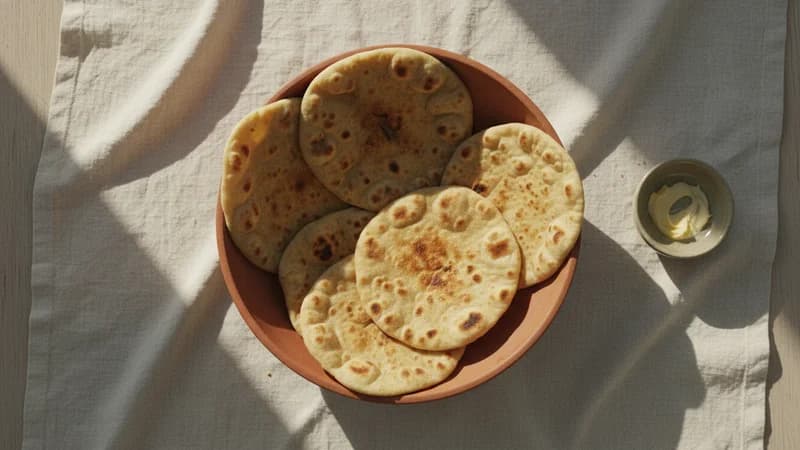
Chapati (Roti) is best suited to Vata, which it helps pacify. In excess it can raise Kapha. Made from whole wheat (Godhuma), which Charaka classifies as Jeevaniya (life-sustaining), supporting steady strength without heaviness. Suitable year-round.
Ayurvedic Profile
Chapati (Roti) (Rotika (रोटिका)) is a wholesome prepared foods treasured in Ayurvedic nutrition. Referenced in Kaiyadeva Nighantu, it is characterised by sweet rasa (taste), heating virya (potency), and sweet vipaka (post-digestive effect). Rotika is the staple bread of Ayurvedic cuisine, made from whole wheat (Godhuma) which Charaka praises as Jeevaniya (life-sustaining); when freshly prepared on a tawa and served warm with ghee, it becomes a perfectly digestible vehicle for absorbing the six tastes from accompanying dishes. Its light and dry gunas make it particularly suited for specific constitutional types. It pacifies Vata, has a neutral effect on Pitta, and can aggravate Kapha when consumed in excess. From a nutritional standpoint, chapati (roti) provides approximately 240 calories per 100g, with 8.0g protein, 44.0g carbohydrates, and is a valuable source of Carbohydrates, Protein, Iron. Best enjoyed during all-seasons, chapati (roti) supports healthy Agni (digestive fire) when prepared according to Ayurvedic principles, helping prevent Ama (toxin) accumulation and nourish the dhatus (body tissues).
Ayurvedic Properties
Rasa (Taste)
sweet
Virya (Potency)
hot
Vipaka (Post-digestive)
sweet
Guna (Qualities)
light, dry
How Chapati (Roti) Affects Vata, Pitta & Kapha
Ayurveda reads every food through the three doshas. Here is how chapati (roti)’s qualities interact with each: Not sure which is yours? Take the free dosha quiz — about 4 minutes.
Chapati (Roti) helps pacify Vata. Its hot virya (potency) and light and dry qualities, with its sweet rasa (taste), counterbalance Vata's tendencies — which is why it traditionally suits Vata dosha in regular use. Vata meal plan
Chapati (Roti) has a broadly neutral effect on Pitta. Its sweet rasa and light and dry qualities neither strongly aggravate nor pacify Pitta, so those with Pitta dosha can enjoy it in moderation within a varied diet. Pitta meal plan
Chapati (Roti) is well tolerated by those with Kapha dosha in normal amounts, but its hot virya and light and dry qualities may aggravate Kapha in excess — so people with Kapha as their leading dosha are best keeping to measured portions. Kapha meal plan
Nutrition Facts (per 100g)
240kcal
Calories
8g
Protein
44g
Carbs
3.5g
Fat
3g
Fibre
Ayurvedic Benefits
- Made from whole wheat (Godhuma), which Charaka classifies as Jeevaniya (life-sustaining), supporting steady strength without heaviness
- Its thin, fat-free, tawa-cooked form is among the lightest of the wheat breads, making it easy to digest even for moderate Agni
- Grounds and pacifies Vata through its sweet rasa and warm, freshly-cooked nature, settling for an anxious or irregular appetite
- The intact bran of whole-wheat atta adds fibre that supports regular elimination (Apana Vayu) and steady, slow-release energy
- Acts as a neutral Shadrasa vehicle, its mild sweetness carrying the six tastes of accompanying dal, sabzi and chutney into the tissues
How to Use
- As chapati (roti) is heating (ushna virya), balance it with cooling accompaniments such as coriander, fennel or a little ghee — especially through the warmer months.
- Cook on a hot tawa until it puffs, then serve immediately, a freshly-made roti carries the most Prana and is far more digestible than a reheated one
- A thin smear of ghee on a warm roti eases Vata dryness and aids assimilation; leave it plain to keep the meal lighter for Kapha
- Because roti is fat-free and light, it makes a suitable evening bread when a paratha or fried grain would feel too heavy before sleep
- Pair with a protein-rich dal and a cooked vegetable to complete the six tastes and balance whole wheat's astringent-sweet nature
- Choose stone-ground whole-wheat atta over refined maida, the intact bran keeps the glycaemic response gentler and the fibre intact
Contraindications
- Those with wheat or gluten sensitivity (a common cause of Ama and bloating) are best avoiding roti or choosing millet-based bajra or jowar rotis
- Cold, stale or refrigerated roti becomes heavy and hard to digest (Guru); Ayurveda advises against it, especially for weak Agni
- In Kapha-dominant constitutions or during Kapha season, keep portions modest and favour millet rotis, as excess wheat may add heaviness and moisture
“Ayurveda classifies Chapati (Roti) by its sweet rasa (taste), hot virya (thermal potency), and sweet vipaka (post-digestive effect). InnerVeda reads these three lenses together to map Chapati (Roti) to your dosha and season.”
Frequently Asked Questions
A plain whole-wheat roti is relatively light and high in fibre, so it can fit a weight-management diet when eaten in moderation with plenty of vegetables and dal. Kapha types who gain weight easily may prefer millet rotis such as bajra or jowar, which have a lighter, more Lekhana (scraping) quality.
Neither is universally better; it depends on your constitution. Whole-wheat roti is heavier, warmer and higher in fibre, grounding for Vata; rice is lighter, cooling and gentler on a delicate or inflamed Pitta digestion. Ayurveda chooses by dosha, season and the strength of your Agni rather than by calories alone.
For most people a fresh whole-wheat roti is a wholesome daily staple, best eaten warm at lunch when Agni is strongest. Varying your grains through the week (rice, millets, barley) keeps the diet balanced across the six tastes so no single grain's qualities accumulate.
Your dosha is the balance of Vata, Pitta and Kapha you were born with. Take the dosha quiz — free, about 4 minutes.
Three questions towards your dosha
These are the first three questions of the full dosha quiz. Answer them here and carry on where you left off.
Prefer to start from the beginning? Take the full dosha quiz.
Dietary information provided is for educational purposes only and is rooted in Ayurvedic tradition. It is not a substitute for professional nutritional or medical advice. Consult a qualified healthcare provider before making significant changes to your diet, especially if you have food allergies, intolerances, or a medical condition.
Want a meal plan matched to your dosha?
Take the free dosha assessment (about 4 minutes) and get a personalised nutrition plan with nearly 300 foods in the app, rated for your body.
Find Your Dosha: FreeAbout 4 minutes