Dal Tadka: Benefits & Dosha Effects
Sanskrit: Dala Tadka (दाल तड़का)
Dal Tadka is especially balancing for Vata and Kapha. With sweet, astringent and pungent rasa (taste), hot virya (potency) and sweet vipaka, it is light and oily in quality and a source of protein.

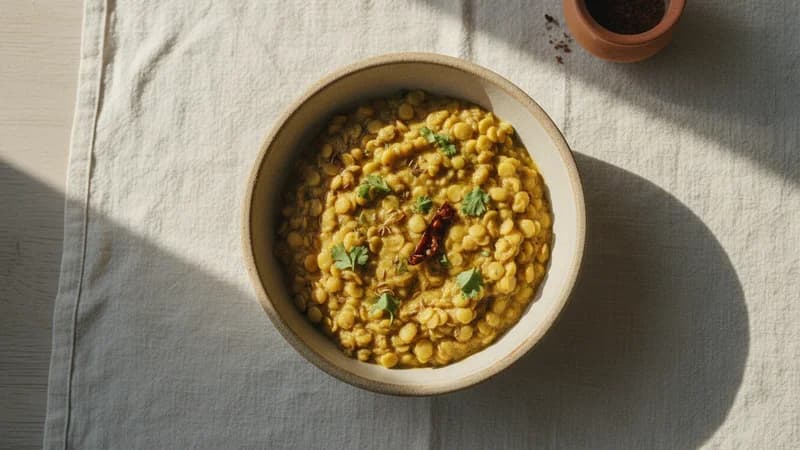
Dal Tadka is best suited to Vata and Kapha, which it helps pacify. The final tadka of ghee, cumin and hing acts as a Deepana-Pachana finish, kindling Agni and traditionally used to ease the bloating that plain boiled lentils can cause. Suitable year-round.
Ayurvedic Profile
Dal Tadka (Dala Tadka (दाल तड़का)) is a wholesome prepared foods treasured in Ayurvedic nutrition. Referenced in Sushruta Samhita, it is characterised by sweet and astringent and pungent rasa (taste), heating virya (potency), and sweet vipaka (post-digestive effect). Dal Tadka represents the Ayurvedic art of Samskara (food processing) at its finest; the ghee-tempered spices transform simple lentils into a Deepaniya-Pachana preparation that nourishes Rasa dhatu while stimulating Agni through aromatic volatile oils. Its light and oily gunas make it particularly suited for specific constitutional types. It pacifies Vata, has a neutral effect on Pitta, and pacifies Kapha. From a nutritional standpoint, dal tadka provides approximately 120 calories per 100g, with 7.5g protein, 16.0g carbohydrates, and is a valuable source of Protein, Iron, Folate. Best enjoyed during all-seasons, dal tadka supports healthy Agni (digestive fire) when prepared according to Ayurvedic principles, helping prevent Ama (toxin) accumulation and nourish the dhatus (body tissues).
Ayurvedic Properties
Rasa (Taste)
sweet, astringent, pungent
Virya (Potency)
hot
Vipaka (Post-digestive)
sweet
Guna (Qualities)
light, oily
How Dal Tadka Affects Vata, Pitta & Kapha
Ayurveda reads every food through the three doshas. Here is how dal tadka’s qualities interact with each: Not sure which is yours? Take the free dosha quiz — about 4 minutes.
Dal Tadka helps pacify Vata. Its hot virya (potency) and light and oily qualities, with its sweet, astringent and pungent rasa (taste), counterbalance Vata's tendencies — which is why it traditionally suits Vata dosha in regular use. Vata meal plan
Dal Tadka has a broadly neutral effect on Pitta. Its sweet, astringent and pungent rasa and light and oily qualities neither strongly aggravate nor pacify Pitta, so those with Pitta dosha can enjoy it in moderation within a varied diet. Pitta meal plan
Dal Tadka helps pacify Kapha. Its hot virya (potency) and light and oily qualities, with its sweet, astringent and pungent rasa (taste), counterbalance Kapha's tendencies — which is why it traditionally suits Kapha dosha in regular use. Kapha meal plan
Nutrition Facts (per 100g)
120kcal
Calories
7.5g
Protein
16g
Carbs
3g
Fat
4g
Fibre
Ayurvedic Benefits
- The final tadka of ghee, cumin and hing acts as a Deepana-Pachana finish, kindling Agni and traditionally used to ease the bloating that plain boiled lentils can cause
- Built on split yellow moong or toor dal, it stays lighter (guna laghu) than heavier masala-based dals, so it may help those with delicate digestion take protein without a sense of stomach heaviness
- Its sweet vipaka and the ghee carrier nourish Rasa dhatu and support Ojas, making it a grounding, Vata-pacifying protein for dry, cold, or windy days
- Supplies plant protein alongside iron and folate from the lentils, supporting the everyday building of tissue and healthy blood-tissue nourishment (Rakta dhatu)
- The astringent (kashaya) note of the lentil gently tones the gut and supports firmer stool, which is why a simple tadka dal is a classic Pathya (supportive) meal during convalescence
How to Use
- As dal tadka is heating (ushna virya), balance it with cooling accompaniments such as coriander, fennel or a little ghee — especially through the warmer months.
- Cook split yellow moong or toor dal soft with turmeric and salt, then finish with a hot tadka of ghee, cumin seeds, a pinch of hing and a clove of garlic poured over just before serving
- Keep it thinner and soupier for an easy-to-digest lunch, or slightly thicker to spoon over plain steamed rice with a little extra ghee for Vata days
- Add the tempering fresh at the table so the aromatic oils of cumin and hing stay lively; a reheated, pre-mixed tadka loses much of its digestive spark
- For a lighter dinner, use only moong dal with a cumin-and-hing tadka and skip the chilli, so the meal does not tax the cooler evening Agni
- Pair with a squeeze of lime and fresh coriander rather than heavy pickles, keeping the plate close to the clean, homestyle character of tadka dal
Contraindications
- Those with high Pitta or a tendency to acidity should keep the dried red chilli and garlic in the tadka light, as the pungent tempering and hot virya can add to heat, especially in summer (Grishma Ritu)
- It is finished in ghee, so anyone advised to limit saturated fat or managing a gallbladder condition should keep the tempering modest and the portion moderate
- Toor-dal versions are heavier and more gas-forming than moong; if you bloat easily, choose a moong-only tadka dal and be sure the hing and cumin are well included
“Ayurveda classifies Dal Tadka by its sweet, astringent, pungent rasa (taste), hot virya (thermal potency), and sweet vipaka (post-digestive effect). InnerVeda reads these three lenses together to map Dal Tadka to your dosha and season.”
Frequently Asked Questions
Dal tadka is boiled lentils finished with a tempering (tadka or chaunk) of ghee, cumin, hing and garlic poured over at the very end, so it stays lighter and cleaner. Dal fry cooks the dal into a fried onion-tomato masala base, making it richer and heavier. In Ayurvedic terms tadka dal is the gentler of the two on Agni.
Split yellow moong dal makes the lightest, most easily digested tadka dal and is ideal when your digestion is delicate. Toor (arhar) dal gives a fuller-bodied version with more substance but is a little heavier. Many homes cook a moong-toor mix; if you bloat easily, lean towards moong and be generous with cumin and hing in the tempering.
A moong-based tadka dal, kept light and well-tempered with cumin and hing, is gentle enough for regular meals and is a mainstay of everyday Ayurvedic eating. Keep the chilli and garlic modest if you run hot or feel acidic, favour it at lunch when Agni is strongest, and vary the lentil so the meal stays interesting.
Your dosha is the balance of Vata, Pitta and Kapha you were born with. Take the dosha quiz — free, about 4 minutes.
Three questions towards your dosha
These are the first three questions of the full dosha quiz. Answer them here and carry on where you left off.
Prefer to start from the beginning? Take the full dosha quiz.
Dietary information provided is for educational purposes only and is rooted in Ayurvedic tradition. It is not a substitute for professional nutritional or medical advice. Consult a qualified healthcare provider before making significant changes to your diet, especially if you have food allergies, intolerances, or a medical condition.
Want a meal plan matched to your dosha?
Take the free dosha assessment (about 4 minutes) and get a personalised nutrition plan with nearly 300 foods in the app, rated for your body.
Find Your Dosha: FreeAbout 4 minutes