Chia Seeds: Benefits & Dosha Effects
Sanskrit: Chiya Bija (चिया बीज)
Chia Seeds is especially balancing for Vata and Pitta but can raise Kapha when eaten in excess. With sweet rasa (taste), cold virya (potency) and sweet vipaka, it is heavy and oily in quality and a source of omega-3.

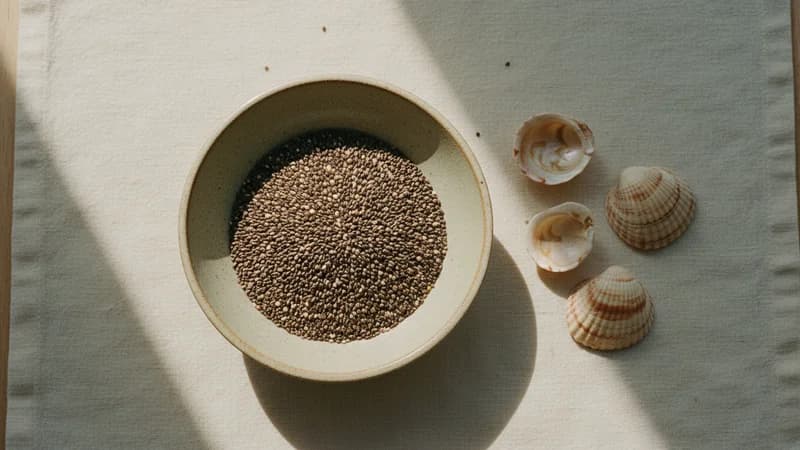
Chia Seeds is best suited to Vata and Pitta, which it helps pacify. In excess it can raise Kapha. Their sweet rasa, cold virya and sweet vipaka make chia a cooling, grounding seed traditionally used to steady an over-mobile Vata and to temper the heat of aggravated Pitta, especially in the fierce summer months.. Best enjoyed during summer.
Ayurvedic Profile
Chia Seeds (Chiya Bija (चिया बीज)) is a strengthening nuts seeds treasured in Ayurvedic nutrition. Referenced in Dhanvantari Nighantu, it is characterised by sweet rasa (taste), cooling virya (potency), and sweet vipaka (post-digestive effect). Though not in classical texts, chia seeds have been embraced in modern Ayurveda for their exceptional Snigdha quality and fibre content; soaked chia forms a mucilaginous gel that soothes inflamed intestinal mucosa and supports regular elimination. Its heavy and oily gunas make it particularly suited for specific constitutional types. It pacifies Vata, pacifies Pitta, and can aggravate Kapha when consumed in excess. From a nutritional standpoint, chia seeds provides approximately 486 calories per 100g, with 16.5g protein, 42.1g carbohydrates, and is a valuable source of Omega-3, Calcium, Manganese. Best enjoyed during summer, chia seeds supports healthy Agni (digestive fire) when prepared according to Ayurvedic principles, helping prevent Ama (toxin) accumulation and nourish the dhatus (body tissues).
Ayurvedic Properties
Rasa (Taste)
sweet
Virya (Potency)
cold
Vipaka (Post-digestive)
sweet
Guna (Qualities)
heavy, oily
How Chia Seeds Affects Vata, Pitta & Kapha
Ayurveda reads every food through the three doshas. Here is how chia seeds’s qualities interact with each: Not sure which is yours? Take the free dosha quiz — about 4 minutes.
Chia Seeds helps pacify Vata. Its cold virya (potency) and heavy and oily qualities, with its sweet rasa (taste), counterbalance Vata's tendencies — which is why it traditionally suits Vata dosha in regular use. Vata meal plan
Chia Seeds helps pacify Pitta. Its cold virya (potency) and heavy and oily qualities, with its sweet rasa (taste), counterbalance Pitta's tendencies — which is why it traditionally suits Pitta dosha in regular use. Pitta meal plan
Chia Seeds is well tolerated by those with Kapha dosha in normal amounts, but its cold virya and heavy and oily qualities may aggravate Kapha in excess — so people with Kapha as their leading dosha are best keeping to measured portions. Kapha meal plan
Nutrition Facts (per 100g)
486kcal
Calories
16.5g
Protein
42.1g
Carbs
30.7g
Fat
34.4g
Fibre
Ayurvedic Benefits
- Their sweet rasa, cold virya and sweet vipaka make chia a cooling, grounding seed traditionally used to steady an over-mobile Vata and to temper the heat of aggravated Pitta, especially in the fierce summer months.
- Rich in plant omega-3 (ALA) and soluble fibre, chia is valued as a Snigdha (unctuous) food that lubricates the channels; a soaked spoonful may help ease dry, sluggish bowel movements without harsh purgatives.
- The gel that forms when chia meets liquid holds many times its weight in water, so it supports steady hydration and a lasting sense of satiety, useful for those prone to erratic Vata-type hunger.
- One of the better plant sources of calcium, magnesium and manganese, chia supports the building of Asthi Dhatu (bone tissue), a gentle everyday addition for those limiting dairy.
- Its heavy, oily guna makes it a nourishing Brinhana food that helps build tissue and supports Ojas, best suited to those who feel depleted, dry or run down rather than heavy and congested.
How to Use
- As chia seeds is cooling (shita virya), favour it in warmer weather and pair it with warming spices like ginger or black pepper when the seasons turn cold.
- Chia Seeds is at its best during summer — eating it in season keeps its Prana (vital energy) and benefit at their peak.
- Soak 1 tablespoon in about 200 ml of water, milk or plant milk for 20 to 30 minutes until a soft gel forms, then take it in the morning; soaking respects the cold virya and prevents the seeds swelling in the throat.
- Stir soaked chia into overnight oats, warm milk with a pinch of cardamom, or into a summer pudding with coconut milk and stewed fruit for a cooling breakfast.
- Blend a spoonful of gelled chia into a mango, banana or berry smoothie to thicken it and add lasting fullness.
- Use it as an egg replacement in baking: one tablespoon chia to three tablespoons water, rested until thick, binds pancakes, muffins and flatbreads.
- Keep the daily amount modest, roughly one to two tablespoons, and always take it well hydrated, since chia is calorie-dense and its heavy guna can burden a weak Agni if overdone.
Contraindications
- Those with a sluggish digestion, heaviness, water retention or a strong Kapha tendency should limit chia, as its heavy, oily quality can aggravate Kapha when eaten in excess.
- Anyone with difficulty swallowing or a history of narrowing of the gullet should only take chia fully soaked, never dry, as the dry seeds swell rapidly and can lodge in the throat or oesophagus.
- Because chia is high in soluble fibre and omega-3, those on blood-thinning medication or preparing for surgery, and anyone with an easily upset gut, should introduce it gradually and, if in doubt, check with their doctor.
“Ayurveda classifies Chia Seeds by its sweet rasa (taste), cold virya (thermal potency), and sweet vipaka (post-digestive effect). InnerVeda reads these three lenses together to map Chia Seeds to your dosha and season.”
Frequently Asked Questions
Soaked, in almost every case. Resting a tablespoon in water or milk for 20 to 30 minutes forms the soft gel that makes chia easy to digest and safe to swallow. Dry seeds draw water from the gut and swell on the way down, which can feel harsh and, rarely, cause them to lodge in the throat. Soaking also honours the seed's cold, heavy nature so it sits more comfortably rather than undigested.
Cooling. Chia carries a cold virya with sweet rasa and sweet vipaka, so it settles Vata and calms Pitta and is especially welcome in summer. The trade-off is its heavy, oily guna, which can increase Kapha if you already tend towards heaviness, water retention or slow digestion, so keep portions small if that sounds like you.
For most people one to two tablespoons a day, always soaked and taken with enough fluid, is plenty. Chia is genuinely calorie-dense at around 486 kcal per 100 g, so a little goes a long way. Start with a single teaspoon if your digestion is delicate and build up slowly, watching for any bloating or heaviness.
Your dosha is the balance of Vata, Pitta and Kapha you were born with. Take the dosha quiz — free, about 4 minutes.
Three questions towards your dosha
These are the first three questions of the full dosha quiz. Answer them here and carry on where you left off.
Prefer to start from the beginning? Take the full dosha quiz.
Dietary information provided is for educational purposes only and is rooted in Ayurvedic tradition. It is not a substitute for professional nutritional or medical advice. Consult a qualified healthcare provider before making significant changes to your diet, especially if you have food allergies, intolerances, or a medical condition.
Want a meal plan matched to your dosha?
Take the free dosha assessment (about 4 minutes) and get a personalised nutrition plan with nearly 300 foods in the app, rated for your body.
Find Your Dosha: FreeAbout 4 minutes