Pumpkin Seeds: Benefits & Dosha Effects
Sanskrit: Kusmanda Bija (कुष्माण्ड बीज)
Pumpkin Seeds is especially balancing for Vata. With sweet and bitter rasa (taste), cold virya (potency) and sweet vipaka, it is light and oily in quality and a source of zinc.

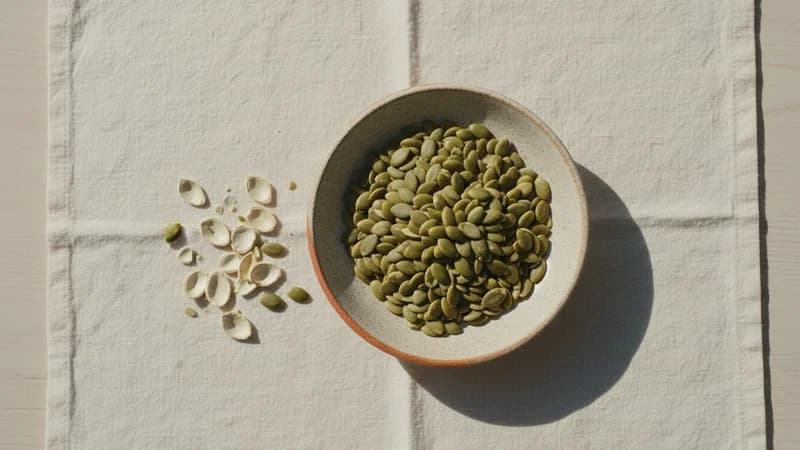
Pumpkin Seeds is best suited to Vata, which it helps pacify. Exceptional zinc content supporting Shukra Dhatu (reproductive tissue) and immune function. Suitable year-round.
Ayurvedic Profile
Pumpkin seeds, understood as Kusmanda Bija (seeds of pumpkin) in the Ayurvedic framework, derive their therapeutic context from the parent fruit Kusmanda (ash gourd/pumpkin family). The Bhavaprakasha Nighantu extensively praises Kusmanda as Medhya (intellect-promoting), Balya (strength-giving), and Shukrala (reproductive tissue-nourishing). The seeds carry a concentrated version of these properties in a nutritionally dense, compact form.
Pumpkin seeds exhibit Madhura-Tikta (sweet-bitter) rasa, Sheeta (cold) virya, and Madhura (sweet) vipaka with Laghu (light) and Snigdha (oily) gunas. The cooling virya combined with oily quality creates an unusually Pitta-friendly seed, distinguishing pumpkin seeds from almonds and sesame which are both heating. This makes pumpkin seeds valuable for Pitta-Vata constitutions who need seed nutrition without excess heat.
The extraordinary zinc content of pumpkin seeds is their most therapeutically significant nutritional feature. In Ayurvedic terms, zinc directly supports Shukra Dhatu (reproductive tissue) health and immune function (Vyadhikshamatva). The Charaka Samhita's Vajikarana chapter emphasises the importance of specific nutrients for reproductive vitality, and pumpkin seeds' zinc content addresses this need effectively, particularly for men's prostate health.
Pumpkin seeds' magnesium content supports Majja Dhatu (nervous tissue) and promotes Nidra (healthy sleep). The amino acid tryptophan, a precursor to serotonin and melatonin, provides additional sleep-supporting action. This combination of magnesium and tryptophan creates what Ayurveda would describe as Nidrajanana (sleep-inducing) properties, making pumpkin seeds an excellent evening snack.
From a practical preparation standpoint, pumpkin seeds can be consumed raw, lightly toasted, or ground. Light toasting enhances their flavour and makes them slightly more digestible without significantly altering their therapeutic properties. Unlike flax seeds, pumpkin seeds can be consumed whole as their shells are thin enough for digestion. However, hulled (green) pumpkin seeds (pepitas) are lighter and preferred for regular consumption.
Ayurvedic Properties
Rasa (Taste)
sweet, bitter
Virya (Potency)
cold
Vipaka (Post-digestive)
sweet
Guna (Qualities)
light, oily
How Pumpkin Seeds Affects Vata, Pitta & Kapha
Ayurveda reads every food through the three doshas. Here is how pumpkin seeds’s qualities interact with each: Not sure which is yours? Take the free dosha quiz — about 4 minutes.
Pumpkin Seeds helps pacify Vata. Its cold virya (potency) and light and oily qualities, with its sweet and bitter rasa (taste), counterbalance Vata's tendencies — which is why it traditionally suits Vata dosha in regular use. Vata meal plan
Pumpkin Seeds has a broadly neutral effect on Pitta. Its sweet and bitter rasa and light and oily qualities neither strongly aggravate nor pacify Pitta, so those with Pitta dosha can enjoy it in moderation within a varied diet. Pitta meal plan
Pumpkin Seeds has a broadly neutral effect on Kapha. Its sweet and bitter rasa and light and oily qualities neither strongly aggravate nor pacify Kapha, so those with Kapha dosha can enjoy it in moderation within a varied diet. Kapha meal plan
Nutrition Facts (per 100g)
559kcal
Calories
30.2g
Protein
10.7g
Carbs
49.1g
Fat
6g
Fibre
Ayurvedic Benefits
- Exceptional zinc content supporting Shukra Dhatu (reproductive tissue) and immune function
- Cooling virya makes them the most Pitta-friendly seed option unlike heating almonds and sesame
- Rich magnesium and tryptophan provide natural Nidrajanana (sleep-supporting) properties
- Light and oily qualities provide Vata pacification without Kapha aggravation
- Concentrated nutrition from the therapeutically renowned Kusmanda (pumpkin) family
How to Use
- As pumpkin seeds is cooling (shita virya), favour it in warmer weather and pair it with warming spices like ginger or black pepper when the seasons turn cold.
- Eat a small handful (1-2 tbsp) as an evening snack for sleep support
- Sprinkle toasted pumpkin seeds on salads, soups, and grain bowls for zinc-rich garnish
- Blend into smoothies with dates and cardamom for a nourishing drink
- Make pumpkin seed butter as a spread for a cooling alternative to nut butters
- Add to trail mix with dried fruits and other seeds for balanced on-the-go nutrition
Contraindications
- Generally very safe with few contraindications for most constitutions
- High caloric density requires mindful portions for those managing weight
- Some individuals may experience mild digestive discomfort; introduce gradually
“Ayurveda classifies Pumpkin Seeds by its sweet, bitter rasa (taste), cold virya (thermal potency), and sweet vipaka (post-digestive effect). InnerVeda reads these three lenses together to map Pumpkin Seeds to your dosha and season.”
Frequently Asked Questions
Yes, pumpkin seeds contain magnesium and tryptophan, both of which support healthy sleep. Magnesium promotes muscle relaxation and nervous system calm, while tryptophan is a precursor to melatonin. Eat a small handful 1-2 hours before bed for gentle sleep support.
One to two tablespoons (about 15-30g) daily provides therapeutic benefits including zinc, magnesium, and healthy fats without excessive calories. This amount is generally well-tolerated by all dosha types. You can eat them raw or lightly toasted.
Hulled pumpkin seeds (pepitas, the green inner kernel) are lighter, easier to digest, and preferred for regular consumption. Unhulled seeds provide more fibre but are heavier and crunchier. For Ayurvedic purposes, hulled pepitas are recommended for their lighter quality and better nutrient accessibility.
Your dosha is the balance of Vata, Pitta and Kapha you were born with. Take the dosha quiz — free, about 4 minutes.
Three questions towards your dosha
These are the first three questions of the full dosha quiz. Answer them here and carry on where you left off.
Prefer to start from the beginning? Take the full dosha quiz.
Dietary information provided is for educational purposes only and is rooted in Ayurvedic tradition. It is not a substitute for professional nutritional or medical advice. Consult a qualified healthcare provider before making significant changes to your diet, especially if you have food allergies, intolerances, or a medical condition.
Want a meal plan matched to your dosha?
Take the free dosha assessment (about 4 minutes) and get a personalised nutrition plan with nearly 300 foods in the app, rated for your body.
Find Your Dosha: FreeAbout 4 minutes