Flax Seeds: Benefits & Dosha Effects
Sanskrit: Atasi (अतसी)
Flax Seeds is especially balancing for Vata. With sweet and bitter rasa (taste), hot virya (potency) and pungent vipaka, it is heavy, oily and smooth in quality and a source of omega-3 (ala).

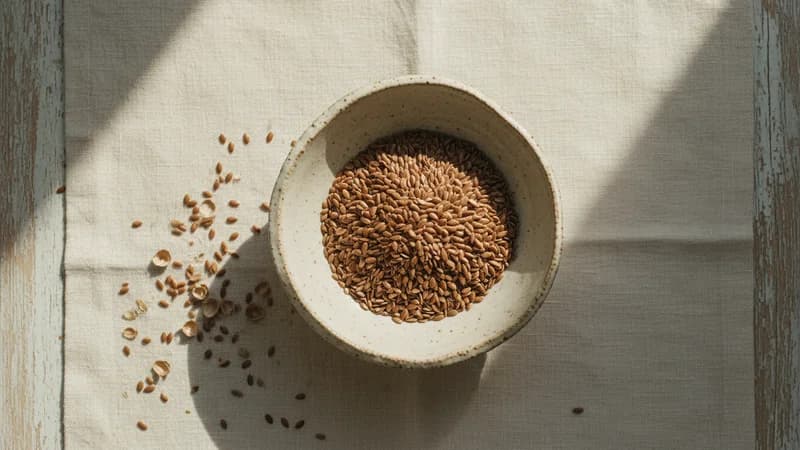
Flax Seeds is best suited to Vata, which it helps pacify. Richest plant source of omega-3 (ALA) fatty acids for Vata pacification and nervous system support. Best enjoyed during winter.
Ayurvedic Profile
Flax seeds, known as Atasi or Uma in Sanskrit, are referenced in classical Ayurvedic texts primarily for their oil (Atasi Taila) rather than as a food. The Bhavaprakasha Nighantu describes Atasi as possessing Madhura-Tikta (sweet-bitter) rasa, Ushna (hot) virya, and Katu (pungent) vipaka with Guru (heavy), Snigdha (oily), and Mridu (soft) gunas. Traditionally, Atasi Taila was used more for external applications and therapeutic preparations than as a dietary oil.
In modern Ayurvedic practice, flax seeds have gained significant prominence due to their exceptional omega-3 fatty acid (ALA) content. From an Ayurvedic perspective, this high Snigdha (oily) quality translates to excellent Vata pacification and Snehana (internal oleation) action. For vegetarians who cannot access marine omega-3 sources, flax seeds provide a plant-based alternative that supports the same tissues: Majja Dhatu (nervous tissue), Asthi Dhatu (bone tissue), and Shukra Dhatu (reproductive tissue).
The extremely high fibre content of flax seeds, particularly the mucilaginous soluble fibre, creates a mild Mridu Virechana (gentle laxative) action that the Ashtanga Hridaya would classify as beneficial for Anulomana (directing Vata downward). Soaking ground flax seeds in water creates a gel-like substance that soothes the intestinal lining and promotes healthy bowel movements without irritation, making it suitable for even sensitive digestive systems.
Lignan content in flax seeds provides phytoestrogenic activity that modern Ayurvedic practitioners find useful for supporting hormonal balance, particularly during perimenopause and menopause. While not described in ancient texts, this property aligns with the broader Ayurvedic principle of Stri Rasayana (female rejuvenative) using nourishing, Vata-Pitta pacifying substances.
A critical Ayurvedic consideration for flax seeds is the principle of freshness and proper preparation. Whole flax seeds pass through the digestive system undigested due to their hard shell. They must be freshly ground to release their oils and nutrients. Ground flax should be consumed immediately or stored in the refrigerator, as the exposed oils oxidise rapidly, converting nourishing Snigdha (unctuous) quality into potentially harmful rancidity.
Ayurvedic Properties
Rasa (Taste)
sweet, bitter
Virya (Potency)
hot
Vipaka (Post-digestive)
pungent
Guna (Qualities)
heavy, oily, smooth
How Flax Seeds Affects Vata, Pitta & Kapha
Ayurveda reads every food through the three doshas. Here is how flax seeds’s qualities interact with each: Not sure which is yours? Take the free dosha quiz — about 4 minutes.
Flax Seeds helps pacify Vata. Its hot virya (potency) and heavy, oily and smooth qualities, with its sweet and bitter rasa (taste), counterbalance Vata's tendencies — which is why it traditionally suits Vata dosha in regular use. Vata meal plan
Flax Seeds has a broadly neutral effect on Pitta. Its sweet and bitter rasa and heavy, oily and smooth qualities neither strongly aggravate nor pacify Pitta, so those with Pitta dosha can enjoy it in moderation within a varied diet. Pitta meal plan
Flax Seeds has a broadly neutral effect on Kapha. Its sweet and bitter rasa and heavy, oily and smooth qualities neither strongly aggravate nor pacify Kapha, so those with Kapha dosha can enjoy it in moderation within a varied diet. Kapha meal plan
Nutrition Facts (per 100g)
534kcal
Calories
18.3g
Protein
28.9g
Carbs
42.2g
Fat
27.3g
Fibre
Ayurvedic Benefits
- Richest plant source of omega-3 (ALA) fatty acids for Vata pacification and nervous system support
- Exceptional fibre content supports gentle Anulomana (Vata-directing) bowel regularity
- Lignans provide phytoestrogenic support for hormonal balance during life transitions
- Mucilaginous quality soothes intestinal lining and supports Grahani (intestinal) health
- Effective Snehana (internal oleation) agent for vegetarians seeking tissue nourishment
How to Use
- As flax seeds is heating (ushna virya), balance it with cooling accompaniments such as coriander, fennel or a little ghee — especially through the warmer months.
- Flax Seeds is at its best during winter — eating it in season keeps its Prana (vital energy) and benefit at their peak.
- Grind fresh in a coffee grinder and add 1 tbsp to warm oatmeal or smoothies
- Soak 1 tbsp ground flax in warm water for 15 minutes and drink for gentle laxative effect
- Mix freshly ground flax into yoghurt or chutneys for enhanced nutrition
- Add to bread dough and baking for fibre and omega-3 enrichment
- Use flax gel (soaked ground seeds) as an egg replacement in Sattvic baking
Contraindications
- Always grind before eating; whole seeds pass through undigested
- Ground flax oxidises rapidly; grind fresh each time or store in refrigerator for maximum 1 week
- May interact with blood-thinning medications due to omega-3 content; consult your physician
“Ayurveda classifies Flax Seeds by its sweet, bitter rasa (taste), hot virya (thermal potency), and pungent vipaka (post-digestive effect). InnerVeda reads these three lenses together to map Flax Seeds to your dosha and season.”
Frequently Asked Questions
Absolutely yes. Whole flax seeds have an indigestible shell that prevents your body from accessing the omega-3s, lignans, and fibre inside. Always grind them fresh before eating. A dedicated coffee grinder works perfectly. Pre-ground flax should be refrigerated and used within a week.
One to two tablespoons of freshly ground flax seeds daily is the standard recommendation. Start with one tablespoon and increase gradually as your digestion adjusts to the high fibre content. Drink adequate water throughout the day when consuming flax to support the fibre's function.
Both are valuable but different. Flax seeds are higher in omega-3 ALA and lignans, and have a more warming quality (Ushna virya). Chia seeds are more cooling and hydrating. In Ayurvedic terms, flax is better for Vata types and winter; chia may be more suitable for Pitta and summer. Both require adequate hydration.
Your dosha is the balance of Vata, Pitta and Kapha you were born with. Take the dosha quiz — free, about 4 minutes.
Three questions towards your dosha
These are the first three questions of the full dosha quiz. Answer them here and carry on where you left off.
Prefer to start from the beginning? Take the full dosha quiz.
Dietary information provided is for educational purposes only and is rooted in Ayurvedic tradition. It is not a substitute for professional nutritional or medical advice. Consult a qualified healthcare provider before making significant changes to your diet, especially if you have food allergies, intolerances, or a medical condition.
Want a meal plan matched to your dosha?
Take the free dosha assessment (about 4 minutes) and get a personalised nutrition plan with nearly 300 foods in the app, rated for your body.
Find Your Dosha: FreeAbout 4 minutes