Duck: Benefits & Dosha Effects
Sanskrit: Vartaka Pakshi (वर्तक पक्षी)
Duck is especially balancing for Vata but can raise Kapha when eaten in excess and tends to aggravate Pitta. With sweet rasa (taste), hot virya (potency) and sweet vipaka, it is heavy and oily in quality and a source of iron.

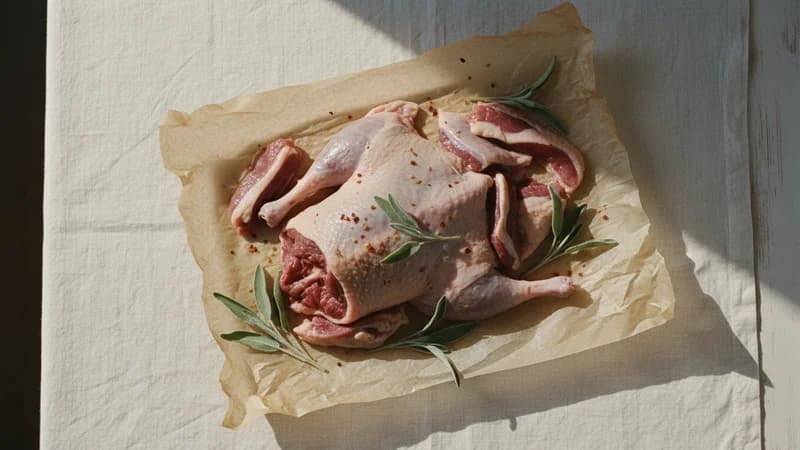
Duck is best suited to Vata, which it helps pacify. It can aggravate Pitta, so people with Pitta as their leading dosha should use it sparingly. Duck is one of the most Brimhana (deeply nourishing) of the fowl, its sweet rasa and sweet vipaka building the Mamsa (muscle) and Rasa dhatus, making it a classical choice for the thin, dry and Vata-depleted seeking to regain body. Best enjoyed during winter.
Ayurvedic Profile
Duck (Vartaka Pakshi (वर्तक पक्षी)) is a tissue-building meats proteins treasured in Ayurvedic nutrition. Referenced in Charaka Samhita, it is characterised by sweet rasa (taste), heating virya (potency), and sweet vipaka (post-digestive effect). Duck meat is classified among Anupa (wetland) birds in Sushruta Samhita as Guru and Snigdha, richer and more Kapha-producing than chicken; its higher fat content deeply nourishes Vata but requires strong Agni and should be consumed with pungent spices. Its heavy and oily gunas make it particularly suited for specific constitutional types. It pacifies Vata, may increase Pitta, and can aggravate Kapha when consumed in excess. From a nutritional standpoint, duck provides approximately 337 calories per 100g, with 19.0g protein, 0.0g carbohydrates, and is a valuable source of Iron, Vitamin B12, Selenium. Best enjoyed during winter, duck supports healthy Agni (digestive fire) when prepared according to Ayurvedic principles, helping prevent Ama (toxin) accumulation and nourish the dhatus (body tissues).
Ayurvedic Properties
Rasa (Taste)
sweet
Virya (Potency)
hot
Vipaka (Post-digestive)
sweet
Guna (Qualities)
heavy, oily
How Duck Affects Vata, Pitta & Kapha
Ayurveda reads every food through the three doshas. Here is how duck’s qualities interact with each: Not sure which is yours? Take the free dosha quiz — about 4 minutes.
Duck helps pacify Vata. Its hot virya (potency) and heavy and oily qualities, with its sweet rasa (taste), counterbalance Vata's tendencies — which is why it traditionally suits Vata dosha in regular use. Vata meal plan
Duck tends to increase Pitta. Its hot virya and heavy and oily qualities, with its sweet rasa, align with Pitta's own nature, so those with Pitta dosha are best using it sparingly and pairing it with Pitta-pacifying foods. Pitta meal plan
Duck is well tolerated by those with Kapha dosha in normal amounts, but its hot virya and heavy and oily qualities may aggravate Kapha in excess — so people with Kapha as their leading dosha are best keeping to measured portions. Kapha meal plan
Nutrition Facts (per 100g)
337kcal
Calories
19g
Protein
0g
Carbs
28.4g
Fat
0g
Fibre
Ayurvedic Benefits
- Duck is one of the most Brimhana (deeply nourishing) of the fowl, its sweet rasa and sweet vipaka building the Mamsa (muscle) and Rasa dhatus, making it a classical choice for the thin, dry and Vata-depleted seeking to regain body
- Its heavy, oily guna and rich natural fat lubricate the tissues and calm an aggravated Vata, supporting warmth, unctuousness and grounded strength through cold, dry weather when the body loses its own oils
- The hot virya rouses a slow winter Agni, which is why richly spiced, well-rendered duck traditionally suits deep winter and those whose digestion turns cold and sluggish in the season
- Duck meat is notably high in haem iron and a good source of Vitamin B12, supporting healthy blood (Rakta) and steady energy; it is traditionally valued for restoring vigour in those left pale and tired after depletion
- Its selenium content supports antioxidant defence and immune function, complementing duck's classical standing as a warming, restorative meat for building reserves before and during the colder months
How to Use
- As duck is heating (ushna virya), balance it with cooling accompaniments such as coriander, fennel or a little ghee — especially through the warmer months.
- Duck is at its best during winter — eating it in season keeps its Prana (vital energy) and benefit at their peak.
- Roast duck on a rack or prick and slow-render the skin so the abundant fat drains away; this tempers its heavy, oily guna and leaves the meat nourishing rather than cloying
- Season generously with digestive, warming spices such as star anise, black pepper, ginger and orange zest, whose heat and aroma help the fire handle duck's density and cut through the richness
- Save the rendered duck fat rather than the meat's excess for cooking lighter vegetables; use the meat itself sparingly and at midday, when Agni is strongest and best able to process such a dense food
- Braise duck legs slowly in a spiced stock until the meat falls from the bone, a preparation far kinder to digestion than pan-fried breast, and serve with bitter or astringent greens to balance the oiliness
- Keep duck to autumn and winter, serve modest portions, and traditionally avoid combining it with milk or curd in the same meal, which Ayurveda regards as Viruddha Ahara (incompatible food combining)
Contraindications
- Duck is among the fattiest poultry, so Kapha-predominant people and anyone with sluggish digestion, high cholesterol or a tendency to congestion and weight gain should best limit it, as its heavy, oily quality readily aggravates Kapha
- Those with a Pitta constitution or current heat, acidity or inflammation should keep duck occasional, since its hot virya can add to that fire; render off the fat well and pair with cooling coriander, fennel or bitter greens
- Given its richness and high fat content, people managing heart conditions, raised lipids or on medication should treat duck as an infrequent indulgence and seek their doctor's advice rather than eating it regularly
“Ayurveda classifies Duck by its sweet rasa (taste), hot virya (thermal potency), and sweet vipaka (post-digestive effect). InnerVeda reads these three lenses together to map Duck to your dosha and season.”
Frequently Asked Questions
Yes. Although both are sweet in rasa and vipaka, duck carries a heavy, oily guna and far more natural fat than chicken, making it more Brimhana but harder on Agni. That density is a gift for a dry, Vata-depleted person in winter but a burden for Kapha or weak digestion, so render the fat, spice it well, eat it at midday and keep servings modest.
Prick and slow-render the skin, or braise the legs in a spiced stock, so the excess fat drains away and the meat becomes lighter. Cook with warming, digestive spices like star anise, ginger, black pepper and orange, and serve alongside astringent or bitter greens. This keeps duck's hot virya and heavy guna in check and makes it far easier on the fire than a quickly seared, fatty breast.
In moderation, yes, but with care. For Pitta, duck's hot virya can add heat, so keep it occasional and balance with cooling coriander and fennel. For Kapha, its fattiness is the greater concern, so render the fat thoroughly, take small portions and add pungent, warming spices. Neither type should make duck a regular food; treat it as an occasional winter dish rather than a staple.
Your dosha is the balance of Vata, Pitta and Kapha you were born with. Take the dosha quiz — free, about 4 minutes.
Three questions towards your dosha
These are the first three questions of the full dosha quiz. Answer them here and carry on where you left off.
Prefer to start from the beginning? Take the full dosha quiz.
Dietary information provided is for educational purposes only and is rooted in Ayurvedic tradition. It is not a substitute for professional nutritional or medical advice. Consult a qualified healthcare provider before making significant changes to your diet, especially if you have food allergies, intolerances, or a medical condition.
Want a meal plan matched to your dosha?
Take the free dosha assessment (about 4 minutes) and get a personalised nutrition plan with nearly 300 foods in the app, rated for your body.
Find Your Dosha: FreeAbout 4 minutes