Guava: Benefits & Dosha Effects
Sanskrit: Amruta (आम्रूत)
Guava is especially balancing for Pitta and Kapha. With sweet and astringent rasa (taste), cold virya (potency) and sweet vipaka, it is light and dry in quality and a source of vitamin c.

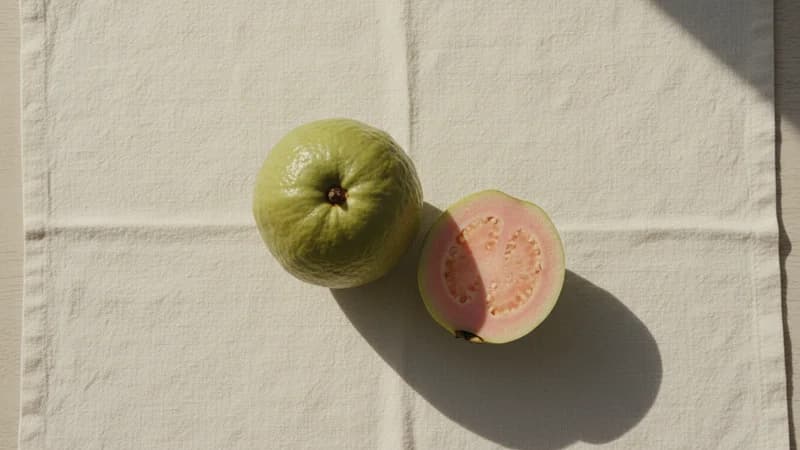
Guava is best suited to Pitta and Kapha, which it helps pacify. Among the richest fruits in vitamin C, a single ripe guava can supply several times the vitamin C of an orange, supporting the body's everyday immune resilience and healthy gums. Best enjoyed during autumn.
Ayurvedic Profile
Guava (Amruta (आम्रूत)) is a rejuvenating fruits treasured in Ayurvedic nutrition. Referenced in Raja Nighantu, it is characterised by sweet and astringent rasa (taste), cooling virya (potency), and sweet vipaka (post-digestive effect). Guava's extraordinary Vitamin C content exceeds most citrus fruits, while its Kashaya (astringent) secondary rasa helps tone intestinal tissues and manage Pitta-related digestive imbalances like loose stools. Its light and dry gunas make it particularly suited for specific constitutional types. It has a neutral effect on Vata, pacifies Pitta, and pacifies Kapha. From a nutritional standpoint, guava provides approximately 68 calories per 100g, with 2.6g protein, 14.3g carbohydrates, and is a valuable source of Vitamin C, Folate, Potassium. Best enjoyed during autumn, guava supports healthy Agni (digestive fire) when prepared according to Ayurvedic principles, helping prevent Ama (toxin) accumulation and nourish the dhatus (body tissues).
Ayurvedic Properties
Rasa (Taste)
sweet, astringent
Virya (Potency)
cold
Vipaka (Post-digestive)
sweet
Guna (Qualities)
light, dry
How Guava Affects Vata, Pitta & Kapha
Ayurveda reads every food through the three doshas. Here is how guava’s qualities interact with each: Not sure which is yours? Take the free dosha quiz — about 4 minutes.
Guava has a broadly neutral effect on Vata. Its sweet and astringent rasa and light and dry qualities neither strongly aggravate nor pacify Vata, so those with Vata dosha can enjoy it in moderation within a varied diet. Vata meal plan
Guava helps pacify Pitta. Its cold virya (potency) and light and dry qualities, with its sweet and astringent rasa (taste), counterbalance Pitta's tendencies — which is why it traditionally suits Pitta dosha in regular use. Pitta meal plan
Guava helps pacify Kapha. Its cold virya (potency) and light and dry qualities, with its sweet and astringent rasa (taste), counterbalance Kapha's tendencies — which is why it traditionally suits Kapha dosha in regular use. Kapha meal plan
Nutrition Facts (per 100g)
68kcal
Calories
2.6g
Protein
14.3g
Carbs
1g
Fat
5.4g
Fibre
Ayurvedic Benefits
- Among the richest fruits in vitamin C, a single ripe guava can supply several times the vitamin C of an orange, supporting the body's everyday immune resilience and healthy gums
- Its firm, seed-studded flesh is exceptionally high in fibre, giving guava a scraping, Kapha-clearing and Ama-reducing quality despite its sweet vipaka
- Sweet-astringent rasa with cold virya makes guava a natural coolant that pacifies Pitta while its light, dry guna resists Kapha stagnation
- Folate content makes ripe guava a traditionally valued fruit during the reproductive years and for nourishing healthy Rakta and Rasa dhatus
- Potassium is the mineral behind normal fluid balance and easy, steady muscle function, adding to guava's quiet nutritional depth
How to Use
- As guava is cooling (shita virya), favour it in warmer weather and pair it with warming spices like ginger or black pepper when the seasons turn cold.
- Guava is at its best during autumn — eating it in season keeps its Prana (vital energy) and benefit at their peak.
- Eat a ripe guava whole, skin and all, once it gives to gentle pressure and turns fragrant, as the skin carries much of the vitamin C and fibre
- Sprinkle cut guava with a little black salt and a pinch of roasted cumin, the classic street-side pairing that lifts its astringency and eases digestion
- Choose fully ripe, soft guavas over hard green ones, which are far more astringent, drying and harder on a sensitive gut
- Chew the small hard seeds thoroughly or scoop them out if your teeth or digestion are sensitive, as they are dense and fibrous
- Enjoy guava mid-morning or early afternoon on an empty stomach rather than late evening, so its high fibre has time to move through easily
Contraindications
- The dense seeds and high insoluble fibre can trouble those with a very sensitive gut or a tendency to constipation if eaten unripe or without enough water
- Hard, unripe green guava is strongly astringent and drying and can aggravate Vata, causing gas or a tight, dry gut; wait for full ripeness
- Those with cold, weak Agni should favour soft ripe fruit in daytime warmth and avoid eating it chilled or late at night
“Ayurveda classifies Guava by its sweet, astringent rasa (taste), cold virya (thermal potency), and sweet vipaka (post-digestive effect). InnerVeda reads these three lenses together to map Guava to your dosha and season.”
Frequently Asked Questions
The seeds are edible and add fibre, but they are very hard and dense. If your teeth or digestion are sensitive, or you are prone to constipation, chew them thoroughly with plenty of water or scoop them out and eat only the surrounding flesh.
Green guava is far more astringent and drying, which can aggravate Vata and cause gas or a dry, tight gut. Ayurvedically, a soft, fragrant, fully ripe guava is preferred, its sweet rasa is developed, it is gentler on Agni, and its vitamin C is most enjoyable to eat.
A sprinkle of black salt and roasted cumin is a traditional pairing that offsets guava's astringency, kindles Agni and makes the fruit easier to digest. It also brings out the sweetness, turning a plain guava into the familiar spiced snack sold across Indian streets.
Your dosha is the balance of Vata, Pitta and Kapha you were born with. Take the dosha quiz — free, about 4 minutes.
Three questions towards your dosha
These are the first three questions of the full dosha quiz. Answer them here and carry on where you left off.
Prefer to start from the beginning? Take the full dosha quiz.
Dietary information provided is for educational purposes only and is rooted in Ayurvedic tradition. It is not a substitute for professional nutritional or medical advice. Consult a qualified healthcare provider before making significant changes to your diet, especially if you have food allergies, intolerances, or a medical condition.
Want a meal plan matched to your dosha?
Take the free dosha assessment (about 4 minutes) and get a personalised nutrition plan with nearly 300 foods in the app, rated for your body.
Find Your Dosha: FreeAbout 4 minutes