Pomegranate: Benefits & Dosha Effects
Sanskrit: Dadima (दाडिम)
Pomegranate is especially balancing for Vata and Pitta. With sweet, astringent and sour rasa (taste), cold virya (potency) and sweet vipaka, it is light and oily in quality and a source of vitamin c.

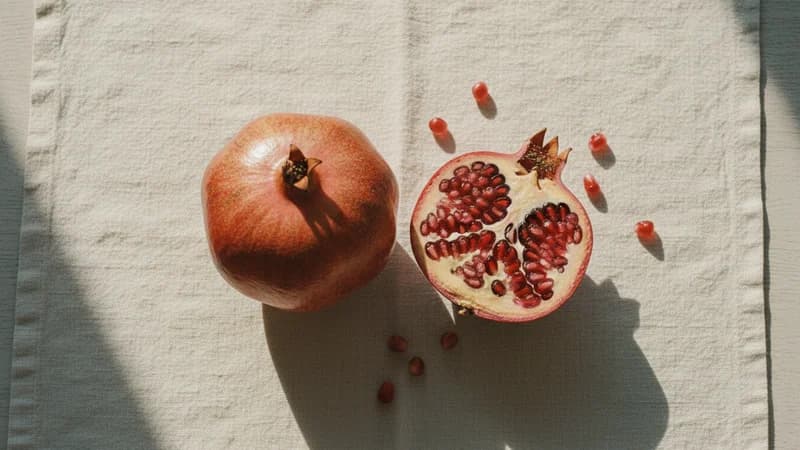
Pomegranate is best suited to Vata and Pitta, which it helps pacify. Tridoshahara (balancing all three doshas), one of the rarest food classifications. Best enjoyed during autumn.
Ayurvedic Profile
Pomegranate, known as Dadima in Sanskrit, is one of the most extensively praised fruits in the entire Ayurvedic materia medica. The Bhavaprakasha Nighantu devotes considerable attention to Dadima, describing it as Tridoshahara (balancing all three doshas), a distinction shared by very few foods. The Charaka Samhita places it among the Hridya (cardiac tonic) and Ruchya (taste-enhancing) groups, and the Ashtanga Hridaya declares it Agrya (best) among fruits for blood health.
Dadima possesses a remarkable multi-rasa profile: Madhura (sweet), Kashaya (astringent), and Amla (sour). The sweet variety (Madhura Dadima) is considered the most therapeutically balanced, with Sheeta (cold) virya and Madhura (sweet) vipaka. Its gunas are Laghu (light) and Snigdha (slightly oily), creating a rare combination of nourishing lightness. This profile allows pomegranate to simultaneously build tissues while keeping channels clear.
The Charaka Samhita extensively recommends Dadima in Grahani Chikitsa (treatment of digestive disorders) and Atisara Chikitsa (treatment of diarrhoea). Its astringent quality provides Grahi (binding) action while its sweet taste nourishes depleted tissues, making it perfect for recovery from digestive illness. The classical preparation Dadimashtaka Churna combines pomegranate with other digestives and is a cornerstone formula for chronic digestive weakness.
Pomegranate's Hridya (cardiac tonic) property is among its most celebrated attributes. The Sushruta Samhita recommends it for Hrid Daurbalya (cardiac weakness), and modern research has validated its cardiovascular benefits through its exceptional punicalagin and ellagic acid content. These compounds support healthy endothelial function and antioxidant defense, aligning with the classical Ayurvedic observations.
The fruit's connection to Rakta Dhatu (blood tissue) is both symbolic and therapeutic. The Ashtanga Hridaya specifically recommends pomegranate juice for Raktapitta (bleeding disorders from excess Pitta) and Pandu (anaemia). Its ability to simultaneously cool excess Pitta, nourish Rakta Dhatu, and tone the blood vessels represents a comprehensive hematological support profile unmatched among common fruits.
Ayurvedic Properties
Rasa (Taste)
sweet, astringent, sour
Virya (Potency)
cold
Vipaka (Post-digestive)
sweet
Guna (Qualities)
light, oily
How Pomegranate Affects Vata, Pitta & Kapha
Ayurveda reads every food through the three doshas. Here is how pomegranate’s qualities interact with each: Not sure which is yours? Take the free dosha quiz — about 4 minutes.
Pomegranate helps pacify Vata. Its cold virya (potency) and light and oily qualities, with its sweet, astringent and sour rasa (taste), counterbalance Vata's tendencies — which is why it traditionally suits Vata dosha in regular use. Vata meal plan
Pomegranate helps pacify Pitta. Its cold virya (potency) and light and oily qualities, with its sweet, astringent and sour rasa (taste), counterbalance Pitta's tendencies — which is why it traditionally suits Pitta dosha in regular use. Pitta meal plan
Pomegranate has a broadly neutral effect on Kapha. Its sweet, astringent and sour rasa and light and oily qualities neither strongly aggravate nor pacify Kapha, so those with Kapha dosha can enjoy it in moderation within a varied diet. Kapha meal plan
Nutrition Facts (per 100g)
83kcal
Calories
1.7g
Protein
18.7g
Carbs
1.2g
Fat
4g
Fibre
Ayurvedic Benefits
- Tridoshahara (balancing all three doshas), one of the rarest food classifications
- Hridya (cardiac tonic) properties validated by modern cardiovascular research
- Agrya (best) among fruits for Rakta Dhatu (blood tissue) health
- Grahi (binding) action supports recovery from diarrhoea and digestive weakness
- Exceptional antioxidant content (punicalagins) traditionally valued for cellular vitality
How to Use
- As pomegranate is cooling (shita virya), favour it in warmer weather and pair it with warming spices like ginger or black pepper when the seasons turn cold.
- Pomegranate is at its best during autumn — eating it in season keeps its Prana (vital energy) and benefit at their peak.
- Eat fresh arils as a mid-morning or afternoon snack for balanced nourishment
- Juice fresh and drink before meals to stimulate Agni and support Rakta Dhatu
- Sprinkle dried pomegranate seeds (Anardana) on salads and dishes as a digestive garnish
- Add arils to grain bowls and breakfast preparations for colour and nutrition
- Prepare pomegranate raita with yogurt and cumin for a Pitta-pacifying condiment
Contraindications
- Generally very safe and tridoshic; few true contraindications exist
- Sour varieties may slightly increase Pitta; prefer sweet pomegranate
- Juice may interact with certain medications; consult your physician if on heart or blood pressure medications
“Ayurveda classifies Pomegranate by its sweet, astringent, sour rasa (taste), cold virya (thermal potency), and sweet vipaka (post-digestive effect). InnerVeda reads these three lenses together to map Pomegranate to your dosha and season.”
Frequently Asked Questions
Pomegranate earns this distinction because it is Tridoshahara (balances all three doshas), Hridya (cardiac tonic), and Agrya for Rakta Dhatu support. Very few fruits can claim to be universally beneficial regardless of constitution. Its multi-rasa profile provides comprehensive nutritional balance.
Yes, pomegranate is a classical remedy for Grahani (digestive weakness) and Atisara (diarrhoea). Its astringent quality binds and tones the digestive tract while its sweet taste nourishes depleted tissues. The formulation Dadimashtaka Churna has been used for centuries for chronic digestive issues.
Both are valuable, but the whole fruit provides more fibre and the chewing process stimulates Agni. Juice is more convenient and allows higher concentration of punicalagins. Ideally, alternate between both. If juicing, drink immediately and avoid adding sugar.
Your dosha is the balance of Vata, Pitta and Kapha you were born with. Take the dosha quiz — free, about 4 minutes.
Three questions towards your dosha
These are the first three questions of the full dosha quiz. Answer them here and carry on where you left off.
Prefer to start from the beginning? Take the full dosha quiz.
Dietary information provided is for educational purposes only and is rooted in Ayurvedic tradition. It is not a substitute for professional nutritional or medical advice. Consult a qualified healthcare provider before making significant changes to your diet, especially if you have food allergies, intolerances, or a medical condition.
Want a meal plan matched to your dosha?
Take the free dosha assessment (about 4 minutes) and get a personalised nutrition plan with nearly 300 foods in the app, rated for your body.
Find Your Dosha: FreeAbout 4 minutes