Apple: Benefits & Dosha Effects
Sanskrit: Seb (Modern) / Phala
Apple is especially balancing for Pitta but can raise Vata when eaten in excess. With sweet and astringent rasa (taste), cold virya (potency) and sweet vipaka, it is light and dry in quality and a source of vitamin c.

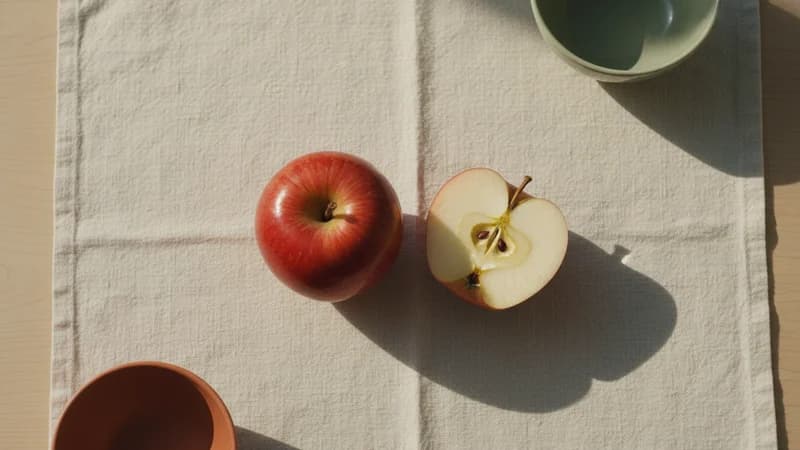
Apple is best suited to Pitta, which it helps pacify. In excess it can raise Vata. Pitta-pacifying fruit with cooling, sweet, and astringent qualities. Best enjoyed during autumn.
Ayurvedic Profile
Apple, while not a fruit native to the Indian subcontinent, is readily analysed through Ayurvedic Dravyaguna principles. It possesses Madhura-Kashaya (sweet-astringent) rasa, Sheeta (cold) virya, and Madhura (sweet) vipaka with Laghu (light) and Ruksha (dry) gunas. This profile makes it a gentle, Pitta-pacifying fruit that is moderately Kapha-neutral but potentially Vata-aggravating when eaten raw and cold due to its dry and light qualities.
The principle of Samskara (food processing) is particularly relevant for apples in Ayurvedic practice. A raw, cold apple on an empty stomach can challenge weak Agni and provoke Vata, especially during autumn (the Vata season when apples are naturally in season). However, a cooked apple with ghee, cinnamon, and a touch of sweetener transforms into a therapeutic preparation that is warming, nourishing, and gentle on digestion. This transformation through cooking demonstrates how Samskara can fundamentally alter a food's therapeutic properties.
Apple's Kashaya (astringent) quality provides gentle Grahi (binding) action to the digestive tract, which can be beneficial for loose stools but potentially constipating for Vata-dry constitutions. The pectin fibre in apples acts as a Prebiotic, supporting the Grahani (intestinal) environment and the healthy bacterial flora that Ayurveda associates with strong Agni.
The quercetin content in apples, concentrated in the skin, provides antioxidant and anti-inflammatory benefits that align with the Pitta-pacifying properties observed by Ayurvedic practitioners. For allergy sufferers, whose condition often involves Pitta-Kapha imbalance, apple's quercetin may provide supportive benefits alongside constitutional management.
In the Ritucharya (seasonal regimen) context, apples are an autumn fruit and should ideally be consumed during their natural season. Eating them cooked and warm during autumn addresses both seasonal Vata aggravation and the need for easily digestible nutrition as the body transitions from summer to winter. The classic baked apple with warming spices is one of the most recommended autumn desserts in Ayurvedic dietary practice.
Ayurvedic Properties
Rasa (Taste)
sweet, astringent
Virya (Potency)
cold
Vipaka (Post-digestive)
sweet
Guna (Qualities)
light, dry
How Apple Affects Vata, Pitta & Kapha
Ayurveda reads every food through the three doshas. Here is how apple’s qualities interact with each: Not sure which is yours? Take the free dosha quiz — about 4 minutes.
Apple is well tolerated by those with Vata dosha in normal amounts, but its cold virya and light and dry qualities may aggravate Vata in excess — so people with Vata as their leading dosha are best keeping to measured portions. Vata meal plan
Apple helps pacify Pitta. Its cold virya (potency) and light and dry qualities, with its sweet and astringent rasa (taste), counterbalance Pitta's tendencies — which is why it traditionally suits Pitta dosha in regular use. Pitta meal plan
Apple has a broadly neutral effect on Kapha. Its sweet and astringent rasa and light and dry qualities neither strongly aggravate nor pacify Kapha, so those with Kapha dosha can enjoy it in moderation within a varied diet. Kapha meal plan
Nutrition Facts (per 100g)
52kcal
Calories
0.3g
Protein
13.8g
Carbs
0.2g
Fat
2.4g
Fibre
Ayurvedic Benefits
- Pitta-pacifying fruit with cooling, sweet, and astringent qualities
- Pectin fibre supports healthy Grahani (intestinal) function and gut microbiome
- Quercetin content provides antioxidant support, traditionally valued for comfort and wellness
- When cooked, becomes a warming, nourishing preparation suitable for all doshas
- Light quality makes it easier to digest than heavier fruits like banana or mango
How to Use
- As apple is cooling (shita virya), favour it in warmer weather and pair it with warming spices like ginger or black pepper when the seasons turn cold.
- Apple is at its best during autumn — eating it in season keeps its Prana (vital energy) and benefit at their peak.
- Bake or stew with ghee, cinnamon, cloves, and cardamom for a Vata-friendly autumn treat
- Eat at room temperature rather than cold from the refrigerator to support Agni
- Prepare apple chutney with ginger and cumin for a digestive condiment
- Add to warm oatmeal while cooking for an enhanced breakfast
- Make spiced apple cider with cinnamon, cloves, and ginger for autumn evenings
Contraindications
- Raw cold apples may aggravate Vata; cook with ghee and spices for Vata types
- Astringent quality can be constipating for already dry Vata constitutions
- Avoid eating on an empty stomach if digestion is weak; have after a light meal or snack
“Ayurveda classifies Apple by its sweet, astringent rasa (taste), cold virya (thermal potency), and sweet vipaka (post-digestive effect). InnerVeda reads these three lenses together to map Apple to your dosha and season.”
Frequently Asked Questions
It depends on your dosha. Pitta types with strong Agni can enjoy raw apples at room temperature. Vata types should cook apples with ghee and warming spices for better digestion. Kapha types can eat them either way. In autumn, cooked apples are recommended for everyone.
Apples provide pectin fibre that supports gut health. However, raw apples can challenge weak digestion. Cooked apples are universally easier to digest and their pectin becomes more accessible. Apple chutney with ginger is a classic digestive preparation.
Mid-morning or afternoon between meals is best. Avoid cold apples on an empty stomach, which can shock Agni. Cooked apples can be enjoyed as part of breakfast or as a warm dessert. Eating apples in their natural autumn season is the most Ayurvedic approach.
Your dosha is the balance of Vata, Pitta and Kapha you were born with. Take the dosha quiz — free, about 4 minutes.
Three questions towards your dosha
These are the first three questions of the full dosha quiz. Answer them here and carry on where you left off.
Prefer to start from the beginning? Take the full dosha quiz.
Dietary information provided is for educational purposes only and is rooted in Ayurvedic tradition. It is not a substitute for professional nutritional or medical advice. Consult a qualified healthcare provider before making significant changes to your diet, especially if you have food allergies, intolerances, or a medical condition.
Want a meal plan matched to your dosha?
Take the free dosha assessment (about 4 minutes) and get a personalised nutrition plan with nearly 300 foods in the app, rated for your body.
Find Your Dosha: FreeAbout 4 minutes