Pear: Benefits & Dosha Effects
Sanskrit: Amritaphala (अमृतफल)
Pear is especially balancing for Pitta and Kapha. With sweet and astringent rasa (taste), cold virya (potency) and sweet vipaka, it is light and dry in quality and a source of vitamin c.

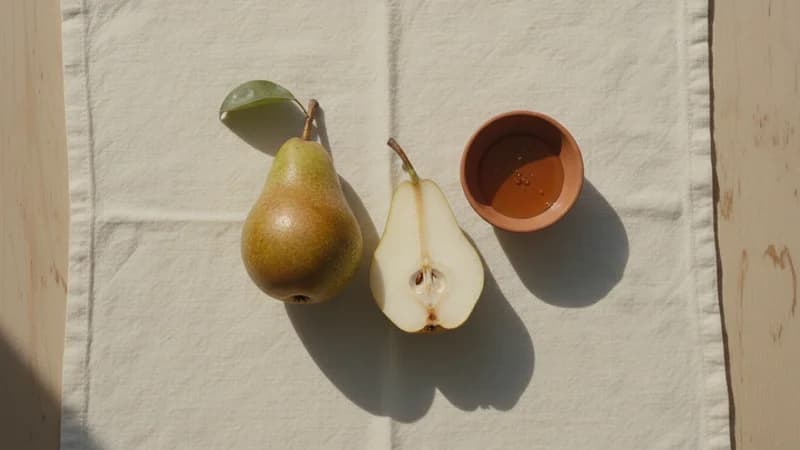
Pear is best suited to Pitta and Kapha, which it helps pacify. Sweet-astringent rasa with cold (Shita) virya makes pear a gentle coolant that pacifies Pitta while its light, dry guna keeps Kapha from accumulating. Best enjoyed during autumn.
Ayurvedic Profile
Pear (Amritaphala (अमृतफल)) is a rejuvenating fruits treasured in Ayurvedic nutrition. Referenced in Ashtanga Hridaya, it is characterised by sweet and astringent rasa (taste), cooling virya (potency), and sweet vipaka (post-digestive effect). Pear's Laghu and Ruksha qualities distinguish it from heavier fruits, making it one of few sweet fruits that actually helps balance Kapha while still nourishing Rasa dhatu and supporting gentle bowel movements. Its light and dry gunas make it particularly suited for specific constitutional types. It has a neutral effect on Vata, pacifies Pitta, and pacifies Kapha. From a nutritional standpoint, pear provides approximately 57 calories per 100g, with 0.4g protein, 15.2g carbohydrates, and is a valuable source of Vitamin C, Vitamin K, Copper. Best enjoyed during autumn, pear supports healthy Agni (digestive fire) when prepared according to Ayurvedic principles, helping prevent Ama (toxin) accumulation and nourish the dhatus (body tissues).
Ayurvedic Properties
Rasa (Taste)
sweet, astringent
Virya (Potency)
cold
Vipaka (Post-digestive)
sweet
Guna (Qualities)
light, dry
How Pear Affects Vata, Pitta & Kapha
Ayurveda reads every food through the three doshas. Here is how pear’s qualities interact with each: Not sure which is yours? Take the free dosha quiz — about 4 minutes.
Pear has a broadly neutral effect on Vata. Its sweet and astringent rasa and light and dry qualities neither strongly aggravate nor pacify Vata, so those with Vata dosha can enjoy it in moderation within a varied diet. Vata meal plan
Pear helps pacify Pitta. Its cold virya (potency) and light and dry qualities, with its sweet and astringent rasa (taste), counterbalance Pitta's tendencies — which is why it traditionally suits Pitta dosha in regular use. Pitta meal plan
Pear helps pacify Kapha. Its cold virya (potency) and light and dry qualities, with its sweet and astringent rasa (taste), counterbalance Kapha's tendencies — which is why it traditionally suits Kapha dosha in regular use. Kapha meal plan
Nutrition Facts (per 100g)
57kcal
Calories
0.4g
Protein
15.2g
Carbs
0.1g
Fat
3.1g
Fibre
Ayurvedic Benefits
- Sweet-astringent rasa with cold (Shita) virya makes pear a gentle coolant that pacifies Pitta while its light, dry guna keeps Kapha from accumulating
- The soluble fibre pectin, concentrated just under the skin, adds soft bulk that traditionally supports easy, unforced bowel movement without over-heating the gut
- High water content combined with the astringent quality helps quench thirst and cool a Pitta-flushed system on a warm autumn afternoon
- Vitamin C and copper together support the body's own collagen-building, aligning with pear's classical reputation as a skin-friendly, Varnya-leaning fruit
- Vitamin K contributes to normal bone metabolism and healthy blood clotting, a quiet nutritional strength of the ripe European pear
How to Use
- As pear is cooling (shita virya), favour it in warmer weather and pair it with warming spices like ginger or black pepper when the seasons turn cold.
- Pear is at its best during autumn — eating it in season keeps its Prana (vital energy) and benefit at their peak.
- Eat a ripe pear at room temperature as a mid-morning snack; press near the stem to check it yields slightly before eating
- Poach halved pears gently in water with a clove and a pinch of cinnamon to warm the cold virya and make them kinder to a delicate Vata digestion
- Leave the skin on when the pear is well-ripened and organic, as most of the pectin fibre sits directly beneath it
- Dice firm pear into a warm autumn porridge or stewed-apple compote rather than eating it chilled from the fridge
- Avoid pairing pear with milk in the same sitting; enjoy it on its own between meals so its light, watery quality does not clash with heavier foods
Contraindications
- Those with weak or slow Agni and a tendency to bloating or loose stools should eat pear stewed rather than raw, as its cold, watery nature can dampen digestion
- People prone to cold hands and feet or excess Vata should warm pear with spice rather than eating it chilled, especially out of season
- Unripe, hard pears are more astringent and harder to digest and are best avoided; wait until the fruit is fully soft and fragrant
“Ayurveda classifies Pear by its sweet, astringent rasa (taste), cold virya (thermal potency), and sweet vipaka (post-digestive effect). InnerVeda reads these three lenses together to map Pear to your dosha and season.”
Frequently Asked Questions
For a well-ripened, organic pear, keep the skin on, as most of the pectin fibre and vitamin C sit just beneath it. If the pear is under-ripe, waxed, or you have a very delicate digestion, peeling and lightly poaching it makes it easier on the gut.
Soft, sweet, fully ripe European pears such as Comice or Williams in early to mid autumn are ideal, as ripeness deepens the sweet rasa and tames the astringency. Very hard or unripe pears are more astringent and drying and are best cooked before eating.
Its pectin fibre and high water content can traditionally add gentle, soft bulk that supports a natural bowel movement. Because its virya is cold, warming it slightly, poaching with a little cinnamon or clove, tends to suit those with sluggish or Vata-type digestion better than eating it raw and chilled.
Your dosha is the balance of Vata, Pitta and Kapha you were born with. Take the dosha quiz — free, about 4 minutes.
Three questions towards your dosha
These are the first three questions of the full dosha quiz. Answer them here and carry on where you left off.
Prefer to start from the beginning? Take the full dosha quiz.
Dietary information provided is for educational purposes only and is rooted in Ayurvedic tradition. It is not a substitute for professional nutritional or medical advice. Consult a qualified healthcare provider before making significant changes to your diet, especially if you have food allergies, intolerances, or a medical condition.
Want a meal plan matched to your dosha?
Take the free dosha assessment (about 4 minutes) and get a personalised nutrition plan with nearly 300 foods in the app, rated for your body.
Find Your Dosha: FreeAbout 4 minutes