Mustard Seeds: Benefits & Dosha Effects
Sanskrit: Rajika (राजिका)
Mustard Seeds is especially balancing for Vata and Kapha and tends to aggravate Pitta. With pungent rasa (taste), hot virya (potency) and pungent vipaka, it is light, oily and sharp in quality and a source of selenium.

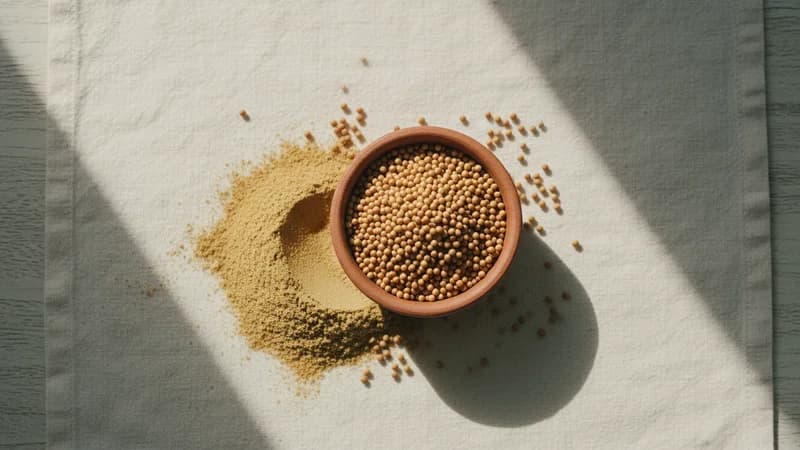
Mustard Seeds is best suited to Vata and Kapha, which it helps pacify. It can aggravate Pitta, so those types should use it sparingly. Its light, oily and sharp qualities make it a favourite winter Vata-pacifier: the oiliness counters Vata's dryness while the heat settles its cold, restless nature.. Best enjoyed during winter.
Ayurvedic Profile
Mustard Seeds (Rajika (राजिका)) is a therapeutic spices treasured in Ayurvedic nutrition. Referenced in Charaka Samhita, it is characterized by pungent rasa (taste), heating virya (potency), and pungent vipaka (post-digestive effect). Rajika is essential in South Indian tadka, described in Dhanvantari Nighantu as Krimighna (anti-parasitic) and Kaphahara; when spluttered in hot oil, it releases isothiocyanates that stimulate Agni and clear nasal passages. Its light and oily and sharp gunas make it particularly suited for specific constitutional types. It pacifies Vata, may increase Pitta, and pacifies Kapha. From a nutritional standpoint, mustard seeds provides approximately 508 calories per 100g, with 26.1g protein, 28.1g carbohydrates, and is a valuable source of Selenium, Manganese, Omega-3. Best enjoyed during winter, mustard seeds supports healthy Agni (digestive fire) when prepared according to Ayurvedic principles, helping prevent Ama (toxin) accumulation and nourish the dhatus (body tissues).
Ayurvedic Properties
Rasa (Taste)
pungent
Virya (Potency)
hot
Vipaka (Post-digestive)
pungent
Guna (Qualities)
light, oily, sharp
How Mustard Seeds Affects Vata, Pitta & Kapha
Ayurveda reads every food through the three doshas. Here is how mustard seeds’s qualities interact with each: Not sure which is yours? Take the free dosha quiz — about 3 minutes, no signup.
Mustard Seeds helps pacify Vata. Its hot virya (potency) and light, oily and sharp qualities, with its pungent rasa (taste), counterbalance Vata's tendencies — which is why it traditionally suits Vata dosha in regular use.
Mustard Seeds tends to increase Pitta. Its hot virya and light, oily and sharp qualities, with its pungent rasa, align with Pitta's own nature, so those with Pitta dosha are best using it sparingly and pairing it with Pitta-pacifying foods.
Mustard Seeds helps pacify Kapha. Its hot virya (potency) and light, oily and sharp qualities, with its pungent rasa (taste), counterbalance Kapha's tendencies — which is why it traditionally suits Kapha dosha in regular use.
Nutrition Facts (per 100g)
508kcal
Calories
26.1g
Protein
28.1g
Carbs
36.2g
Fat
12.2g
Fiber
Ayurvedic Benefits
- Its light, oily and sharp qualities make it a favourite winter Vata-pacifier: the oiliness counters Vata's dryness while the heat settles its cold, restless nature.
- A strongly Kapha-reducing spice whose pungency helps break down the heavy, sticky congestion that tends to accumulate in the cold, damp season.
- Kindles Agni and, when spluttered in hot oil for a tadka, releases pungent aromatics that traditionally wake up the appetite and lighten a stodgy meal.
- A notably rich plant source of selenium, a trace mineral that supports normal thyroid and antioxidant function, alongside manganese for metabolism.
- Supplies plant omega-3 (alpha-linolenic acid) from its natural oil, which, together with its unctuous guna, is why mustard is valued as a warming, lubricating spice in winter.
How to Use
- As mustard seeds is heating (ushna virya), balance it with cooling accompaniments such as coriander, fennel or a little ghee — especially through the warmer months.
- Mustard Seeds is at its best during winter — eating it in season keeps its Prana (vital energy) and benefit at their peak.
- Splutter the seeds in hot oil or ghee at the very start of a tadka until they pop; this tempering is what unlocks their aroma and tames their raw bite.
- Coarsely grind the seeds into a paste with a little water and let it stand a few minutes to develop the sharp, sinus-clearing pungency used in Bengali and pickle preparations.
- Toast whole seeds briefly and add to warming winter vegetables such as cabbage, potato or green beans where their heat balances the vegetables' heaviness.
- Use black or brown mustard (rai) for South-Indian tempering and yellow mustard, which is milder, when you want gentler heat.
- Warm mustard oil is used externally in classical abhyanga for a strongly Vata-pacifying winter massage; for eating, keep the seeds themselves to modest culinary amounts.
Contraindications
- Its heating pungency can aggravate Pitta, so those prone to acidity, heartburn or inflamed skin should keep mustard light, especially in summer.
- Best limited by anyone with an active stomach ulcer or an irritable gut, as the sharp mustard oils can be harsh on an already sensitive lining.
- Use only culinary amounts in pregnancy, and note that raw crushed seed and undiluted mustard oil are far more pungent than tempered whole seeds.
“Ayurveda classifies Mustard Seeds by its pungent rasa (taste), hot virya (thermal potency), and pungent vipaka (post-digestive effect). InnerVeda reads these three lenses together to map Mustard Seeds to your dosha and season.”
Mustard Seeds by Dosha
See how mustard seeds interacts with each dosha and get personalised guidance.
Frequently Asked Questions
They share the same pungent, heating Ayurvedic profile but differ in strength. Tiny black and brown seeds (rai) are the sharpest and are used for South-Indian and pickle tempering; larger yellow seeds are milder and make the gentler paste used in Western-style mustard. Choose the darker seeds when you want assertive heat, yellow when you want a softer effect.
Heating the seeds in oil or ghee until they pop mellows their raw bitterness, releases their aromatic pungency, and pairs their heat with the unctuous oil so they sit more comfortably in the stomach. Adding raw seeds to a dish gives a harsher, less digestible result, which is why nearly every Indian recipe begins with this tadka step.
Yes, this is where they shine. With a hot virya and light, oily, sharp qualities, mustard both warms and lubricates, so it is traditionally used to counter cold, dry Vata and damp Kapha through the winter. Fold spluttered seeds into hearty winter vegetables and dals; in summer, when Pitta is high, ease off.
Dietary information provided is for educational purposes only and is rooted in Ayurvedic tradition. It is not a substitute for professional nutritional or medical advice. Consult a qualified healthcare provider before making significant changes to your diet, especially if you have food allergies, intolerances, or a medical condition.
Want a meal plan matched to your dosha?
Take the free 3-minute dosha assessment and get a personalised nutrition plan with 300 foods rated for your body.
Find Your Dosha — Free~3 min · no signup