Palm Sugar: Benefits & Dosha Effects
Sanskrit: Tala Guda (ताल गुड)
Palm Sugar is especially balancing for Vata but can raise Kapha when eaten in excess. With sweet rasa (taste), cold virya (potency) and sweet vipaka, it is heavy and oily in quality and a source of iron.

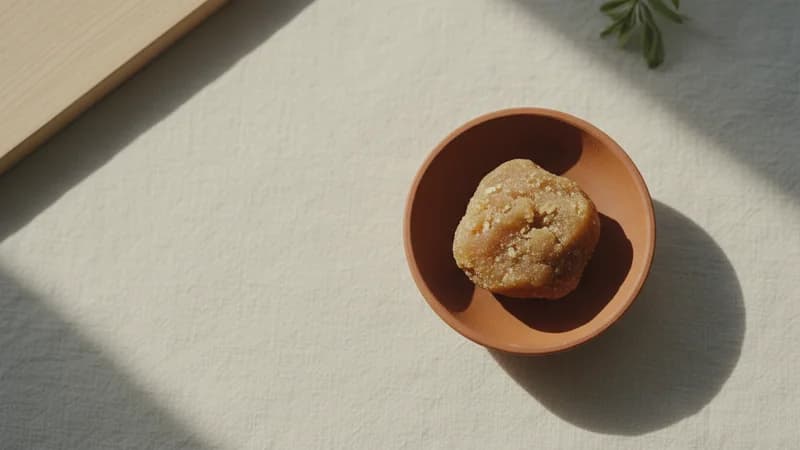
Palm Sugar is best suited to Vata, which it helps pacify. In excess it can raise Kapha. An unrefined, mineral-bearing sweetener from palm sap, carrying iron, potassium and zinc rather than empty sweetness. Suitable year-round.
Ayurvedic Profile
Palm Sugar (Tala Guda (ताल गुड)) is a energising sweeteners treasured in Ayurvedic nutrition. Referenced in Raja Nighantu, it is characterised by sweet rasa (taste), cooling virya (potency), and sweet vipaka (post-digestive effect). Palm sugar (from palmyra or coconut palm) is considered gentler than cane jaggery in Ayurvedic practice, with a lower glycemic response; its Sheeta virya makes it more suitable for Pitta constitutions than heating jaggery. Its heavy and oily gunas make it particularly suited for specific constitutional types. It pacifies Vata, has a neutral effect on Pitta, and can aggravate Kapha when consumed in excess. From a nutritional standpoint, palm sugar provides approximately 377 calories per 100g, with 0.0g protein, 97.3g carbohydrates, and is a valuable source of Iron, Potassium, Zinc. Best enjoyed during all-seasons, palm sugar supports healthy Agni (digestive fire) when prepared according to Ayurvedic principles, helping prevent Ama (toxin) accumulation and nourish the dhatus (body tissues).
Ayurvedic Properties
Rasa (Taste)
sweet
Virya (Potency)
cold
Vipaka (Post-digestive)
sweet
Guna (Qualities)
heavy, oily
How Palm Sugar Affects Vata, Pitta & Kapha
Ayurveda reads every food through the three doshas. Here is how palm sugar’s qualities interact with each: Not sure which is yours? Take the free dosha quiz — about 4 minutes.
Palm Sugar helps pacify Vata. Its cold virya (potency) and heavy and oily qualities, with its sweet rasa (taste), counterbalance Vata's tendencies — which is why it traditionally suits Vata dosha in regular use. Vata meal plan
Palm Sugar has a broadly neutral effect on Pitta. Its sweet rasa and heavy and oily qualities neither strongly aggravate nor pacify Pitta, so those with Pitta dosha can enjoy it in moderation within a varied diet. Pitta meal plan
Palm Sugar is well tolerated by those with Kapha dosha in normal amounts, but its cold virya and heavy and oily qualities may aggravate Kapha in excess — so people with Kapha as their leading dosha are best keeping to measured portions. Kapha meal plan
Nutrition Facts (per 100g)
377kcal
Calories
0g
Protein
97.3g
Carbs
0g
Fat
0g
Fibre
Ayurvedic Benefits
- An unrefined, mineral-bearing sweetener from palm sap, carrying iron, potassium and zinc rather than empty sweetness
- Its sweet, grounding, building nature pacifies Vata and gently nourishes the tissues
- Traditionally preferred over white sugar, being closer to its natural state and less depleting
- Warming when taken in small amounts in traditional preparations, unlike the cooling of refined sugar
- Lends a deep, caramel sweetness that satisfies with less quantity than refined sugar
How to Use
- As palm sugar is cooling (shita virya), favour it in warmer weather and pair it with warming spices like ginger or black pepper when the seasons turn cold.
- Use palm sugar in place of refined white sugar in sweets, chutneys and traditional preparations
- Melt it gently into warm (not boiling) milk or kanji rather than cooking it fiercely
- Keep to small amounts — it is a whole-food sweetener but still a concentrated sugar
- Pair its sweetness with warming spices like cardamom, ginger or black pepper to aid digestion
- Choose dark, minimally-processed palm jaggery for the fullest mineral content
Contraindications
- Being a concentrated sugar, palm sugar increases Kapha and should be limited by those managing weight or blood sugar
- Its sweet, heavy nature can add to congestion and heaviness if used freely
- Whole-food does not mean unlimited — small culinary amounts are the rule for all
“Ayurveda classifies Palm Sugar by its sweet rasa (taste), cold virya (thermal potency), and sweet vipaka (post-digestive effect). InnerVeda reads these three lenses together to map Palm Sugar to your dosha and season.”
Frequently Asked Questions
Palm sugar is unrefined and retains minerals such as iron, potassium and zinc that white sugar loses, and it is grounding and Vata-pacifying, so it is generally preferred in Ayurveda. It is still a concentrated sugar, though, so it should be used in small amounts.
Palm sugar is still a concentrated sweetener that raises blood sugar, so those managing diabetes should treat it like any sugar and use only small amounts, with guidance. Its mineral content does not make it a free food.
Both are unrefined traditional sweeteners; palm sugar (or palm jaggery) is made from the sap of palm trees, while common jaggery is usually made from sugarcane. Palm jaggery tends to be darker and more mineral-rich, with a deep caramel flavour.
Your dosha is the balance of Vata, Pitta and Kapha you were born with. Take the dosha quiz — free, about 4 minutes.
Three questions towards your dosha
These are the first three questions of the full dosha quiz. Answer them here and carry on where you left off.
Prefer to start from the beginning? Take the full dosha quiz.
Dietary information provided is for educational purposes only and is rooted in Ayurvedic tradition. It is not a substitute for professional nutritional or medical advice. Consult a qualified healthcare provider before making significant changes to your diet, especially if you have food allergies, intolerances, or a medical condition.
Want a meal plan matched to your dosha?
Take the free dosha assessment (about 4 minutes) and get a personalised nutrition plan with nearly 300 foods in the app, rated for your body.
Find Your Dosha: FreeAbout 4 minutes