Radish: Benefits & Dosha Effects
Sanskrit: Mulaka (मूलक)
Radish is especially balancing for Kapha but can raise Pitta when eaten in excess. With pungent and bitter rasa (taste), hot virya (potency) and pungent vipaka, it is light and dry in quality and a source of vitamin c.

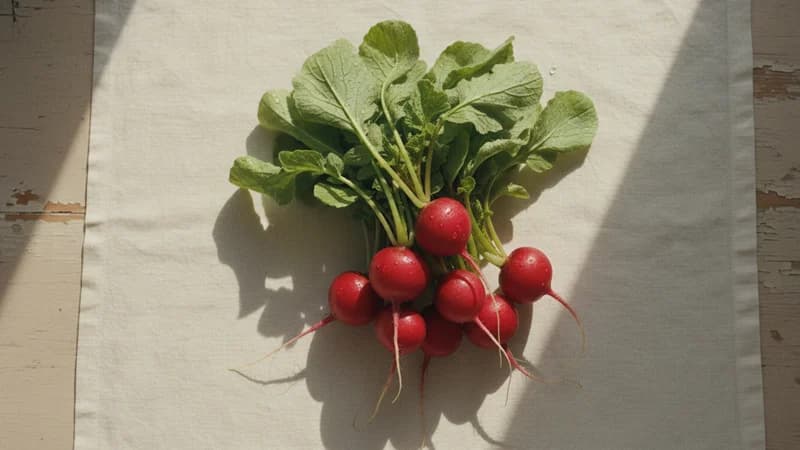
Radish is best suited to Kapha, which it helps pacify. In excess it can raise Pitta. As a light, dry root with pungent rasa and hot virya, radish kindles Agni and traditionally supports the breaking down of Ama, making a heavy winter meal feel lighter and easier to digest.. Best enjoyed during winter.
Ayurvedic Profile
Radish (Mulaka (मूलक)) is a nourishing vegetables treasured in Ayurvedic nutrition. Referenced in Sushruta Samhita, it is characterised by pungent and bitter rasa (taste), heating virya (potency), and pungent vipaka (post-digestive effect). Charaka Samhita extensively describes Mulaka as a supreme digestive aid that clears srotas (channels), reduces abdominal bloating, and is one of few vegetables recommended for managing Kapha-related respiratory conditions. Its light and dry gunas make it particularly suited for specific constitutional types. It has a neutral effect on Vata, can aggravate Pitta when consumed in excess, and pacifies Kapha. From a nutritional standpoint, radish provides approximately 16 calories per 100g, with 0.7g protein, 3.4g carbohydrates, and is a valuable source of Vitamin C, Folate, Potassium. Best enjoyed during winter, radish supports healthy Agni (digestive fire) when prepared according to Ayurvedic principles, helping prevent Ama (toxin) accumulation and nourish the dhatus (body tissues).
Ayurvedic Properties
Rasa (Taste)
pungent, bitter
Virya (Potency)
hot
Vipaka (Post-digestive)
pungent
Guna (Qualities)
light, dry
How Radish Affects Vata, Pitta & Kapha
Ayurveda reads every food through the three doshas. Here is how radish’s qualities interact with each: Not sure which is yours? Take the free dosha quiz — about 4 minutes.
Radish has a broadly neutral effect on Vata. Its pungent and bitter rasa and light and dry qualities neither strongly aggravate nor pacify Vata, so those with Vata dosha can enjoy it in moderation within a varied diet. Vata meal plan
Radish is well tolerated by those with Pitta dosha in normal amounts, but its hot virya and light and dry qualities may aggravate Pitta in excess — so people with Pitta as their leading dosha are best keeping to measured portions. Pitta meal plan
Radish helps pacify Kapha. Its hot virya (potency) and light and dry qualities, with its pungent and bitter rasa (taste), counterbalance Kapha's tendencies — which is why it traditionally suits Kapha dosha in regular use. Kapha meal plan
Nutrition Facts (per 100g)
16kcal
Calories
0.7g
Protein
3.4g
Carbs
0.1g
Fat
1.6g
Fibre
Ayurvedic Benefits
- As a light, dry root with pungent rasa and hot virya, radish kindles Agni and traditionally supports the breaking down of Ama, making a heavy winter meal feel lighter and easier to digest.
- Its Kapha-reducing action means it may help clear the sticky, congested feeling of a mucous-laden season, which is why grated mooli is a classic winter accompaniment in North Indian kitchens.
- The pungent-bitter combination gently stimulates digestion and the appetite; classical texts favour the fresh, tender root as the wholesome form and consider the old, large, fibrous radish far heavier and more aggravating to the doshas.
- Rich in vitamin C and folate with high water content, radish supports hydration and everyday immune resilience during the cold months while adding almost no calories to the plate.
- Its potassium and natural diuretic quality traditionally support the free passage of urine, which is why vaidyas have long paired tender radish with meals to ease a sluggish, water-retentive feeling.
How to Use
- As radish is heating (ushna virya), balance it with cooling accompaniments such as coriander, fennel or a little ghee — especially through the warmer months.
- Radish is at its best during winter — eating it in season keeps its Prana (vital energy) and benefit at their peak.
- Eat the young, tender white mooli raw and grated into winter salads or laccha with a squeeze of lemon and a pinch of rock salt to keep its pungency lively and its digestive spark intact.
- Stuff finely grated, squeezed radish with ajwain and coriander into mooli paratha for a warming winter breakfast that balances the root's dryness with the ghee of the griddle.
- Simmer thick slices into a light radish-and-moong sabzi or a clear soup when you want its Kapha-clearing warmth without the sharpness of the raw root.
- Always choose firm, tender roots over large woody old ones; the old, hard radish is heavier to digest and classical texts consider it the least wholesome form.
- Pickle radish sparingly in mustard oil for a small, appetite-kindling side rather than a large helping, as a little is enough to wake up a heavy meal.
Contraindications
- Those with a Pitta constitution or signs of heat such as acidity, heartburn or skin flare-ups should limit radish, as its hot virya and pungent vipaka can aggravate Pitta.
- People prone to loose stools, gastritis or a sensitive, irritable gut should go gently, since the sharp pungency of the raw root can feel harsh; cooked radish is the milder choice.
- Radish belongs to the same family as cabbage and mustard, whose glucosinolates can affect thyroid activity when eaten raw in very large, regular amounts; those with a thyroid condition should keep portions moderate and speak to their clinician.
“Ayurveda classifies Radish by its pungent, bitter rasa (taste), hot virya (thermal potency), and pungent vipaka (post-digestive effect). InnerVeda reads these three lenses together to map Radish to your dosha and season.”
Frequently Asked Questions
Both have a place. Raw tender radish carries the strongest pungency and is best for kindling Agni and clearing Kapha in winter. Cooking softens its sharp virya, making it gentler for those with any heat or a sensitive stomach, so choose cooked if raw feels too fiery.
Its pungent-bitter compounds and dryness can produce wind if eaten in excess or if your digestion is weak. Pair it with ajwain, cumin or ginger, favour the tender young root over the old woody one, and keep portions modest to avoid bloating and the lingering after-taste.
Ayurveda considers radish a winter food because its hot virya suits cold, damp weather. In the heat of summer it can add to Pitta and inner warmth, so it is best limited then; if you do eat it, choose the mild tender root, keep it small and balance it with cooling coriander and lemon.
Your dosha is the balance of Vata, Pitta and Kapha you were born with. Take the dosha quiz — free, about 4 minutes.
Three questions towards your dosha
These are the first three questions of the full dosha quiz. Answer them here and carry on where you left off.
Prefer to start from the beginning? Take the full dosha quiz.
Dietary information provided is for educational purposes only and is rooted in Ayurvedic tradition. It is not a substitute for professional nutritional or medical advice. Consult a qualified healthcare provider before making significant changes to your diet, especially if you have food allergies, intolerances, or a medical condition.
Want a meal plan matched to your dosha?
Take the free dosha assessment (about 4 minutes) and get a personalised nutrition plan with nearly 300 foods in the app, rated for your body.
Find Your Dosha: FreeAbout 4 minutes