Val Dal: Benefits & Dosha Effects
Sanskrit: Nishpava (निष्पाव)
Val Dal is especially balancing for Kapha but can raise Vata when eaten in excess. With sweet and astringent rasa (taste), cold virya (potency) and sweet vipaka, it is light and dry in quality and a source of folate.

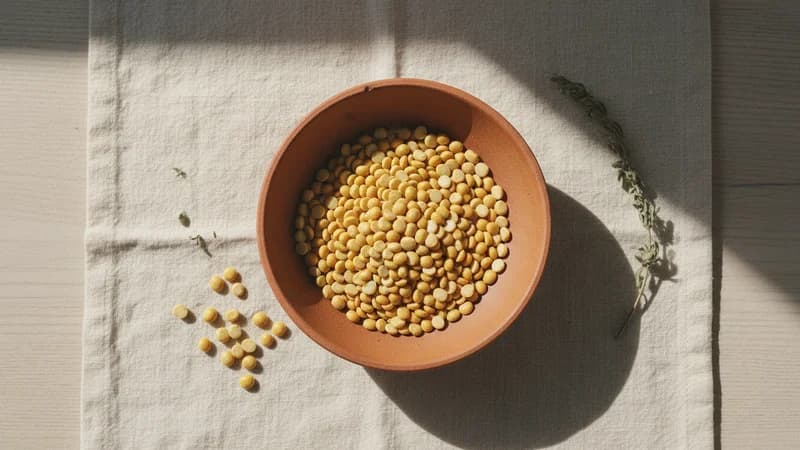
Val Dal is best suited to Kapha, which it helps pacify. In excess it can raise Vata. Val dal, the split field bean known classically as Nishpava, carries a sweet-astringent taste and sweet vipaka that nourish the tissues, while its astringent quality lends a firming, drying action welcome in the damp months.. Best enjoyed during winter.
Ayurvedic Profile
Val Dal (Nishpava (निष्पाव)) is a protein-rich legumes treasured in Ayurvedic nutrition. Referenced in Raja Nighantu, it is characterised by sweet and astringent rasa (taste), cooling virya (potency), and sweet vipaka (post-digestive effect). Nishpava (field bean/val) is mentioned in Kaiyadeva Nighantu among the Shimbi group with Madhura-Kashaya rasa. It is commonly used in Gujarati and Maharashtrian Ayurvedic cooking, where its Laghu-Ruksha properties help balance Kapha while providing substantial plant protein. Its light and dry gunas make it particularly suited for specific constitutional types. It can aggravate Vata when consumed in excess, has a neutral effect on Pitta, and pacifies Kapha. From a nutritional standpoint, val dal provides approximately 340 calories per 100g, with 24.5g protein, 60.5g carbohydrates, and is a valuable source of Folate, Iron, Potassium. Best enjoyed during winter, val dal supports healthy Agni (digestive fire) when prepared according to Ayurvedic principles, helping prevent Ama (toxin) accumulation and nourish the dhatus (body tissues).
Ayurvedic Properties
Rasa (Taste)
sweet, astringent
Virya (Potency)
cold
Vipaka (Post-digestive)
sweet
Guna (Qualities)
light, dry
How Val Dal Affects Vata, Pitta & Kapha
Ayurveda reads every food through the three doshas. Here is how val dal’s qualities interact with each: Not sure which is yours? Take the free dosha quiz — about 4 minutes.
Val Dal is well tolerated by those with Vata dosha in normal amounts, but its cold virya and light and dry qualities may aggravate Vata in excess — so people with Vata as their leading dosha are best keeping to measured portions. Vata meal plan
Val Dal has a broadly neutral effect on Pitta. Its sweet and astringent rasa and light and dry qualities neither strongly aggravate nor pacify Pitta, so those with Pitta dosha can enjoy it in moderation within a varied diet. Pitta meal plan
Val Dal helps pacify Kapha. Its cold virya (potency) and light and dry qualities, with its sweet and astringent rasa (taste), counterbalance Kapha's tendencies — which is why it traditionally suits Kapha dosha in regular use. Kapha meal plan
Nutrition Facts (per 100g)
340kcal
Calories
24.5g
Protein
60.5g
Carbs
1.3g
Fat
11g
Fibre
Ayurvedic Benefits
- Val dal, the split field bean known classically as Nishpava, carries a sweet-astringent taste and sweet vipaka that nourish the tissues, while its astringent quality lends a firming, drying action welcome in the damp months.
- Its light, dry guna makes it a decidedly Kapha-reducing pulse, so it suits those who feel heavy or congested and want a hearty legume that will not add to that sluggishness.
- Rich in folate and iron, val dal is traditionally valued for nourishing healthy blood (Rakta), and its potassium content supports the body's fluid balance when the dal is cooked soft and warmly spiced.
- Its firm astringent character and dry guna give val dal a notably scraping, lekhana-like quality, which Ayurveda values for gently clearing Kapha-type stagnation from the channels (srotas).
- The cooling virya makes it a substantial, settling choice in warmer or damp weather, offering hearty nourishment to a Pitta constitution without adding internal heat.
How to Use
- As val dal is cooling (shita virya), favour it in warmer weather and pair it with warming spices like ginger or black pepper when the seasons turn cold.
- Val Dal is at its best during winter — eating it in season keeps its Prana (vital energy) and benefit at their peak.
- Make the Gujarati favourite dal dhokli or a val nu shaak: simmer soaked val dal with jaggery, tamarind, ginger and green chilli so its firm astringent edge is balanced by sweet and sour.
- Sprout whole val beans before splitting or cooking; sprouting lightens their heavy, dry quality further and makes them gentler on the digestion.
- Cook val dal with a generous pinch of asafoetida, ajwain and ginger, which specifically counter the wind this drier pulse can cause.
- Pair it with a moister grain or a little coconut in the pot to offset its dryness, especially welcome for Vata types who find it too rough alone.
- Finish the dal with a spoon of ghee and fresh coriander; the ghee tempers its dry, astringent character and helps its nourishment reach the deeper tissues.
Contraindications
- Val dal is among the drier, more wind-forming pulses, so Vata-predominant people and anyone prone to bloating should keep portions small and always cook it well with ajwain, asafoetida and ginger.
- Those with weak or irregular Agni may find it harder to digest than lighter dals; sprouting first and eating it warm and freshly cooked makes it far more tolerable.
- People managing gout or high uric acid should limit frequent large servings, as field-bean pulses contribute dietary purines.
“Ayurveda classifies Val Dal by its sweet, astringent rasa (taste), cold virya (thermal potency), and sweet vipaka (post-digestive effect). InnerVeda reads these three lenses together to map Val Dal to your dosha and season.”
Frequently Asked Questions
Val, or field bean, has a firm astringent taste and a dry, light quality that together give it a scraping, lekhana-like action prized for clearing Kapha stagnation from the channels. Cooking it with jaggery and tamarind, as in Gujarati val nu shaak, softens that edge beautifully.
It can be, because its dry, dense quality makes it one of the more wind-forming pulses. Sprouting the beans, soaking well, cooking until soft and tempering with ajwain, asafoetida and ginger all make it considerably easier on the gut.
Sprouting is an excellent idea with val. It lightens the bean's heavy, dry nature, improves digestibility and reduces the wind it can otherwise cause, while also lifting its folate and enzyme content. Sprout for a day or two, then cook thoroughly with warming spices.
Your dosha is the balance of Vata, Pitta and Kapha you were born with. Take the dosha quiz — free, about 4 minutes.
Three questions towards your dosha
These are the first three questions of the full dosha quiz. Answer them here and carry on where you left off.
Prefer to start from the beginning? Take the full dosha quiz.
Dietary information provided is for educational purposes only and is rooted in Ayurvedic tradition. It is not a substitute for professional nutritional or medical advice. Consult a qualified healthcare provider before making significant changes to your diet, especially if you have food allergies, intolerances, or a medical condition.
Want a meal plan matched to your dosha?
Take the free dosha assessment (about 4 minutes) and get a personalised nutrition plan with nearly 300 foods in the app, rated for your body.
Find Your Dosha: FreeAbout 4 minutes