Moong Dal: Benefits & Dosha Effects
Sanskrit: Mudga (मुद्ग)
Moong Dal is especially balancing for Pitta and Kapha. With sweet and astringent rasa (taste), cold virya (potency) and sweet vipaka, it is light and dry in quality and a source of protein.

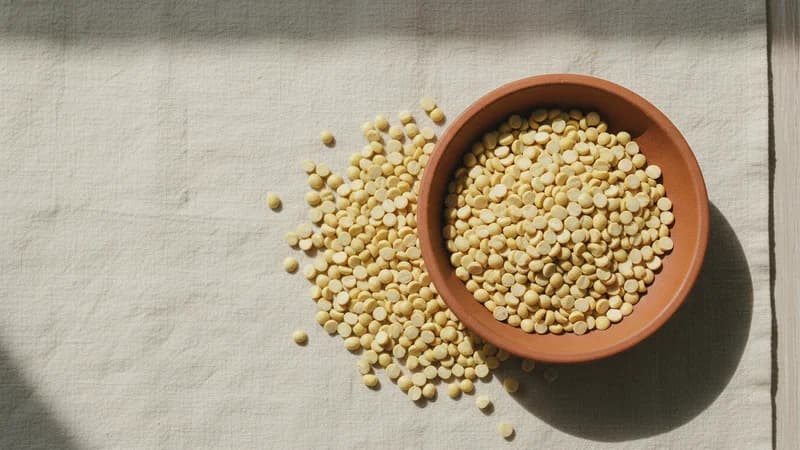
Moong Dal is best suited to Pitta and Kapha, which it helps pacify. Split and husked, moong dal is the lightest of all pulses on Agni (the digestive fire), which is why it forms the base of kitchari, the classic Ayurvedic convalescent meal traditionally used to rest a tired gut.. Suitable year-round.
Ayurvedic Profile
Moong Dal, known as Mudga in Sanskrit, is declared by the Charaka Samhita as Agrya (best) among all Shimbi Dhanya (legumes/pulses). This supreme classification is not given lightly and reflects Mudga's unique position as the only legume that is light enough for therapeutic diets while providing substantial protein nourishment. The Bhavaprakasha Nighantu describes it as Laghu (light), Ruksha (dry), and Kashaya-Madhura (astringent-sweet), with Sheeta (cold) virya and Madhura (sweet) vipaka.
The Charaka Samhita classifies Mudga among the Sangrahi (absorbent) and Chakshushya (vision-promoting) groups. Its light and dry qualities are the antithesis of the heavy, channel-blocking properties that characterize most other legumes. This is why moong dal is the only legume universally recommended during illness, convalescence, and Panchakarma dietary protocols. When other beans cause bloating and gas, moong dal is gentle and easily assimilated.
The Ashtanga Hridaya recommends Mudga for Jwara (fever), Atisara (diarrhea), and as Pathya (therapeutic diet) in virtually every disease condition. Its Tridoshahara tendency (though primarily Pitta-Kapha pacifying) combined with its light digestibility makes it suitable for even the weakest Agni. The split, hulled variety (yellow moong dal) is lightest; the whole green variety is slightly heavier but more nutritious.
Khichdi, the combination of moong dal with basmati rice, is considered the ultimate healing food in Ayurveda. The Charaka Samhita describes this combination as providing complete protein (Samyak Poshana) while remaining easy to digest, a principle validated by modern understanding of complementary amino acid profiles. During Panchakarma, khichdi serves as the standard diet throughout the treatment period.
In the Ayurvedic understanding of food timing, moong dal is one of the few protein sources light enough for evening meals. While most legumes and heavy proteins are recommended only at lunch, moong dal soup can be enjoyed at dinner without significantly burdening the nighttime Agni. This versatility, combined with its therapeutic safety, makes it the backbone of Ayurvedic vegetarian nutrition.
Ayurvedic Properties
Rasa (Taste)
sweet, astringent
Virya (Potency)
cold
Vipaka (Post-digestive)
sweet
Guna (Qualities)
light, dry
How Moong Dal Affects Vata, Pitta & Kapha
Ayurveda reads every food through the three doshas. Here is how moong dal’s qualities interact with each: Not sure which is yours? Take the free dosha quiz — about 3 minutes, no signup.
Moong Dal has a broadly neutral effect on Vata. Its sweet and astringent rasa and light and dry qualities neither strongly aggravate nor pacify Vata, so those with Vata dosha can enjoy it in moderation within a varied diet.
Moong Dal helps pacify Pitta. Its cold virya (potency) and light and dry qualities, with its sweet and astringent rasa (taste), counterbalance Pitta's tendencies — which is why it traditionally suits Pitta dosha in regular use.
Moong Dal helps pacify Kapha. Its cold virya (potency) and light and dry qualities, with its sweet and astringent rasa (taste), counterbalance Kapha's tendencies — which is why it traditionally suits Kapha dosha in regular use.
Nutrition Facts (per 100g)
347kcal
Calories
23.9g
Protein
62.6g
Carbs
1.2g
Fat
16.3g
Fiber
Ayurvedic Benefits
- Split and husked, moong dal is the lightest of all pulses on Agni (the digestive fire), which is why it forms the base of kitchari, the classic Ayurvedic convalescent meal traditionally used to rest a tired gut.
- Its sweet-astringent rasa and cooling virya pacify both Pitta and Kapha while staying neutral for Vata, making it one of the few legumes suitable across all three constitutions without heaviness.
- The light, slightly dry guna means it produces little Ama (metabolic residue) compared with heavier beans, so it may help those prone to bloating and sluggish digestion feel lighter after meals.
- A generous plant protein of roughly 24g per 100g dry, paired with folate and iron, supports the building of rasa and rakta dhatu (the nourishing and blood tissues), a useful base when the body is rebuilding strength or on a vegetarian diet.
- Because the skins are removed, it cooks quickly to a smooth, easily assimilated puree, sparing the gut the extra work whole pulses demand and supporting steady nourishment when appetite is low.
How to Use
- As moong dal is cooling (shita virya), favour it in warmer weather and pair it with warming spices like ginger or black pepper when the seasons turn cold.
- Dry-roast the split dal for a minute before cooking to deepen its flavour and further lighten it, then simmer with rice, ghee, cumin, turmeric and ginger into a soft kitchari.
- Cook one part dal to three parts water into a thin, well-spiced dal soup for an easy evening meal that will not sit heavily overnight.
- Add a small piece of ginger, a pinch of hing (asafoetida) and cumin while it simmers; these classic aids offset the mild Vata-provoking dryness of any pulse and support easy digestion.
- For a smoother puree that suits weak Agni or a recovering stomach, cook it well past al dente until it collapses, then finish with a spoon of warm ghee.
- Soak for 30 minutes before cooking to shorten simmering time; unlike whole beans it does not need overnight soaking.
Contraindications
- Its cooling virya and light-dry quality can aggravate Vata if eaten cold, dry or in excess; Vata types should always cook it soft with ghee, ginger and warming spices.
- Anyone with a diagnosed legume or pulse allergy should avoid it, and those prone to gas should keep portions moderate and always cook it thoroughly.
- Best limited to well-cooked, warm, spiced preparations if your digestion is very weak, as under-cooked dal can still feel heavy despite being the lightest pulse.
“Ayurveda classifies Moong Dal by its sweet, astringent rasa (taste), cold virya (thermal potency), and sweet vipaka (post-digestive effect). InnerVeda reads these three lenses together to map Moong Dal to your dosha and season.”
Frequently Asked Questions
Yes. Because it is split and husked, it is classically regarded as the lightest of all pulses on Agni, producing less Ama and gas than chana or masoor. This is why kitchari made from moong dal is the traditional food for a resting or recovering digestion.
They come from the same plant (Mudga), but moong dal is the whole green bean split in half with its green skin removed, leaving the pale yellow inner halves. Whole mung beans keep their skin, cook slower and are a little heavier and higher in fibre.
It is one of the few pulses gentle enough for daily use across all constitutions. Keep it well-cooked, warm and spiced with cumin, ginger and a little ghee, and vary your other foods so the diet stays balanced.
Dietary information provided is for educational purposes only and is rooted in Ayurvedic tradition. It is not a substitute for professional nutritional or medical advice. Consult a qualified healthcare provider before making significant changes to your diet, especially if you have food allergies, intolerances, or a medical condition.
Want a meal plan matched to your dosha?
Take the free 3-minute dosha assessment and get a personalised nutrition plan with 300 foods rated for your body.
Find Your Dosha — Free~3 min · no signup