Ayurveda vs Keto: A Comparison
A fair comparison of Ayurvedic eating and the ketogenic diet — where they align, where they differ, and which approach suits your dosha best.

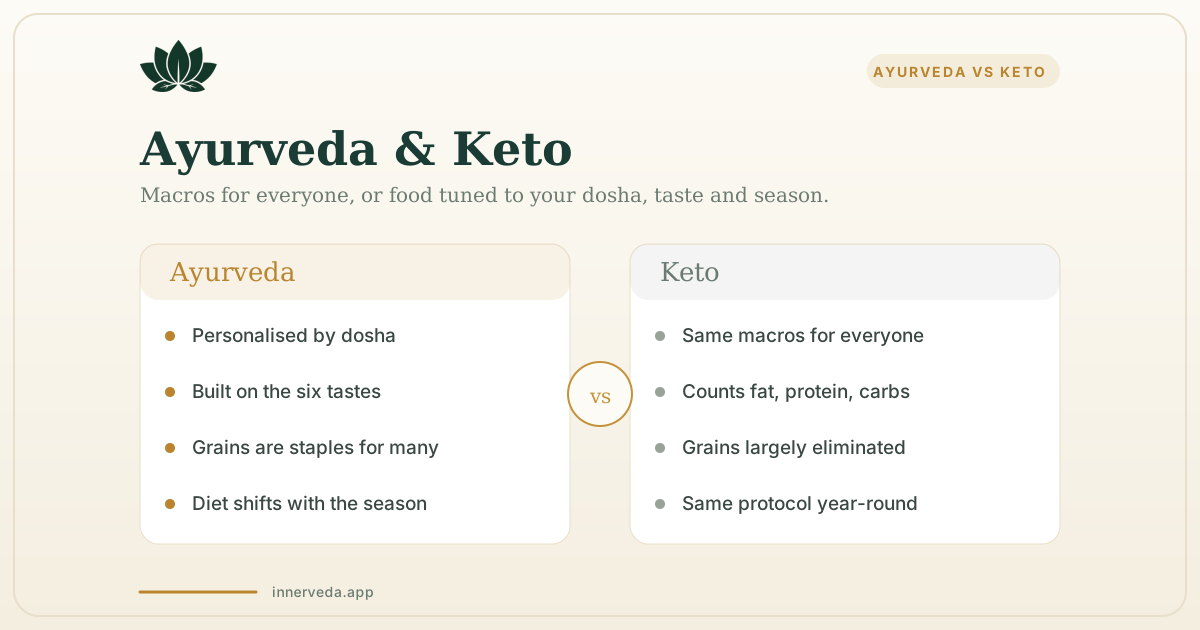
Keto focuses on high-fat, very low-carb eating to achieve ketosis. Ayurveda personalises nutrition by dosha, digestive strength, and the six tastes. Both prefer whole foods. They disagree on whether one protocol fits everyone. Kapha types may tolerate lower carbs better. Vata types typically need more grounding carbohydrates.
Two Popular Approaches to Eating
The ketogenic diet has become one of the most discussed dietary protocols of the last decade. Ayurvedic nutrition has been practised for over 5,000 years. Both have passionate advocates. Both claim to support health and vitality. They approach food from fundamentally different starting points.
This article is a fair, balanced comparison. The goal is not to crown a winner. It is to help you understand how each system thinks about food so you can make informed decisions for your own body.
The Keto Approach: A Quick Overview
The ketogenic diet is a high-fat, moderate-protein, very low-carbohydrate eating pattern. The mechanism is simple. Drop carbohydrate intake to 20-50 grams per day, and the body shifts from burning glucose to burning fat, producing molecules called ketones.
Typical keto macronutrient ratios:
- Fat: 70-80% of calories
- Protein: 15-20% of calories
- Carbohydrates: 5-10% of calories
Foods emphasised: Meat, fish, eggs, butter, oils, nuts, seeds, low-carb vegetables, cheese, avocado
Foods restricted: Grains, most fruits, starchy vegetables, legumes, sugar, most processed foods
Proponents point to research suggesting potential benefits for weight management, blood sugar regulation, and certain neurological conditions. Long-term studies remain limited, and individual responses vary a lot.
The Ayurvedic Approach: A Quick Overview
Ayurvedic nutrition does not prescribe a single diet for everyone. It starts with the individual. Dosha (Prakriti), current imbalances (Vikriti), digestive strength (Agni), the season, even the time of day.
Core organising principles:
- Six tastes (Shadrasa): Sweet, sour, salty, pungent, bitter, astringent. Each meal ideally includes all six.
- Agni (digestive fire): The strength of your digestion determines what you can process
- Dosha: Vata, Pitta, and Kapha types each have different optimal foods
- Food quality: Sattvic (pure, fresh), Rajasic (stimulating), Tamasic (heavy, stale)
Foods emphasised: Freshly cooked whole foods, seasonal produce, appropriate spices, ghee, grains suited to your dosha
Foods restricted: Varies entirely by individual. What nourishes one person may aggravate another.
Where Keto and Ayurveda Agree
Despite their different foundations, these two systems share some common ground:
1. Whole Foods Over Processed Foods
Both approaches strongly discourage processed, packaged, and artificial foods. Keto eliminates them because they tend to be high in carbs and seed oils. Ayurveda considers them Tamasic, devoid of Prana (life force) and harmful to Agni.
2. Mindful Eating Matters
Both systems, when practised thoughtfully, encourage awareness around food. Keto practitioners track macros and pay attention to how foods affect their ketone levels. Ayurveda teaches Ahara Vidhi, the art of eating with awareness, including attention to hunger signals, eating environment, and food combinations.
3. Sugar Is Problematic
Both keto and Ayurveda caution against excessive refined sugar. Keto eliminates it to maintain ketosis. Ayurveda considers refined sugar a Tamasic food that dulls the mind and creates Ama (digestive toxins).
4. Quality Fats Have a Place
Both systems value healthy fats. Keto makes fat the primary macronutrient. Ayurveda considers ghee one of the most important foods in the entire system. It is said to kindle Agni, nourish all seven tissue layers (Dhatus), and carry nutrients deep into cells.
Where Keto and Ayurveda Differ
1. One Size Fits All vs Personalised
This is the most fundamental difference. Keto prescribes the same macronutrient ratios regardless of individual constitution, season, or life stage. Ayurveda insists there is no universal optimal diet. What works depends entirely on who you are.
A strict keto protocol for a thin, anxious Vata type looks identical to one for a robust, sluggish Kapha type. Ayurveda would call that a significant oversight.
2. Macronutrients vs Tastes and Qualities
Keto organises food by macronutrient content (grams of fat, protein, carbs). Ayurveda organises food by taste (Rasa), quality (Guna), potency (Virya), and post-digestive effect (Vipaka). These are entirely different lenses through which to view nutrition.
For example, Ayurveda would distinguish between honey and maple syrup not by their carb counts (both are high) but by their energetic qualities. Honey is warming, drying, and scraping. Maple syrup is cooling and building. This distinction matters for dosha recommendations.
3. Grains: Villain vs Staple
Keto largely eliminates grains due to their carbohydrate content. Ayurveda considers certain grains, particularly rice, barley, and millet, among the most important foods. Barley (Yava) is praised in the Charaka Samhita as one of the most health-promoting grains, valued for its light quality and ability to support Kapha balance.
What Keto Gets Right That Ayurveda Often Misses
A real concession. Modern keto research has produced clearer data on insulin response, blood sugar stability, and metabolic flexibility than anything in classical Ayurveda. The texts talk about Agni in qualitative terms. Keto studies talk about HbA1c, glucose curves, and ketone levels in numbers. For someone with insulin resistance or type 2 diabetes, a measured low-carb approach can produce results that traditional Ayurvedic dietary advice, on its own, may not match for speed.
4. Digestive Fire vs Ketosis
Keto measures success through ketone levels, a metabolic marker. Ayurveda measures dietary success through the strength of Agni (digestive fire), assessed by how you feel after eating, the quality of your energy, and the clarity of your mind. These are qualitative rather than quantitative measures.
5. Seasonal Flexibility vs Fixed Protocol
Ayurveda adjusts dietary recommendations by season. In winter, heavier and more nourishing foods are recommended. In summer, lighter and cooler foods take priority. Keto macronutrient ratios generally remain the same year-round.
Dosha Considerations: Where It Gets Interesting
This is where Ayurvedic wisdom may genuinely enhance a keto-curious person's experience.
Kapha Types and Lower-Carb Eating
Kapha constitutions tend to have slower metabolisms, efficient digestion that stores easily, and a natural tendency toward heaviness. Ayurveda traditionally recommends lighter meals, pungent and bitter foods, and less frequent eating for Kapha types.
In practice, this may naturally align with some keto principles: Kapha types often do well with fewer carbohydrates, more stimulating spices, lighter meals, and less snacking. A modified lower-carb approach with Ayurvedic spicing could be a reasonable middle ground.
Pitta Types: Moderate and Cooling
Pitta types have strong digestive fire and typically process food efficiently. They can usually handle moderate carbohydrates well. Strict keto's heavy reliance on meat and fat, without cooling foods, may increase Pitta's already strong internal heat.
Pitta types exploring lower-carb eating might benefit from emphasising cooling fats (coconut, ghee), including plenty of vegetables, and avoiding an excess of warming animal proteins.
Vata Types: Caution Advised
Vata types are where keto and Ayurveda diverge most sharply. Vata constitutions tend to be thin, sensitive, and prone to dryness and anxiety. They traditionally thrive on warm, moist, grounding foods. Many are carbohydrate-rich: cooked grains, root vegetables, sweet fruits, and nourishing soups.
Strict keto removes most of these Vata-pacifying foods. Some Vata types report feeling ungrounded, anxious, or depleted on very low-carb diets. If you are a Vata type interested in reducing carbohydrates, a gentle approach with plenty of healthy fats, warming spices, and moderate (not extreme) carb reduction tends to be more sustainable.
The Ayurvedic Alternative to Macro Counting
Rather than counting grams of fat, protein, and carbohydrates, Ayurveda offers a different framework for building meals:
- Include all six tastes at each meal (sweet, sour, salty, pungent, bitter, astringent)
- Eat according to your hunger, not a clock or a macro target
- Make lunch the largest meal, when Agni is strongest (aligned with the sun's peak)
- Cook with appropriate spices for your dosha to support digestion
- Eat seasonal, local foods whenever possible
- Leave one-third of your stomach empty to allow space for digestion
This approach is inherently flexible and self-regulating. When you eat with awareness and include all six tastes, you naturally tend toward balanced nutrition without the need for tracking apps or ketone meters.
Can You Combine Elements of Both?
It doesn't have to be either/or. Many people find value in borrowing from both:
- From keto: Awareness of sugar and processed carb intake, appreciation for healthy fats, questioning the "low-fat" paradigm
- From Ayurveda: Personalisation by dosha, seasonal eating, spice wisdom, attention to digestive capacity, and the understanding that food is more than macronutrients
A Kapha type who reduces processed carbs, cooks with warming spices, includes plenty of bitter greens, and uses ghee as a primary fat is, in effect, practising a blend of both philosophies.
Comparison Summary
| Aspect | Ayurveda | Keto |
|---|---|---|
| Philosophy | Personalised by dosha, season, and digestive strength | Universal macronutrient ratios for everyone |
| Food Classification | By taste (Rasa), quality (Guna), potency (Virya), and post-digestive effect (Vipaka) | By macronutrient content (fat, protein, carbs) |
| Carbohydrates | Varies by dosha; grains are staples for many constitutions | Very low (20-50g/day) to maintain ketosis |
| Fats | Valued, especially ghee; amount varies by dosha | Primary energy source (70-80% of calories) |
| Grains | Considered essential for many doshas (rice, barley, millet) | Largely eliminated due to carb content |
| Success Metric | Strength of Agni (digestive fire), energy, clarity | Ketone levels and measurable biomarkers |
| Seasonal Adjustment | Diet changes with seasons | Same protocol year-round |
| Best Suited For | All doshas (with personalisation) | May suit Kapha types; challenging for Vata |
| Tracking Method | Internal awareness and body signals | Macro counting, ketone testing |
| History | 5,000+ years of traditional practice | Modern dietary protocol (research since ~1920s) |
The Bottom Line
Keto offers a structured, measurable approach to eating that works well for some people, particularly in the short to medium term. Ayurveda offers a personalised, flexible framework that has supported human health for millennia.
The right question is not "which diet is better?" It is "which approach serves my unique body, life stage, and goals?" For many people, the answer involves wisdom from both traditions, filtered through the lens of individual constitution.
If you take one lesson from Ayurveda into any dietary experiment, let it be this. Pay attention to how you feel, not just what the numbers say. Your body's signals (energy, digestion, sleep, mood, clarity) are the real measure of whether an approach is working for you.
Disclaimer
This article is for educational and informational purposes only and does not constitute medical or dietary advice. Both the ketogenic diet and Ayurvedic nutrition have their own evidence bases and limitations. Individual responses to any dietary approach vary significantly. Consult a qualified healthcare provider or registered dietitian before making significant changes to your eating patterns, especially if you have diabetes, kidney disease, disordered eating, or any other health condition.
Frequently Asked Questions
You can borrow from both, though they have different foundations. A Kapha type might thrive on lighter, lower-carb meals with plenty of warming spices. Strict keto macros may conflict with Ayurvedic principles for Vata types, who traditionally need more grounding foods.
Ayurveda does not categorise foods primarily by macronutrients like carbs, protein, or fat. Instead, it organises foods by taste (Rasa), quality (Guna), and effect on the doshas. That said, Ayurveda naturally recommends lighter eating for Kapha types, which may result in lower carbohydrate intake. For Vata types, grains and root vegetables are considered essential grounding foods.
Ayurveda values healthy fats, particularly ghee, sesame oil, and coconut oil, as essential for tissue nourishment, especially for Vata types. The amount recommended varies by dosha. Kapha types are traditionally advised to limit heavy fats. Vata types may benefit from generous amounts. Agni (digestive fire) determines how much fat a person can comfortably process.
Strict keto may be challenging for Vata types, who traditionally benefit from warm, moist, and grounding foods including cooked grains, root vegetables, and nourishing soups. The very low-carb nature of keto removes many of these Vata-pacifying foods. If a Vata type wants to reduce carbs, a moderate approach with dosha awareness may be more suitable than strict ketogenic ratios.
References & sources
- Prakriti and its associations with metabolism, chronic diseases, and genotypes— Journal of Ayurveda and Integrative Medicine, 2014
- Recapitulation of Ayurveda constitution types by machine learning of phenotypic traits— Scientific Reports, 2017
- Biochemistry, Ketogenesis (StatPearls)— StatPearls, NCBI Bookshelf (NIH), updated 2025
- Very-low-carbohydrate ketogenic diet v. low-fat diet for long-term weight loss: a meta-analysis of randomised controlled trials— Bueno NB et al., British Journal of Nutrition, 2013
- A Comparative Study Evaluating the Effectiveness Between Ketogenic and Low-Carbohydrate Diets on Glycemic and Weight Control in Patients With Type 2 Diabetes Mellitus: A Systematic Review and Meta-Analysis— Choy KYC, Louie JCY (peer-reviewed systematic review/meta-analysis), Cureus, 2022
- A systematic review of the use of the ketogenic diet in childhood epilepsy— Keene DL, Pediatric Neurology, 2006 (reports ~33% of children achieving >50% seizure reduction; 15.6% complete control)
Classical sources
- Charaka Samhita— Sutrasthana, Chapter 27 (Annapanavidhi Adhyaya), verses 19-20 Sutrasthana 27.19-20
- Ashtanga Hridaya— Sutrasthana, Chapter 8 (Matrashitiya Adhyaya), verse 46 Sutrasthana 8.46
- Charaka Samhita— Sutrasthana, Chapter 25 (Yajjah Purusiya Adhyaya), verse ~30-31 Sutrasthana 25.30-31
This article is for educational purposes only and reflects traditional Ayurvedic perspectives alongside selected research. It is not medical advice. Always consult a qualified healthcare provider before acting on any information presented here.
Written by
Ganesh Kompella
Founder, InnerVeda
Research assisted by Vaidya AI
Trained on 500+ classical Ayurvedic texts

Medically reviewed by Dr. Sheetal Rajput
BAMS (Bachelor of Ayurvedic Medicine & Surgery)
Practise this
Guided sessions that put this article into practice.
On the plate: Ghee — how it affects Vata, Pitta and Kapha, and how to use it.
Continue Reading

Ayurvedic Nutrition: Eating for Your Dosha Type
Ayurveda vs Modern Nutrition: Can They Work Together?

The 6 Tastes of Ayurveda: How to Balance Every Meal
Ayurveda vs Traditional Chinese Medicine: Key Differences
Best Ayurveda Apps 2026: Expert Comparison
Put this into practice
Take the free dosha assessment. Get a personalised wellness plan with nutrition, meditation, and daily routines matched to your body.
Find Your Dosha — Free~3 min · no signup