Beetroot: Benefits & Dosha Effects
Sanskrit: Palandu Rakta (Modern Adaptation)
Beetroot is especially balancing for Vata but can raise Pitta when eaten in excess. With sweet rasa (taste), hot virya (potency) and sweet vipaka, it is heavy and oily in quality and a source of folate.

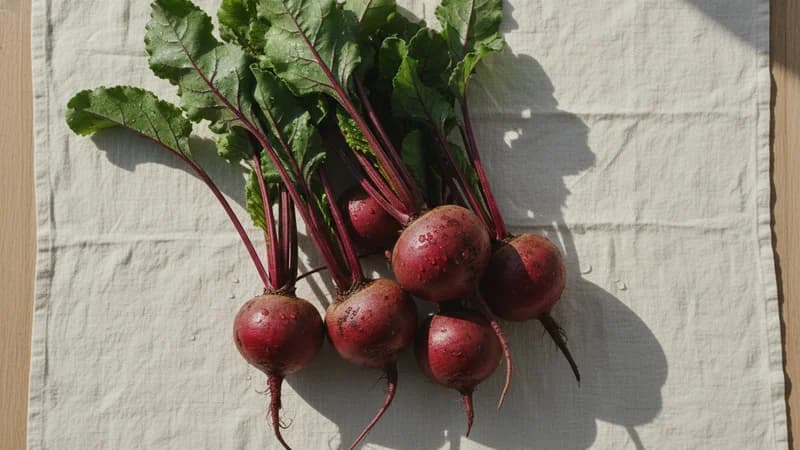
Beetroot is best suited to Vata, which it helps pacify. In excess it can raise Pitta. Exceptional Raktavardhaka (blood-building) food rich in iron and folate. Best enjoyed during winter.
Ayurvedic Profile
Beetroot, while not a classical Ayurvedic vegetable, is analysed through Dravyaguna Shastra as a Kanda (tuber/root) with predominantly Madhura (sweet) rasa, Ushna (hot) virya, and Madhura (sweet) vipaka. Its gunas are Guru (heavy) and Snigdha (oily), giving it a distinctly grounding, nourishing profile. The deep red-purple colour immediately connects it to Rakta Dhatu (blood tissue) in the Ayurvedic understanding of food-body correspondence.
The Ayurvedic principle of Samanya (similarity) suggests that substances resembling a particular tissue or organ tend to nourish it. Beetroot's blood-red colour and rich iron content make it one of the most intuitive Raktavardhaka (blood-building) foods. This principle, while appearing simplistic, has been repeatedly validated by nutritional science showing beetroot's exceptional iron, folate, and nitrate content all support healthy blood formation and circulation.
Beetroot's natural nitrate content, which the body converts to nitric oxide, aligns with the Ayurvedic concept of Srotamsi Vivarana (channel-opening). By dilating blood vessels and improving circulation, beetroot supports the flow of Rasa Dhatu through the Rasavaha Srotas and nutrient delivery to all seven tissues. This vascular-supportive action benefits athletic performance, cognitive function, and overall vitality.
From a Doshic perspective, beetroot's sweet taste and heating virya primarily benefit Vata dosha through grounding and nourishing action. However, its heating nature means it can aggravate Pitta in excess, particularly in individuals with Raktapitta (excess heat in the blood). Kapha types can enjoy beetroot in moderation as its iron content supports Rakta Dhatu without excessive heaviness when consumed in reasonable portions.
The therapeutic use of beetroot extends to liver support (Yakrit Shodhana) in modern Ayurvedic practice. The liver, governed by Ranjaka Pitta, is responsible for colouring the blood and metabolising nutrients. Beetroot's betalain compounds support hepatic detoxification pathways, complementing the Ayurvedic understanding of the liver as the seat of blood formation and purification.
Ayurvedic Properties
Rasa (Taste)
sweet
Virya (Potency)
hot
Vipaka (Post-digestive)
sweet
Guna (Qualities)
heavy, oily
How Beetroot Affects Vata, Pitta & Kapha
Ayurveda reads every food through the three doshas. Here is how beetroot’s qualities interact with each: Not sure which is yours? Take the free dosha quiz — about 4 minutes.
Beetroot helps pacify Vata. Its hot virya (potency) and heavy and oily qualities, with its sweet rasa (taste), counterbalance Vata's tendencies — which is why it traditionally suits Vata dosha in regular use. Vata meal plan
Beetroot is well tolerated by those with Pitta dosha in normal amounts, but its hot virya and heavy and oily qualities may aggravate Pitta in excess — so people with Pitta as their leading dosha are best keeping to measured portions. Pitta meal plan
Beetroot has a broadly neutral effect on Kapha. Its sweet rasa and heavy and oily qualities neither strongly aggravate nor pacify Kapha, so those with Kapha dosha can enjoy it in moderation within a varied diet. Kapha meal plan
Nutrition Facts (per 100g)
43kcal
Calories
1.6g
Protein
9.6g
Carbs
0.2g
Fat
2.8g
Fibre
Ayurvedic Benefits
- Exceptional Raktavardhaka (blood-building) food rich in iron and folate
- Natural nitrates support Srotamsi Vivarana (channel-opening) for improved circulation
- Grounding and nourishing for Vata dosha with its sweet, heavy qualities
- Valued in Ayurvedic tradition for digestive wellness (Yakrit Shodhana) through betalain compounds
- Enhances athletic performance and stamina through improved oxygen delivery
How to Use
- As beetroot is heating (ushna virya), balance it with cooling accompaniments such as coriander, fennel or a little ghee — especially through the warmer months.
- Beetroot is at its best during winter — eating it in season keeps its Prana (vital energy) and benefit at their peak.
- Roast whole with cumin and coriander, then slice for a warm, grounding salad
- Juice fresh with ginger and lemon for a morning blood-building tonic
- Grate raw into warm salads with lemon, mint, and a drizzle of sesame oil
- Add to soups and stews for earthy sweetness and vivid colour
- Prepare as a traditional beetroot raita with yogurt, cumin, and coriander
Contraindications
- May aggravate Pitta in excess due to Ushna virya; use moderately if Pitta is high
- Can colour urine and stool red, which is harmless but may cause unnecessary alarm
- Those with kidney stones should moderate intake due to oxalate content
“Ayurveda classifies Beetroot by its sweet rasa (taste), hot virya (thermal potency), and sweet vipaka (post-digestive effect). InnerVeda reads these three lenses together to map Beetroot to your dosha and season.”
Frequently Asked Questions
Yes, beetroot is one of the best dietary supports for Pandu (anaemia). Its combination of iron, folate, and Vitamin C creates optimal conditions for Rakta Dhatu (blood tissue) formation. Combine with foods rich in Vitamin C like lemon for enhanced iron absorption.
For most people, a small glass (100-150ml) of beetroot juice 3-4 times per week is beneficial. Daily consumption in large amounts may aggravate Pitta. Always add ginger to the juice for digestibility. Those with kidney stones should limit frequency.
Beetroot has Ushna (hot) virya despite its sweet taste, which is an important distinction. This heating potency means it can increase Pitta if used excessively. Pitta types should consume it with cooling accompaniments like yogurt, mint, or coriander.
Your dosha is the balance of Vata, Pitta and Kapha you were born with. Take the dosha quiz — free, about 4 minutes.
Three questions towards your dosha
These are the first three questions of the full dosha quiz. Answer them here and carry on where you left off.
Prefer to start from the beginning? Take the full dosha quiz.
Dietary information provided is for educational purposes only and is rooted in Ayurvedic tradition. It is not a substitute for professional nutritional or medical advice. Consult a qualified healthcare provider before making significant changes to your diet, especially if you have food allergies, intolerances, or a medical condition.
Want a meal plan matched to your dosha?
Take the free dosha assessment (about 4 minutes) and get a personalised nutrition plan with nearly 300 foods in the app, rated for your body.
Find Your Dosha: FreeAbout 4 minutes