Spinach: Benefits & Dosha Effects
Sanskrit: Palakya (पालक्य)
Spinach is especially balancing for Pitta and Kapha but can raise Vata when eaten in excess. With sweet and astringent rasa (taste), cold virya (potency) and pungent vipaka, it is light, dry and rough in quality and a source of iron.

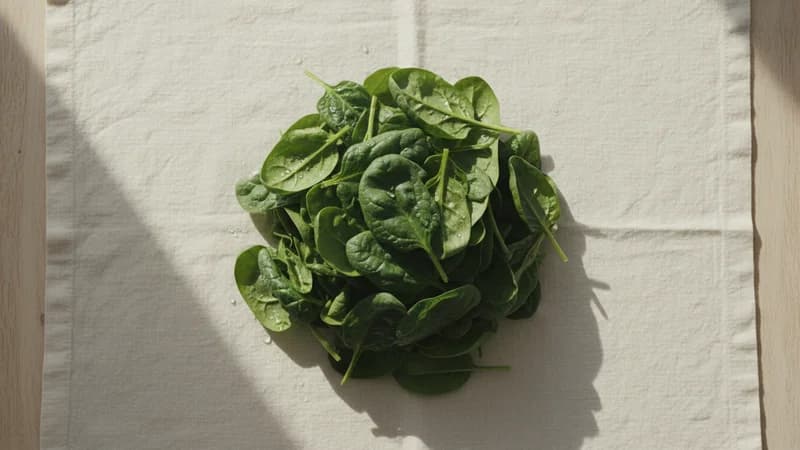
Spinach is best suited to Pitta and Kapha, which it helps pacify. In excess it can raise Vata. Rich in iron for Rakta Dhatu (blood tissue) nourishment and Pandu (anaemia) support. Best enjoyed during spring.
Ayurvedic Profile
Spinach, referred to in Ayurvedic context as Palakya or Vastuka (a related leafy green mentioned in classical texts), is a Shaka Varga (vegetable category) food that embodies the cooling, purifying qualities valued in Pitta-pacifying diets. While the specific species Spinacia oleracea is not referenced in ancient texts, the Bhavaprakasha Nighantu describes various Patra Shakas (leafy greens) with properties closely matching spinach: Madhura-Kashaya (sweet-astringent) rasa, Sheeta (cold) virya, and Katu (pungent) vipaka with Laghu (light) and Ruksha (dry) gunas.
The Charaka Samhita broadly classifies leafy greens under Shaka Varga and notes their Shodhana (purifying) effect on the Rasa and Rakta Dhatus (plasma and blood tissues). Spinach exemplifies this principle with its exceptional iron and folate content supporting Rakta Dhatu formation. In Ayurvedic hematology, foods rich in iron are classified as Panduhara (anti-anaemic), and spinach has earned this distinction in modern practice.
The Ashtanga Hridaya advises that most Shaka (green vegetables) are Vatala (Vata-increasing) when consumed in excess, particularly raw. This is critically important for spinach, which is often consumed raw in salads in Western diets but should ideally be lightly cooked (Samskara) to reduce its Vata-aggravating potential. The classical technique of sauteing greens in ghee with cumin and a pinch of hing (asafoetida) is not merely culinary tradition but a precise Ayurvedic formulation that makes the greens more digestible and less likely to cause gas.
Spinach's high oxalate content is relevant from both modern and Ayurvedic perspectives. Ayurveda would classify this as a Doshic limitation requiring Samskara (processing) to mitigate. Cooking spinach significantly reduces oxalate content and is always preferred over raw consumption. Pairing cooked spinach with lemon juice (vitamin C) enhances iron absorption while further neutralising oxalates.
For Pitta-dominant individuals experiencing excess heat, skin inflammation, or blood-related conditions, spinach served as a cooked preparation with cooling spices like coriander and cumin provides excellent therapeutic support. Its bitter and astringent secondary tastes help dry excess moisture and reduce inflammatory Pitta without creating imbalance.
Ayurvedic Properties
Rasa (Taste)
sweet, astringent
Virya (Potency)
cold
Vipaka (Post-digestive)
pungent
Guna (Qualities)
light, dry, rough
How Spinach Affects Vata, Pitta & Kapha
Ayurveda reads every food through the three doshas. Here is how spinach’s qualities interact with each: Not sure which is yours? Take the free dosha quiz — about 4 minutes.
Spinach is well tolerated by those with Vata dosha in normal amounts, but its cold virya and light, dry and rough qualities may aggravate Vata in excess — so people with Vata as their leading dosha are best keeping to measured portions. Vata meal plan
Spinach helps pacify Pitta. Its cold virya (potency) and light, dry and rough qualities, with its sweet and astringent rasa (taste), counterbalance Pitta's tendencies — which is why it traditionally suits Pitta dosha in regular use. Pitta meal plan
Spinach helps pacify Kapha. Its cold virya (potency) and light, dry and rough qualities, with its sweet and astringent rasa (taste), counterbalance Kapha's tendencies — which is why it traditionally suits Kapha dosha in regular use. Kapha meal plan
Nutrition Facts (per 100g)
23kcal
Calories
2.9g
Protein
3.6g
Carbs
0.4g
Fat
2.2g
Fibre
Ayurvedic Benefits
- Rich in iron for Rakta Dhatu (blood tissue) nourishment and Pandu (anaemia) support
- Cooling properties help pacify Pitta and reduce inflammatory heat
- High Vitamin K content supports healthy blood clotting and bone metabolism
- Purifying effect on Rasa and Rakta Dhatus supports clear skin
- Light quality supports weight management and Kapha reduction
How to Use
- As spinach is cooling (shita virya), favour it in warmer weather and pair it with warming spices like ginger or black pepper when the seasons turn cold.
- Spinach is at its best during spring — eating it in season keeps its Prana (vital energy) and benefit at their peak.
- Saute lightly in ghee with cumin and hing for optimal digestibility
- Add to dal and soups for nutrient-dense, easy-to-digest greens
- Cook with paneer and spices for classic Palak Paneer that balances all gunas
- Squeeze lemon on cooked spinach to enhance iron absorption and reduce oxalates
- Blend into warm smoothies with ginger and turmeric for a green tonic
Contraindications
- Can aggravate Vata in excess due to dry, rough, light qualities; always cook and add ghee
- High oxalate content; avoid in excess if prone to kidney stones (Ashmari)
- Raw spinach is harder to digest; Ayurveda strongly prefers cooked preparations
“Ayurveda classifies Spinach by its sweet, astringent rasa (taste), cold virya (thermal potency), and pungent vipaka (post-digestive effect). InnerVeda reads these three lenses together to map Spinach to your dosha and season.”
Frequently Asked Questions
Ayurveda strongly recommends cooking spinach. Cooking reduces oxalates, makes nutrients more bioavailable, and counters the Vata-aggravating qualities of raw greens. Saute in ghee with cumin and hing for the most therapeutic preparation.
Yes, spinach is rich in iron and folate, making it valuable for Pandu (anaemia) management. However, its oxalates can inhibit iron absorption. Always cook spinach and pair with vitamin C sources like lemon juice to maximise iron uptake.
Moderate daily consumption of cooked spinach is fine for Pitta and Kapha types. Vata types should limit to 2-3 times per week and always cook with ghee. Those with a history of kidney stones should consume less frequently due to oxalate content.
Your dosha is the balance of Vata, Pitta and Kapha you were born with. Take the dosha quiz — free, about 4 minutes.
Three questions towards your dosha
These are the first three questions of the full dosha quiz. Answer them here and carry on where you left off.
Prefer to start from the beginning? Take the full dosha quiz.
Dietary information provided is for educational purposes only and is rooted in Ayurvedic tradition. It is not a substitute for professional nutritional or medical advice. Consult a qualified healthcare provider before making significant changes to your diet, especially if you have food allergies, intolerances, or a medical condition.
Want a meal plan matched to your dosha?
Take the free dosha assessment (about 4 minutes) and get a personalised nutrition plan with nearly 300 foods in the app, rated for your body.
Find Your Dosha: FreeAbout 4 minutes