Brown Rice: Benefits & Dosha Effects
Sanskrit: Dhanya (धान्य)
Brown Rice is especially balancing for Pitta but can raise Vata when eaten in excess. With sweet rasa (taste), cold virya (potency) and sweet vipaka, it is heavy and dry in quality and a source of manganese.

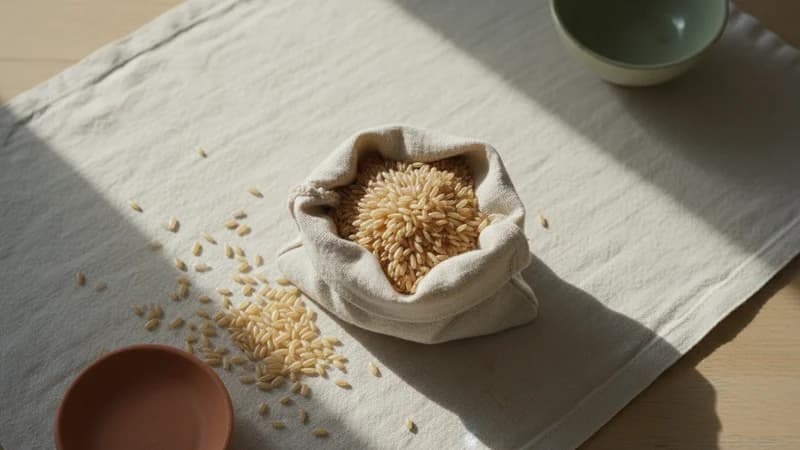
Brown Rice is best suited to Pitta, which it helps pacify. In excess it can raise Vata. Higher fibre content supports Meda Dhatu balance and healthy blood sugar levels. Suitable year-round.
Ayurvedic Profile
Brown rice, understood through the Ayurvedic lens as unhusked or partially processed Dhanya, represents a more complete form of the rice grain. While classical Ayurvedic texts primarily reference Shali (polished rice) and Nivara (wild rice), the principle of understanding foods through their gunas (qualities) allows us to analyse brown rice through traditional frameworks. Its retention of the bran layer gives it qualities that differ significantly from white rice: it is Guru (heavier), Ruksha (drier), and takes longer to digest.
From an Ayurvedic perspective, brown rice's additional fibre and nutrient density come at the cost of increased heaviness and potential Vata aggravation. The Charaka Samhita's preference for Shali (polished rice) reflects the practical observation that lighter grains are easier to digest and place less burden on Agni. This does not make brown rice unhealthy but positions it differently in the therapeutic hierarchy. For individuals with strong Agni and Pitta-Kapha constitutions, brown rice can be an excellent choice.
The Ashtanga Hridaya's principle of Ahara Vidhi (rules of eating) applies well to brown rice: it should be consumed in amounts proportional to one's digestive capacity and should be prepared with appropriate Samskara (processing methods) to enhance its digestibility. Soaking brown rice overnight, cooking it with digestive spices like cumin and ginger, and serving it with ghee are all classical techniques that reduce its inherent heaviness.
Brown rice offers superior nutritional density compared to white rice, retaining B vitamins, manganese, selenium, and magnesium that are lost during polishing. In modern Ayurvedic practice, it finds an important place for individuals with Meda Dhatu (fat tissue) concerns and Prameha (metabolic conditions), where its lower glycemic impact and higher fibre content provide sustained energy without rapid blood sugar fluctuations.
The key Ayurvedic wisdom regarding brown rice lies in individualisation. Rather than declaring it universally superior or inferior to white rice, a Vaidya would assess the individual's Prakriti (constitution), Agni (digestive capacity), and current state of health before recommending the appropriate rice variety. This nuanced approach transcends the modern tendency to label foods as categorically good or bad.
Ayurvedic Properties
Rasa (Taste)
sweet
Virya (Potency)
cold
Vipaka (Post-digestive)
sweet
Guna (Qualities)
heavy, dry
How Brown Rice Affects Vata, Pitta & Kapha
Ayurveda reads every food through the three doshas. Here is how brown rice’s qualities interact with each: Not sure which is yours? Take the free dosha quiz — about 4 minutes.
Brown Rice is well tolerated by those with Vata dosha in normal amounts, but its cold virya and heavy and dry qualities may aggravate Vata in excess — so people with Vata as their leading dosha are best keeping to measured portions. Vata meal plan
Brown Rice helps pacify Pitta. Its cold virya (potency) and heavy and dry qualities, with its sweet rasa (taste), counterbalance Pitta's tendencies — which is why it traditionally suits Pitta dosha in regular use. Pitta meal plan
Brown Rice has a broadly neutral effect on Kapha. Its sweet rasa and heavy and dry qualities neither strongly aggravate nor pacify Kapha, so those with Kapha dosha can enjoy it in moderation within a varied diet. Kapha meal plan
Nutrition Facts (per 100g)
362kcal
Calories
7.5g
Protein
76.2g
Carbs
2.7g
Fat
3.4g
Fibre
Ayurvedic Benefits
- Higher fibre content supports Meda Dhatu balance and healthy blood sugar levels
- Rich in B vitamins, manganese, and selenium for sustained energy
- Lower glycemic response compared to white rice, beneficial for Prameha management
- Good choice for strong-Agni Pitta-Kapha constitutions seeking whole-grain nutrition
- Provides more Mala-forming fibre to support healthy bowel regularity
How to Use
- As brown rice is cooling (shita virya), favour it in warmer weather and pair it with warming spices like ginger or black pepper when the seasons turn cold.
- Soak overnight before cooking to improve digestibility and reduce cooking time
- Cook with cumin, ginger, and a dollop of ghee to counteract heaviness and dryness
- Eat primarily at lunchtime when Agni is strongest to ensure proper digestion
- Mix 50-50 with white basmati for a balanced approach to nutrition and digestibility
- Use in Buddha bowls with plenty of warm vegetables and a rich dressing
Contraindications
- May aggravate Vata dosha due to its heavy and dry qualities; Vata types should prefer white rice
- Not ideal during illness or convalescence when Agni is weak; switch to white rice or congee
- Can cause bloating in those with Mandagni (weak digestion); prepare with digestive spices
“Ayurveda classifies Brown Rice by its sweet rasa (taste), cold virya (thermal potency), and sweet vipaka (post-digestive effect). InnerVeda reads these three lenses together to map Brown Rice to your dosha and season.”
Frequently Asked Questions
Not necessarily. Ayurveda values digestibility alongside nutrition. White basmati is lighter and easier to digest, which is why classical texts prefer it. Brown rice is more nutritious on paper but harder to digest. The best choice depends on your dosha and digestive strength.
Soak it overnight, cook it with plenty of water and digestive spices (cumin, ginger, turmeric), and serve it with ghee. These classical Samskara (processing) techniques significantly improve digestibility. Eating it at midday when Agni is strongest also helps.
People with weak digestion (Mandagni), Vata-dominant constitutions, those recovering from illness, and anyone undergoing Panchakarma should opt for white basmati rice instead. If you consistently experience bloating after brown rice, it is not right for your current state.
Your dosha is the balance of Vata, Pitta and Kapha you were born with. Take the dosha quiz — free, about 4 minutes.
Three questions towards your dosha
These are the first three questions of the full dosha quiz. Answer them here and carry on where you left off.
Prefer to start from the beginning? Take the full dosha quiz.
Dietary information provided is for educational purposes only and is rooted in Ayurvedic tradition. It is not a substitute for professional nutritional or medical advice. Consult a qualified healthcare provider before making significant changes to your diet, especially if you have food allergies, intolerances, or a medical condition.
Want a meal plan matched to your dosha?
Take the free dosha assessment (about 4 minutes) and get a personalised nutrition plan with nearly 300 foods in the app, rated for your body.
Find Your Dosha: FreeAbout 4 minutes