Bulgur Wheat: Benefits & Dosha Effects
Sanskrit: Dalia (दलिया)
Bulgur Wheat is especially balancing for Vata but can raise Kapha when eaten in excess. With sweet rasa (taste), hot virya (potency) and sweet vipaka, it is light and dry in quality and a source of manganese.

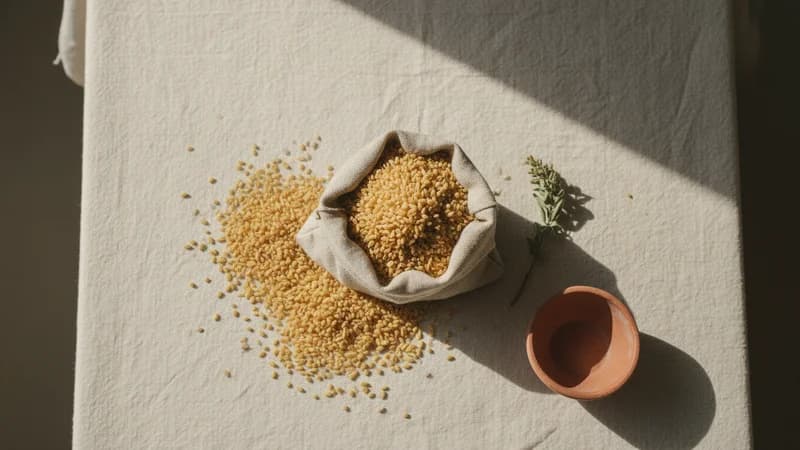
Bulgur Wheat is best suited to Vata, which it helps pacify. In excess it can raise Kapha. Made by parboiling, drying and cracking whole durum wheat, bulgur is precooked and light and dry (laghu, ruksha) in guna, so it prepares in minutes and sits easily on Agni, making it a quick, grounding grain for Vata.. Best enjoyed during winter.
Ayurvedic Profile
Bulgur Wheat (Dalia (दलिया)) is a sustaining grains treasured in Ayurvedic nutrition. Referenced in Dhanvantari Nighantu, it is characterised by sweet rasa (taste), heating virya (potency), and sweet vipaka (post-digestive effect). Bulgur (Dalia) is par-boiled cracked wheat that is lighter than whole wheat due to processing. In Ayurvedic practice, Dalia is a popular convalescent food for its easy digestibility while retaining wheat's tissue-nourishing Madhura rasa and high fibre content. Its light and dry gunas make it particularly suited for specific constitutional types. It pacifies Vata, has a neutral effect on Pitta, and can aggravate Kapha when consumed in excess. From a nutritional standpoint, bulgur wheat provides approximately 342 calories per 100g, with 12.3g protein, 75.9g carbohydrates, and is a valuable source of Manganese, Magnesium, Iron. Best enjoyed during winter, bulgur wheat supports healthy Agni (digestive fire) when prepared according to Ayurvedic principles, helping prevent Ama (toxin) accumulation and nourish the dhatus (body tissues).
Ayurvedic Properties
Rasa (Taste)
sweet
Virya (Potency)
hot
Vipaka (Post-digestive)
sweet
Guna (Qualities)
light, dry
How Bulgur Wheat Affects Vata, Pitta & Kapha
Ayurveda reads every food through the three doshas. Here is how bulgur wheat’s qualities interact with each: Not sure which is yours? Take the free dosha quiz — about 4 minutes.
Bulgur Wheat helps pacify Vata. Its hot virya (potency) and light and dry qualities, with its sweet rasa (taste), counterbalance Vata's tendencies — which is why it traditionally suits Vata dosha in regular use. Vata meal plan
Bulgur Wheat has a broadly neutral effect on Pitta. Its sweet rasa and light and dry qualities neither strongly aggravate nor pacify Pitta, so those with Pitta dosha can enjoy it in moderation within a varied diet. Pitta meal plan
Bulgur Wheat is well tolerated by those with Kapha dosha in normal amounts, but its hot virya and light and dry qualities may aggravate Kapha in excess — so people with Kapha as their leading dosha are best keeping to measured portions. Kapha meal plan
Nutrition Facts (per 100g)
342kcal
Calories
12.3g
Protein
75.9g
Carbs
1.3g
Fat
12.5g
Fibre
Ayurvedic Benefits
- Made by parboiling, drying and cracking whole durum wheat, bulgur is precooked and light and dry (laghu, ruksha) in guna, so it prepares in minutes and sits easily on Agni, making it a quick, grounding grain for Vata.
- Its sweet rasa and sweet vipaka nourish and settle an ungrounded constitution, while the warming virya keeps this cracked wholegrain comforting and easy to digest through cold weather.
- Because it is a parboiled wholegrain, bulgur retains much of its bran and delivers manganese and magnesium, minerals that contribute to normal muscle and nerve function, along with useful plant iron.
- Its generous fibre and low, mellow sweetness give steady fullness; the light, dry quality means it satisfies without the heaviness of denser grains, a helpful balance for those prone to feeling weighed down after meals.
- The precooking gives a tender yet distinctly nutty, chewy bite, well suited to warm winter grain dishes such as pilaf and the classic parsley-rich tabbouleh.
How to Use
- As bulgur wheat is heating (ushna virya), balance it with cooling accompaniments such as coriander, fennel or a little ghee — especially through the warmer months.
- Bulgur Wheat is at its best during winter — eating it in season keeps its Prana (vital energy) and benefit at their peak.
- For fine bulgur, simply cover with an equal volume of boiling water or warm stock, put on a lid and leave for 10 to 15 minutes until tender, then fluff with a fork; no cooking required.
- Cook coarse bulgur like a pilaf: toast it briefly in ghee or olive oil with onion and spices, add twice its volume of hot stock, and simmer gently until the liquid is absorbed.
- Make a warming take on tabbouleh with soaked fine bulgur, plenty of chopped parsley and mint, tomato and lemon, gently warmed through rather than served fridge-cold to protect a delicate Agni.
- Fold cooked bulgur into hearty winter soups, or use it as a base for a grain bowl topped with roasted vegetables, herbs and a spoonful of yoghurt.
- Bind it with grated vegetables, herbs and spices to shape into patties or kofte, pan-fried in a little ghee for a satisfying, savoury meal.
Contraindications
- As it is warming and Kapha-aggravating in excess, those with sluggish digestion, congestion or a tendency to weight gain should keep portions moderate and favour it warm and well-spiced rather than cold.
- Bulgur is cracked durum wheat and contains gluten, so it is unsuitable for anyone with coeliac disease or a wheat allergy.
- Its dry, fibrous quality can feel too rough for a very weak or sensitive digestion; in that case, soak it well, serve it warm and start with small amounts.
“Ayurveda classifies Bulgur Wheat by its sweet rasa (taste), hot virya (thermal potency), and sweet vipaka (post-digestive effect). InnerVeda reads these three lenses together to map Bulgur Wheat to your dosha and season.”
Frequently Asked Questions
It depends on the grind. Fine bulgur is already parboiled and only needs soaking in boiling water for 10 to 15 minutes. Coarse bulgur is better simmered like a pilaf for around 15 to 20 minutes. Either way it is far quicker than raw grains because it is precooked during manufacture.
Bulgur is wholegrain wheat that has been parboiled, dried and then cracked, so it is precooked and nuttier. Plain cracked wheat is simply crushed raw grain and needs longer cooking. Couscous is not a cracked grain at all but tiny rolled pasta made from semolina, giving a much finer, softer texture.
It can be, in moderation. Bulgur is light and dry rather than heavy, so it tends to sit more comfortably than dense grains. To be kind to a sensitive gut, soak it well, serve it warm rather than cold, add warming spices such as cumin, and keep portions modest.
Your dosha is the balance of Vata, Pitta and Kapha you were born with. Take the dosha quiz — free, about 4 minutes.
Three questions towards your dosha
These are the first three questions of the full dosha quiz. Answer them here and carry on where you left off.
Prefer to start from the beginning? Take the full dosha quiz.
Dietary information provided is for educational purposes only and is rooted in Ayurvedic tradition. It is not a substitute for professional nutritional or medical advice. Consult a qualified healthcare provider before making significant changes to your diet, especially if you have food allergies, intolerances, or a medical condition.
Want a meal plan matched to your dosha?
Take the free dosha assessment (about 4 minutes) and get a personalised nutrition plan with nearly 300 foods in the app, rated for your body.
Find Your Dosha: FreeAbout 4 minutes