Cinnamon: Benefits & Dosha Effects
Sanskrit: Tvak (त्वक्)
Cinnamon is especially balancing for Vata and Kapha but can raise Pitta when eaten in excess. With sweet, pungent and bitter rasa (taste), hot virya (potency) and sweet vipaka, it is light, dry and sharp in quality and a source of manganese.

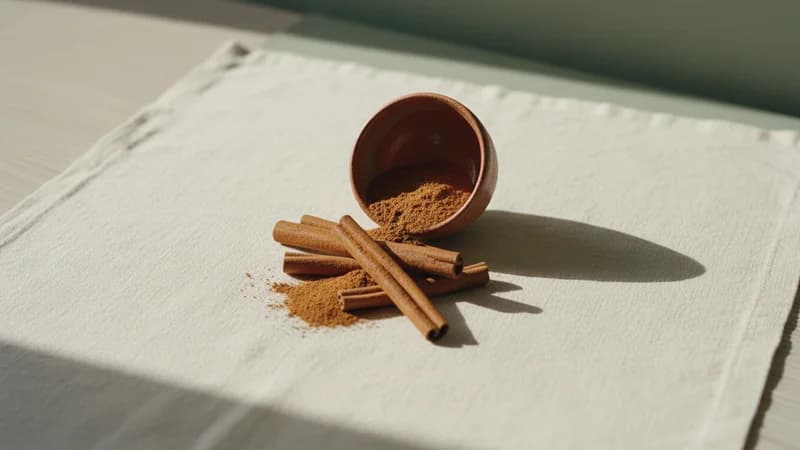
Cinnamon is best suited to Vata and Kapha, which it helps pacify. In excess it can raise Pitta. Supports healthy blood sugar metabolism as described in classical Prameha treatments. Best enjoyed during winter.
Ayurvedic Profile
Cinnamon, called Tvak in Sanskrit (meaning 'skin' or 'bark'), is among the oldest known spices in Ayurvedic medicine. The Bhavaprakasha Nighantu describes Tvak as Madhura (sweet) and Katu (pungent) in rasa with Ushna (hot) virya, classifying it under the Karpuradi Varga. Its name references its origin as the inner bark of the Cinnamomum tree, and this bark-nature connects it symbolically and therapeutically to the Tvak (skin) and Rakta Dhatu (blood tissue) in the human body.
The Charaka Samhita lists Tvak among the Trishna Nigraha (thirst-alleviating) and Shiro Virechanopaga (supportive of nasal cleansing therapy) groups. This dual classification highlights its ability to work on both the Rasavaha Srotas (plasma channels) and the Pranavaha Srotas (respiratory channels). Its sweet post-digestive effect (Madhura vipaka), unusual for a heating spice, means it ultimately nourishes the tissues even while it stimulates Agni.
According to the Ashtanga Hridaya, Tvak is Hridya (cardio-tonic), Varnya (complexion-enhancing), and Mukhaprasadana (face-brightening). These properties have been partially validated by modern research showing cinnamon's positive effects on blood sugar regulation and cardiovascular markers. In classical Ayurvedic practice, Tvak was combined with honey (Madhu) to create preparations for Medoroga (metabolic disorders involving fat tissue), a practice that anticipates modern findings about cinnamon and insulin sensitivity.
Cinnamon is a vital component of the famous Ayurvedic formulation Talisadi Churna, used for respiratory conditions, and appears in Lavangadi Vati for throat ailments. The Sharangadhara Samhita includes it in several compound formulations for Prameha (urinary disorders, including diabetes), demonstrating its versatile therapeutic applications across multiple body systems.
In the Ayurvedic kitchen, Tvak serves as both Deepana (appetite stimulant) and Pachana (digestive). Its sweet undertone makes it uniquely suitable for balancing Vata dosha, particularly during the cold autumn and winter seasons (Sharad and Hemanta Ritu). Added to warm apple cider, oatmeal, or rice pudding, it transforms simple foods into therapeutic preparations that nourish Ojas while gently stoking the digestive fire.
Ayurvedic Properties
Rasa (Taste)
sweet, pungent, bitter
Virya (Potency)
hot
Vipaka (Post-digestive)
sweet
Guna (Qualities)
light, dry, sharp
How Cinnamon Affects Vata, Pitta & Kapha
Ayurveda reads every food through the three doshas. Here is how cinnamon’s qualities interact with each: Not sure which is yours? Take the free dosha quiz — about 4 minutes.
Cinnamon helps pacify Vata. Its hot virya (potency) and light, dry and sharp qualities, with its sweet, pungent and bitter rasa (taste), counterbalance Vata's tendencies — which is why it traditionally suits Vata dosha in regular use. Vata meal plan
Cinnamon is well tolerated by those with Pitta dosha in normal amounts, but its hot virya and light, dry and sharp qualities may aggravate Pitta in excess — so people with Pitta as their leading dosha are best keeping to measured portions. Pitta meal plan
Cinnamon helps pacify Kapha. Its hot virya (potency) and light, dry and sharp qualities, with its sweet, pungent and bitter rasa (taste), counterbalance Kapha's tendencies — which is why it traditionally suits Kapha dosha in regular use. Kapha meal plan
Nutrition Facts (per 100g)
247kcal
Calories
4g
Protein
80.6g
Carbs
1.2g
Fat
53.1g
Fibre
Ayurvedic Benefits
- Supports healthy blood sugar metabolism as described in classical Prameha treatments
- Hridya (cardio-tonic) properties promote cardiovascular wellness
- Kindles Agni while nourishing tissues through its sweet vipaka
- Supports respiratory health and is a key ingredient in classical lung formulas
- Varnya (complexion-enhancing) properties support skin radiance
- Warming nature makes it excellent for Vata and Kapha pacification in cold weather
How to Use
- As cinnamon is heating (ushna virya), balance it with cooling accompaniments such as coriander, fennel or a little ghee — especially through the warmer months.
- Cinnamon is at its best during winter — eating it in season keeps its Prana (vital energy) and benefit at their peak.
- Add a cinnamon stick to your morning oatmeal or porridge while cooking
- Stir 1/4 tsp ground cinnamon into warm water with honey as a Kapha-balancing morning drink
- Sprinkle on baked apples or pears for a warming autumn dessert
- Include in chai masala blend with cardamom, ginger, and cloves
- Add to smoothies or golden milk for enhanced metabolic support
Contraindications
- May aggravate Pitta in excess due to its Ushna virya; use moderately in summer
- Cassia cinnamon contains higher coumarin levels; Ceylon cinnamon is preferred for regular use
- Pregnant women should limit to culinary amounts and avoid therapeutic doses
“Ayurveda classifies Cinnamon by its sweet, pungent, bitter rasa (taste), hot virya (thermal potency), and sweet vipaka (post-digestive effect). InnerVeda reads these three lenses together to map Cinnamon to your dosha and season.”
Cinnamon by Dosha
See how cinnamon interacts with each dosha and get personalised guidance.
Frequently Asked Questions
Ceylon cinnamon (true cinnamon) is preferred in Ayurveda as it is gentler and contains less coumarin, which can be hard on the liver in large doses. Cassia is more common in grocery stores and is perfectly fine for occasional cooking but not ideal for daily therapeutic use.
Ayurveda has used Tvak in Prameha (diabetes-related) formulations for centuries. Modern studies support its role in insulin sensitivity. Use 1/4 to 1/2 teaspoon daily as a complement to your healthcare plan, not as a replacement for medical treatment.
Pitta-dominant individuals can enjoy cinnamon in small culinary quantities, especially when combined with cooling ingredients like milk or ghee. Avoid large therapeutic doses during summer or when Pitta symptoms like acidity or skin rashes are present.
Your dosha is the balance of Vata, Pitta and Kapha you were born with. Take the dosha quiz — free, about 4 minutes.
Three questions towards your dosha
These are the first three questions of the full dosha quiz. Answer them here and carry on where you left off.
Prefer to start from the beginning? Take the full dosha quiz.
Dietary information provided is for educational purposes only and is rooted in Ayurvedic tradition. It is not a substitute for professional nutritional or medical advice. Consult a qualified healthcare provider before making significant changes to your diet, especially if you have food allergies, intolerances, or a medical condition.
Want a meal plan matched to your dosha?
Take the free dosha assessment (about 4 minutes) and get a personalised nutrition plan with nearly 300 foods in the app, rated for your body.
Find Your Dosha: FreeAbout 4 minutes