Golden Milk (Haldi Doodh): Dosha Effects
Sanskrit: Haldi Doodh (हल्दी दूध)
Golden Milk (Haldi Doodh) is especially balancing for Vata and Kapha. With sweet, bitter and pungent rasa (taste), hot virya (potency) and sweet vipaka, it is light and oily in quality and a source of curcumin (from turmeric).

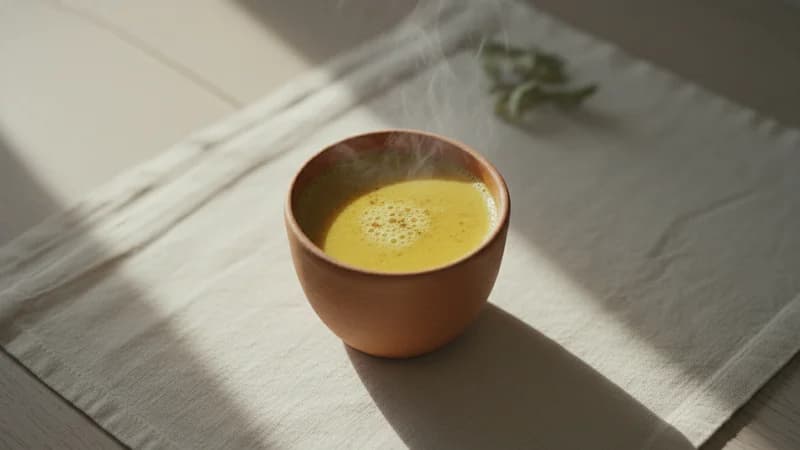
Golden Milk (Haldi Doodh) is best suited to Vata and Kapha, which it helps pacify. Traditionally regarded in Ayurveda as a nourishing (Rasayana) drink. Suitable year-round.
Ayurvedic Profile
Golden Milk, known as Haldi Doodh in Hindi, is one of the best-known Ayurvedic drinks, combining classical warm-milk preparations with turmeric. While no single ancient text describes 'golden milk' by name, the practice of adding therapeutic herbs to warm milk is extensively documented in the Charaka Samhita's Ksheera Paka Vidhi (method of milk preparation) and represents one of the most ancient forms of food-as-medicine.
The classical formulation combines warm milk (Ksheera) with turmeric (Haridra), a pinch of black pepper (Maricha), and ghee (Ghrita). Each ingredient serves a specific therapeutic purpose that creates synergy far exceeding its individual components. Milk provides the nourishing Madhura (sweet), Sheeta (cold) base that carries the medicine deep into the tissues. Turmeric provides Tikta (bitter) and Katu (pungent) rasa with Ushna virya for anti-inflammatory and Ama-clearing action. Black pepper's piperine helps the body absorb curcumin, which Ayurveda describes through its Yogavahi (carrying) property. Ghee serves as the Anupana (vehicle) that ensures fat-soluble curcumin reaches the deeper tissues.
The Ashtanga Hridaya's principle of Ksheerasevana (therapeutic milk consumption) states that medicated milk preparations are among the best Rasayana (rejuvenative) methods for building Ojas, enhancing immunity, and promoting deep, restorative sleep. Golden milk follows this tradition of warm, spiced milk.
From a Doshic perspective, golden milk is remarkably balanced. The milk cools while turmeric warms, creating a net neutral-to-slightly warming effect that suits most people. The beverage primarily reduces Vata through milk's nourishing qualities, is generally gentle for Pitta in moderate amounts, and reduces Kapha through turmeric's lightening effect. This near-tridoshic balance explains its universal popularity in Ayurvedic wellness.
Modern adaptations include dairy-free versions using almond milk or coconut milk, which sacrifice some of the classical Ksheera Paka benefits but remain therapeutically valuable through the turmeric-pepper-fat synergy. Additional spices commonly included in modern preparations include cinnamon, cardamom, ginger, and saffron, each adding its own flavour.
Ayurvedic Properties
Rasa (Taste)
sweet, bitter, pungent
Virya (Potency)
hot
Vipaka (Post-digestive)
sweet
Guna (Qualities)
light, oily
How Golden Milk (Haldi Doodh) Affects Vata, Pitta & Kapha
Ayurveda reads every food through the three doshas. Here is how golden milk (haldi doodh)’s qualities interact with each: Not sure which is yours? Take the free dosha quiz — about 4 minutes.
Golden Milk (Haldi Doodh) helps pacify Vata. Its hot virya (potency) and light and oily qualities, with its sweet, bitter and pungent rasa (taste), counterbalance Vata's tendencies — which is why it traditionally suits Vata dosha in regular use. Vata meal plan
Golden Milk (Haldi Doodh) has a broadly neutral effect on Pitta. Its sweet, bitter and pungent rasa and light and oily qualities neither strongly aggravate nor pacify Pitta, so those with Pitta dosha can enjoy it in moderation within a varied diet. Pitta meal plan
Golden Milk (Haldi Doodh) helps pacify Kapha. Its hot virya (potency) and light and oily qualities, with its sweet, bitter and pungent rasa (taste), counterbalance Kapha's tendencies — which is why it traditionally suits Kapha dosha in regular use. Kapha meal plan
Nutrition Facts (per 100g)
105kcal
Calories
4.2g
Protein
12.1g
Carbs
4.5g
Fat
0.3g
Fibre
Ayurvedic Benefits
- Traditionally regarded in Ayurveda as a nourishing (Rasayana) drink
- Traditional wellness synergy from curcumin enhanced by black pepper's piperine
- A warm, comforting drink that many people enjoy as part of winding down in the evening
- Can suit Vata, Pitta and Kapha in moderate amounts; go easy on the turmeric if Pitta is high
- Combines four everyday Ayurvedic kitchen ingredients: milk, turmeric, black pepper and ghee
How to Use
- As golden milk (haldi doodh) is heating (ushna virya), balance it with cooling accompaniments such as coriander, fennel or a little ghee — especially through the warmer months.
- Warm a cup of milk with a little turmeric, a pinch of black pepper and a little ghee.
- Add a little cardamom or cinnamon for flavour if you like.
- For dairy-free option, use warm almond milk with coconut oil replacing ghee
- Sip it slowly as part of a calm evening routine.
- Prepare a larger batch of spice mix (turmeric, pepper, cinnamon, cardamom) for convenient nightly use
Contraindications
- Those who do not tolerate dairy should use almond or coconut milk alternatives
- Too much turmeric can aggravate Pitta, so use it sparingly.
- May stain clothing and surfaces; handle turmeric with care during preparation
“Ayurveda classifies Golden Milk (Haldi Doodh) by its sweet, bitter, pungent rasa (taste), hot virya (thermal potency), and sweet vipaka (post-digestive effect). InnerVeda reads these three lenses together to map Golden Milk (Haldi Doodh) to your dosha and season.”
Frequently Asked Questions
Many people enjoy it in the evening, a little while after dinner and before bed, as part of a calm wind-down. You can have it at other times of day too.
Yes, almond milk is the closest Ayurvedic alternative to dairy milk for golden milk. Use coconut oil instead of ghee to maintain the fat-soluble curcumin absorption. The preparation loses some of the classical Ksheera Paka benefits but retains the core turmeric-pepper-fat therapeutic synergy.
Have it when it suits you; there is no need to take it every night. Golden milk is a comforting food, not a treatment. If poor sleep lasts more than 4 weeks or is affecting your day, see a doctor.
Your dosha is the balance of Vata, Pitta and Kapha you were born with. Take the dosha quiz — free, about 4 minutes.
Three questions towards your dosha
These are the first three questions of the full dosha quiz. Answer them here and carry on where you left off.
Prefer to start from the beginning? Take the full dosha quiz.
Dietary information provided is for educational purposes only and is rooted in Ayurvedic tradition. It is not a substitute for professional nutritional or medical advice. Consult a qualified healthcare provider before making significant changes to your diet, especially if you have food allergies, intolerances, or a medical condition.
Want a meal plan matched to your dosha?
Take the free dosha assessment (about 4 minutes) and get a personalised nutrition plan with nearly 300 foods in the app, rated for your body.
Find Your Dosha: FreeAbout 4 minutes