Okra: Benefits & Dosha Effects
Sanskrit: Bhindi / Tindisha
Okra is especially balancing for Vata and Pitta but can raise Kapha when eaten in excess. With sweet and astringent rasa (taste), cold virya (potency) and sweet vipaka, it is light, oily and smooth in quality and a source of vitamin c.

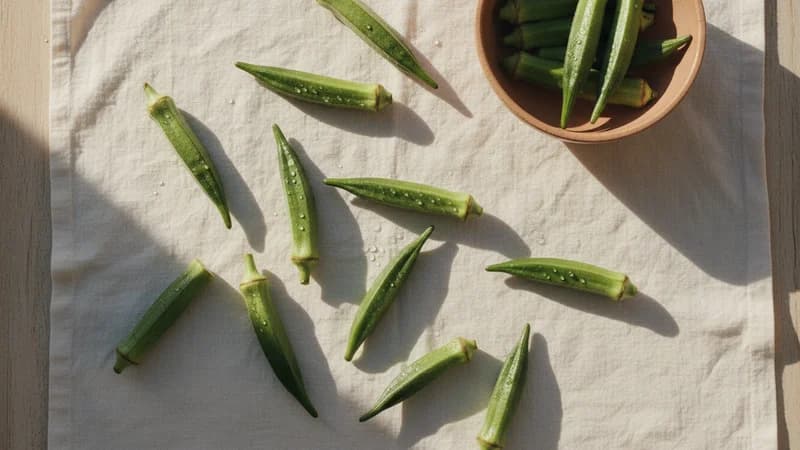
Okra is best suited to Vata and Pitta, which it helps pacify. In excess it can raise Kapha. The smooth, oily mucilage (picchila guna) coats and soothes the lining of the digestive channels, traditionally valued for a sensitive, Pitta-aggravated gut.. Best enjoyed during summer.
Ayurvedic Profile
Okra, known colloquially as Bhindi in Hindi, is analysed in modern Ayurvedic practice through its observable gunas and effects on the doshas. While not extensively described in the most ancient texts, its properties can be clearly deduced through the Ayurvedic Dravyaguna framework. Okra possesses Madhura-Kashaya (sweet-astringent) rasa, Sheeta (cold) virya, and Madhura (sweet) vipaka, with Laghu (light), Snigdha (oily), and Picchila (slimy/mucilaginous) gunas.
The mucilaginous quality (Picchila Guna) of okra is its most therapeutically distinctive property. In Ayurveda, Picchila substances are understood to coat, protect, and soothe the mucosal linings of the digestive tract. This makes okra particularly valuable for conditions of Paittika Grahani (Pitta-type intestinal disorders) where the intestinal lining is inflamed or irritated. The mucilage acts as a Snehana (oleation) agent for the inner walls of the Annavaha Srotas (digestive channels).
Okra's sweet taste and cooling nature make it an excellent Pitta-pacifying vegetable that simultaneously nourishes without causing the heaviness associated with other sweet foods. Its Laghu (light) guna prevents Kapha accumulation while its Snigdha quality gently pacifies Vata. This balanced profile makes it one of the more tridoshic vegetables, though those with excessive Kapha should use it moderately due to its mucilaginous nature.
In traditional Ayurvedic-influenced cuisine, okra is typically prepared in ways that honour its therapeutic potential. Dry-frying or roasting okra at high heat reduces the mucilaginous quality for those who find it excessive, while retaining it in stews and curries maximises its gut-soothing properties. The addition of heating spices like turmeric, cumin, and coriander in classical preparations is a form of Samskara that ensures digestive compatibility.
Okra's folate content makes it particularly valuable for women's reproductive health, supporting healthy fetal development and complementing the Ayurvedic emphasis on proper nourishment during the Garbhini Paricharya (prenatal care protocol). Its Vitamin K content supports healthy Rakta Dhatu (blood tissue) function, particularly coagulation pathways.
Ayurvedic Properties
Rasa (Taste)
sweet, astringent
Virya (Potency)
cold
Vipaka (Post-digestive)
sweet
Guna (Qualities)
light, oily, smooth
How Okra Affects Vata, Pitta & Kapha
Ayurveda reads every food through the three doshas. Here is how okra’s qualities interact with each: Not sure which is yours? Take the free dosha quiz — about 4 minutes.
Okra helps pacify Vata. Its cold virya (potency) and light, oily and smooth qualities, with its sweet and astringent rasa (taste), counterbalance Vata's tendencies — which is why it traditionally suits Vata dosha in regular use. Vata meal plan
Okra helps pacify Pitta. Its cold virya (potency) and light, oily and smooth qualities, with its sweet and astringent rasa (taste), counterbalance Pitta's tendencies — which is why it traditionally suits Pitta dosha in regular use. Pitta meal plan
Okra is well tolerated by those with Kapha dosha in normal amounts, but its cold virya and light, oily and smooth qualities may aggravate Kapha in excess — so people with Kapha as their leading dosha are best keeping to measured portions. Kapha meal plan
Nutrition Facts (per 100g)
33kcal
Calories
1.9g
Protein
7.5g
Carbs
0.2g
Fat
3.2g
Fibre
Ayurvedic Benefits
- The smooth, oily mucilage (picchila guna) coats and soothes the lining of the digestive channels, traditionally valued for a sensitive, Pitta-aggravated gut.
- Sweet-astringent rasa with cold virya makes it a genuinely cooling summer vegetable that helps pacify both Vata and Pitta without provoking the heat of many other greens.
- Its soluble fibre and mucilage slow the release of sugars from a meal, so it is traditionally used to support steady energy and comfortable digestion after eating.
- Rich in folate, it supports the formation of Rakta and Mamsa dhatu, making it a nourishing everyday vegetable while rebuilding after illness or through the extra demands of pregnancy (Garbhini).
- The astringent quality gently tones the tissues and, combined with light guna, offers nourishment that does not sit heavily or dull the Agni.
How to Use
- As okra is cooling (shita virya), favour it in warmer weather and pair it with warming spices like ginger or black pepper when the seasons turn cold.
- Okra is at its best during summer — eating it in season keeps its Prana (vital energy) and benefit at their peak.
- Dry-roast whole or sliced pods on a hot tawa with turmeric, cumin and a pinch of asafoetida until the edges crisp — this tames the slippery texture and suits Vata.
- Simmer chopped okra into sambar or a tangy tomato dal, where its mucilage acts as a natural thickener and soothes the gut.
- Slit whole pods and stuff them with a roasted besan, coriander and fennel masala for the classic bharwan bhindi, cooked slowly in a little ghee.
- Keep pods and knife bone-dry before cutting, and add a squeeze of lemon or a little dry mango powder near the end to cut excess sliminess.
- Choose young, tender pods no longer than a finger — snap the tip to test; if it bends rather than snaps cleanly, it is past its best and turns fibrous.
Contraindications
- The mucilaginous (picchila) quality increases Kapha, so Kapha-dominant types, or anyone with a heavy cold, congestion or sluggish digestion, should dry-roast it and eat it sparingly.
- Okra is unusually high in dietary oxalates; those with a history of calcium-oxalate kidney stones should limit portions and not rely on it daily.
- Always cook okra thoroughly — raw or barely-cooked pods are hard on the Agni and can cause bloating; discard any pod that is woody or has darkened, spongy patches.
“Ayurveda classifies Okra by its sweet, astringent rasa (taste), cold virya (thermal potency), and sweet vipaka (post-digestive effect). InnerVeda reads these three lenses together to map Okra to your dosha and season.”
Frequently Asked Questions
Traditionally it is thought to help — its soluble fibre and mucilage slow how quickly sugars leave a meal, which is why okra water (pods soaked overnight) is a common folk practice for steady energy. It supports balance rather than replacing any prescribed medicine, so keep it as part of a varied diet and follow your doctor's advice.
The slime is water-soluble mucilage, so keep everything dry: wash and fully dry the pods before slicing, cook on high heat rather than a low simmer, avoid crowding the pan, and add an acid like lemon or amchur only towards the end. Dry-roasting removes the most sliminess.
For most people a few times a week is ideal. Because it is cooling and slightly heavy on Kapha, and fairly high in oxalates, daily large portions are best limited — especially if you are prone to kidney stones or tend to feel congested. Vary it with warmer, drier vegetables.
Your dosha is the balance of Vata, Pitta and Kapha you were born with. Take the dosha quiz — free, about 4 minutes.
Three questions towards your dosha
These are the first three questions of the full dosha quiz. Answer them here and carry on where you left off.
Prefer to start from the beginning? Take the full dosha quiz.
Dietary information provided is for educational purposes only and is rooted in Ayurvedic tradition. It is not a substitute for professional nutritional or medical advice. Consult a qualified healthcare provider before making significant changes to your diet, especially if you have food allergies, intolerances, or a medical condition.
Want a meal plan matched to your dosha?
Take the free dosha assessment (about 4 minutes) and get a personalised nutrition plan with nearly 300 foods in the app, rated for your body.
Find Your Dosha: FreeAbout 4 minutes