Amla (Indian Gooseberry): Dosha Effects
Sanskrit: Amalaki (आमलकी)
Amla (Indian Gooseberry) is especially balancing for Vata, Pitta and Kapha. With sour, sweet, pungent, bitter and astringent rasa (taste), cold virya (potency) and sweet vipaka, it is light and dry in quality and a source of vitamin c.

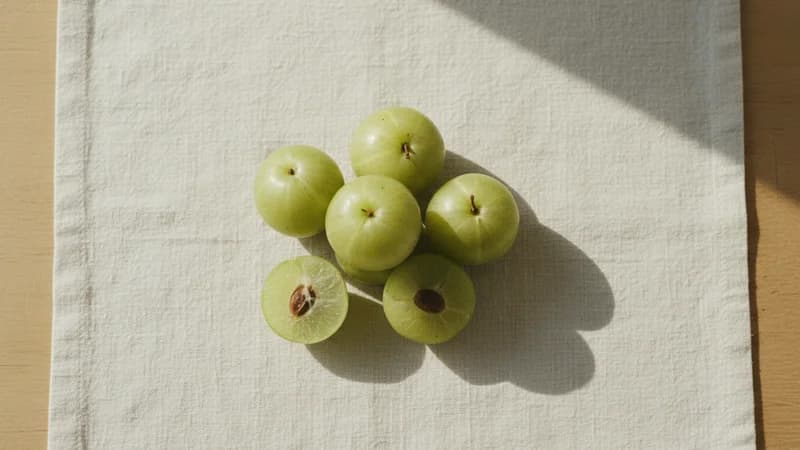
Amla (Indian Gooseberry) is best suited to Vata, Pitta and Kapha, which it helps pacify. Supreme Rasayana (rejuvenative) declared best for longevity by Charaka Samhita. Best enjoyed during winter.
Ayurvedic Profile
Amla, known as Amalaki in Sanskrit, is considered the single most important Rasayana (rejuvenative) fruit in Ayurveda. The Charaka Samhita elevates Amalaki to an extraordinary status, declaring it the best among Vayahsthapana (age-defying) herbs and including it among the Jeevaniya (life-sustaining) and Prajasthapana (reproductive health-supporting) groups. Its reverence in Ayurveda is matched by few other substances in the entire pharmacopoeia.
Amalaki's most remarkable feature is that it contains five of the six tastes (Pancharasa): Amla (sour), Madhura (sweet), Katu (pungent), Tikta (bitter), and Kashaya (astringent), lacking only Lavana (salty). This near-complete rasa profile is exceptionally rare and gives Amalaki the ability to nourish virtually every tissue and balance every dosha. The Bhavaprakasha Nighantu confirms its Tridoshahara status with special emphasis on Pitta pacification through its Sheeta (cold) virya.
The Ashtanga Hridaya describes Amalaki as Chakshushya (vision-supporting), Raktaprasadana (blood-purifying), Vrishya (reproductive-enhancing), and Medhya (intellect-promoting). It is the primary ingredient in Chyawanprash, the most famous Ayurvedic Rasayana formulation, which has been prepared continuously for thousands of years according to the recipe in the Charaka Samhita. Amalaki is also one-third of Triphala, the celebrated tri-fruit formula for digestive health.
Modern research has revealed that Amalaki contains an extraordinarily stable form of Vitamin C that is protected by a unique matrix of tannins and gallic acid. While most vitamin C sources degrade rapidly with heat and time, Amalaki retains its potency even after cooking and prolonged storage. This biochemical stability may explain why Ayurvedic texts describe Amalaki's rejuvenative power as sustainable and long-lasting.
The Charaka Samhita prescribes Amalaki Rasayana as a specific therapeutic protocol where fresh Amalaki is consumed with specific dietary and lifestyle modifications over an extended period to achieve profound rejuvenation. This dedicated Rasayana therapy is described as capable of restoring youthfulness, enhancing memory, and promoting longevity, reflecting the supreme regard in which this fruit is held.
Ayurvedic Properties
Rasa (Taste)
sour, sweet, pungent, bitter, astringent
Virya (Potency)
cold
Vipaka (Post-digestive)
sweet
Guna (Qualities)
light, dry
How Amla (Indian Gooseberry) Affects Vata, Pitta & Kapha
Ayurveda reads every food through the three doshas. Here is how amla (indian gooseberry)’s qualities interact with each: Not sure which is yours? Take the free dosha quiz — about 4 minutes.
Amla (Indian Gooseberry) helps pacify Vata. Its cold virya (potency) and light and dry qualities, with its sour, sweet, pungent, bitter and astringent rasa (taste), counterbalance Vata's tendencies — which is why it traditionally suits Vata dosha in regular use. Vata meal plan
Amla (Indian Gooseberry) helps pacify Pitta. Its cold virya (potency) and light and dry qualities, with its sour, sweet, pungent, bitter and astringent rasa (taste), counterbalance Pitta's tendencies — which is why it traditionally suits Pitta dosha in regular use. Pitta meal plan
Amla (Indian Gooseberry) helps pacify Kapha. Its cold virya (potency) and light and dry qualities, with its sour, sweet, pungent, bitter and astringent rasa (taste), counterbalance Kapha's tendencies — which is why it traditionally suits Kapha dosha in regular use. Kapha meal plan
Nutrition Facts (per 100g)
44kcal
Calories
0.9g
Protein
10.2g
Carbs
0.6g
Fat
4.3g
Fibre
Ayurvedic Benefits
- Supreme Rasayana (rejuvenative) declared best for longevity by Charaka Samhita
- Tridoshahara with five of six tastes, balancing Vata, Pitta, and Kapha simultaneously
- Highest stable natural source of Vitamin C, protected by unique tannin matrix
- Primary ingredient in Chyawanprash and Triphala, two cornerstone Ayurvedic formulations
- Chakshushya (vision-supporting), Medhya (intellect-promoting), and Vrishya (reproductive-nourishing)
- Raktaprasadana (blood-purifying) action supports clear skin and healthy complexion
How to Use
- As amla (indian gooseberry) is cooling (shita virya), favour it in warmer weather and pair it with warming spices like ginger or black pepper when the seasons turn cold.
- Amla (Indian Gooseberry) is at its best during winter — eating it in season keeps its Prana (vital energy) and benefit at their peak.
- Eat one fresh amla daily during season, plain or with rock salt and turmeric
- Dose, timing and Anupana should be decided after consultation with a qualified Ayurvedic practitioner.
- Consume Chyawanprash (amla-based) daily in winter for immune support
- Prepare amla murabba (preserved in sugar syrup) for year-round availability
Contraindications
- Fresh amla is sour and may loosen stools in some people.
- If you have severe acidity, check with a qualified practitioner before taking amla regularly, despite its overall cooling nature.
- Avoid concentrated amla during diarrhoea.
- Amla is generally well tolerated, but if you have very sensitive digestion or take regular medication, check with a qualified practitioner whether it suits you.
- Avoid excessive use.
- Enjoy amla as a food if it suits you; concentrated amla powder should not be taken routinely without a practitioner's advice.
- See a doctor if a digestive problem lasts more than 3 weeks or diarrhoea lasts more than 7 days, or sooner if you notice blood in your stools or vomit, black stools, weight loss you cannot explain, repeated vomiting, difficulty swallowing or severe stomach pain.
“Ayurveda classifies Amla (Indian Gooseberry) by its sour, sweet, pungent, bitter, astringent rasa (taste), cold virya (thermal potency), and sweet vipaka (post-digestive effect). InnerVeda reads these three lenses together to map Amla (Indian Gooseberry) to your dosha and season.”
Frequently Asked Questions
During amla season (winter), eat one fresh fruit daily. You can also take it through chyawanprash or triphala. Consistency matters more than quantity. For amla powder, dose, timing and Anupana should be decided after consultation with a qualified Ayurvedic practitioner.
Amla contains five of six tastes, making it uniquely capable of nourishing all tissues and balancing all doshas. Its Vitamin C is exceptionally stable, its cold potency prevents Pitta aggravation despite the sour taste, and its sweet vipaka nourishes Ojas. No other single fruit offers this combination.
Triphala already contains amla as one-third of the formula. Whether to combine them is part of the same decision: Dose, timing and Anupana should be decided after consultation with a qualified Ayurvedic practitioner.
Your dosha is the balance of Vata, Pitta and Kapha you were born with. Take the dosha quiz — free, about 4 minutes.
Three questions towards your dosha
These are the first three questions of the full dosha quiz. Answer them here and carry on where you left off.
Prefer to start from the beginning? Take the full dosha quiz.
Dietary information provided is for educational purposes only and is rooted in Ayurvedic tradition. It is not a substitute for professional nutritional or medical advice. Consult a qualified healthcare provider before making significant changes to your diet, especially if you have food allergies, intolerances, or a medical condition.
Want a meal plan matched to your dosha?
Take the free dosha assessment (about 4 minutes) and get a personalised nutrition plan with nearly 300 foods in the app, rated for your body.
Find Your Dosha: FreeAbout 4 minutes