Sesame Seeds: Benefits & Dosha Effects
Sanskrit: Tila (तिल)
Sesame Seeds is especially balancing for Vata but can raise Pitta and Kapha when eaten in excess. With sweet, bitter and astringent rasa (taste), hot virya (potency) and sweet vipaka, it is heavy and oily in quality and a source of calcium.

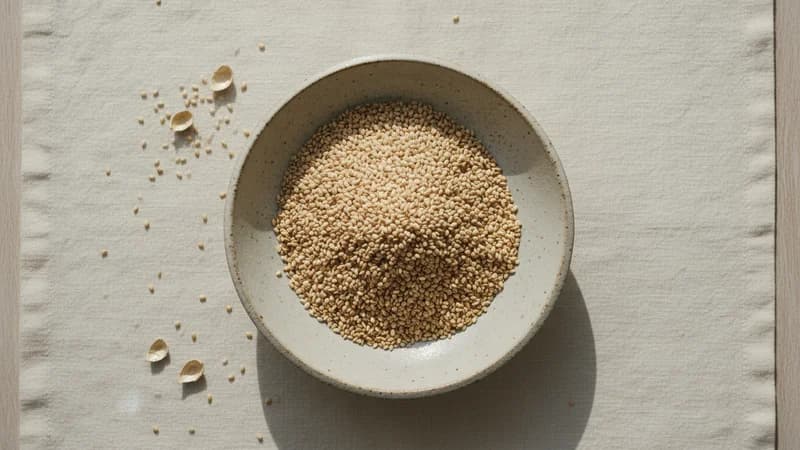
Sesame Seeds is best suited to Vata, which it helps pacify. In excess it can raise Pitta and Kapha. Supreme Vata-pacifying seed providing deep Snehana (oleation) from within. Best enjoyed during winter.
Ayurvedic Profile
Sesame seeds, known as Tila in Sanskrit, hold a sacred and therapeutically exalted position in Ayurvedic medicine. The Charaka Samhita classifies Tila among the Vataghna (Vata-destroying) group and describes it as the supreme seed for Snehana (oleation) and Vata pacification. Its significance extends beyond nutrition into Hindu spiritual practice, where sesame plays essential roles in rituals for ancestors (Pitru Karma) and in various Samskara (life-passage) ceremonies.
Tila possesses Madhura-Tikta-Kashaya (sweet-bitter-astringent) rasa, Ushna (hot) virya, and Madhura (sweet) vipaka with Guru (heavy) and Snigdha (oily) gunas. This combination of heating potency with sweet vipaka creates a deeply nourishing and warming therapeutic profile. The Bhavaprakasha Nighantu praises Tila as Tvachya (skin-nourishing), Keshya (hair-promoting), Balya (strength-giving), and Medhya (intellect-promoting).
The Ashtanga Hridaya extensively discusses Tila Taila (sesame oil) as the premier external Abhyanga (oil massage) medium. Sesame oil is described as the only oil that penetrates all seven Dhatus when applied to the skin, making it the default choice for Ayurvedic body massage, Shirodhara (oil-pouring therapy), and all external oleation procedures. Its capacity to enter the skin and nourish deep tissues is unmatched among plant oils.
Sesame's exceptional calcium content, surpassing that of milk per serving, makes it invaluable for Asthi Dhatu (bone tissue) health. The Charaka Samhita's dietary recommendations for Asthi Kshaya (bone depletion) include sesame-rich preparations, anticipating modern understanding of calcium-rich plant foods. Black sesame seeds are considered more potent than white, with stronger Keshya (hair-nourishing) and Vrishya (reproductive) properties.
The classical preparation Tila Modaka (sesame laddu), combining sesame seeds with jaggery, is a traditional winter food that provides concentrated warmth, nourishment, and Ojas-building sustenance. This preparation is specifically recommended during Makar Sankranti, a winter festival, reflecting the integration of seasonal nutrition into cultural celebration. Sesame's heating nature makes it particularly valuable during Hemanta and Shishira Ritu (winter seasons).
Ayurvedic Properties
Rasa (Taste)
sweet, bitter, astringent
Virya (Potency)
hot
Vipaka (Post-digestive)
sweet
Guna (Qualities)
heavy, oily
How Sesame Seeds Affects Vata, Pitta & Kapha
Ayurveda reads every food through the three doshas. Here is how sesame seeds’s qualities interact with each: Not sure which is yours? Take the free dosha quiz — about 4 minutes.
Sesame Seeds helps pacify Vata. Its hot virya (potency) and heavy and oily qualities, with its sweet, bitter and astringent rasa (taste), counterbalance Vata's tendencies — which is why it traditionally suits Vata dosha in regular use. Vata meal plan
Sesame Seeds is well tolerated by those with Pitta dosha in normal amounts, but its hot virya and heavy and oily qualities may aggravate Pitta in excess — so people with Pitta as their leading dosha are best keeping to measured portions. Pitta meal plan
Sesame Seeds is well tolerated by those with Kapha dosha in normal amounts, but its hot virya and heavy and oily qualities may aggravate Kapha in excess — so people with Kapha as their leading dosha are best keeping to measured portions. Kapha meal plan
Nutrition Facts (per 100g)
573kcal
Calories
17.7g
Protein
23.5g
Carbs
49.7g
Fat
11.8g
Fibre
Ayurvedic Benefits
- Supreme Vata-pacifying seed providing deep Snehana (oleation) from within
- Exceptional calcium content supporting Asthi Dhatu (bone tissue) health
- Tila Taila (sesame oil) is the premier Abhyanga massage oil penetrating all seven Dhatus
- Keshya (hair-nourishing) and Tvachya (skin-nourishing) properties support external beauty
- Powerful warming food ideal for winter nourishment and Ojas building
How to Use
- As sesame seeds is heating (ushna virya), balance it with cooling accompaniments such as coriander, fennel or a little ghee — especially through the warmer months.
- Sesame Seeds is at its best during winter — eating it in season keeps its Prana (vital energy) and benefit at their peak.
- Make Tila Modaka (sesame laddu) with jaggery as a warming winter energy food
- Sprinkle toasted sesame on salads, rice, and vegetables for calcium and flavour
- Use sesame tahini as a spread or dressing base mixed with lemon and cumin
- Practice daily self-massage (Abhyanga) with warm sesame oil for deep Vata pacification
- Add black sesame seeds to smoothies and desserts for enhanced Keshya and Vrishya benefits
Contraindications
- Heating and heavy; Pitta and Kapha types should use moderately
- Excessive consumption may increase body heat and cause skin breakouts in Pitta types
- Highly caloric; be mindful of portions for those managing weight
“Ayurveda classifies Sesame Seeds by its sweet, bitter, astringent rasa (taste), hot virya (thermal potency), and sweet vipaka (post-digestive effect). InnerVeda reads these three lenses together to map Sesame Seeds to your dosha and season.”
Frequently Asked Questions
Black sesame seeds are considered more medicinally potent in Ayurveda, with stronger Keshya (hair) and Vrishya (reproductive) properties. White sesame is milder and more commonly used in cooking. For therapeutic purposes, choose black; for general culinary use, either variety works well.
One to two tablespoons of sesame seeds or tahini daily is appropriate for most constitutions during autumn and winter. Vata types can use slightly more. Reduce during spring and summer when the heating quality is less needed. Always combine with food rather than consuming isolated large amounts.
In Ayurveda, sesame oil (Tila Taila) is considered the default and supreme massage oil because it penetrates all seven tissue layers. It is warming, Vata-pacifying, and has inherent antioxidant properties. Coconut oil may be preferred for Pitta types or in hot climates, but sesame is the general gold standard.
Your dosha is the balance of Vata, Pitta and Kapha you were born with. Take the dosha quiz — free, about 4 minutes.
Three questions towards your dosha
These are the first three questions of the full dosha quiz. Answer them here and carry on where you left off.
Prefer to start from the beginning? Take the full dosha quiz.
Dietary information provided is for educational purposes only and is rooted in Ayurvedic tradition. It is not a substitute for professional nutritional or medical advice. Consult a qualified healthcare provider before making significant changes to your diet, especially if you have food allergies, intolerances, or a medical condition.
Want a meal plan matched to your dosha?
Take the free dosha assessment (about 4 minutes) and get a personalised nutrition plan with nearly 300 foods in the app, rated for your body.
Find Your Dosha: FreeAbout 4 minutes