Sabja (Basil Seeds): Benefits & Dosha Effects
Sanskrit: Tulasi Bija (तुलसी बीज)
Sabja (Basil Seeds) is especially balancing for Vata and Pitta but can raise Kapha when eaten in excess. With sweet rasa (taste), cold virya (potency) and sweet vipaka, it is heavy, oily and smooth in quality and a source of iron.

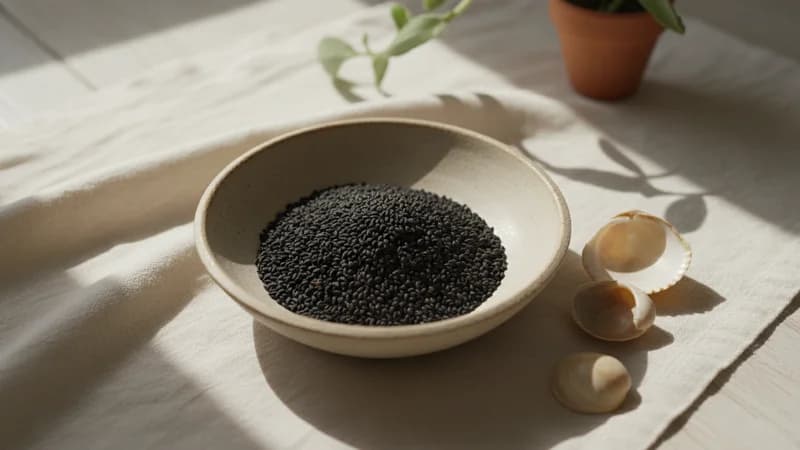
Sabja (Basil Seeds) is best suited to Vata and Pitta, which it helps pacify. In excess it can raise Kapha. Sabja, the black seed of sweet basil, carries a sweet rasa and distinctly cold virya, making it one of the classic summer coolants of Indian kitchens, traditionally used to draw down excess Pitta and ease the sensation of a heated, over-fired body.. Best enjoyed during summer.
Ayurvedic Profile
Sabja (Basil Seeds) (Tulasi Bija (तुलसी बीज)) is a strengthening nuts seeds treasured in Ayurvedic nutrition. Referenced in Kaiyadeva Nighantu, it is characterised by sweet rasa (taste), cooling virya (potency), and sweet vipaka (post-digestive effect). Tulasi Bija (basil seeds) form a cooling mucilaginous gel when soaked, similar to chia seeds. In Ayurvedic practice, they are prized as Sheeta virya Pitta-shamaka, used in summer beverages like Falooda to cool the body, soothe inflamed Pachaka Pitta, and support healthy bowel movements. Its heavy and oily and smooth gunas make it particularly suited for specific constitutional types. It pacifies Vata, pacifies Pitta, and can aggravate Kapha when consumed in excess. From a nutritional standpoint, sabja (basil seeds) provides approximately 57 calories per 100g, with 2.0g protein, 12.0g carbohydrates, and is a valuable source of Iron, Calcium, Magnesium. Best enjoyed during summer, sabja (basil seeds) supports healthy Agni (digestive fire) when prepared according to Ayurvedic principles, helping prevent Ama (toxin) accumulation and nourish the dhatus (body tissues).
Ayurvedic Properties
Rasa (Taste)
sweet
Virya (Potency)
cold
Vipaka (Post-digestive)
sweet
Guna (Qualities)
heavy, oily, smooth
How Sabja (Basil Seeds) Affects Vata, Pitta & Kapha
Ayurveda reads every food through the three doshas. Here is how sabja (basil seeds)’s qualities interact with each: Not sure which is yours? Take the free dosha quiz — about 4 minutes.
Sabja (Basil Seeds) helps pacify Vata. Its cold virya (potency) and heavy, oily and smooth qualities, with its sweet rasa (taste), counterbalance Vata's tendencies — which is why it traditionally suits Vata dosha in regular use. Vata meal plan
Sabja (Basil Seeds) helps pacify Pitta. Its cold virya (potency) and heavy, oily and smooth qualities, with its sweet rasa (taste), counterbalance Pitta's tendencies — which is why it traditionally suits Pitta dosha in regular use. Pitta meal plan
Sabja (Basil Seeds) is well tolerated by those with Kapha dosha in normal amounts, but its cold virya and heavy, oily and smooth qualities may aggravate Kapha in excess — so people with Kapha as their leading dosha are best keeping to measured portions. Kapha meal plan
Nutrition Facts (per 100g)
57kcal
Calories
2g
Protein
12g
Carbs
0.6g
Fat
7g
Fibre
Ayurvedic Benefits
- Sabja, the black seed of sweet basil, carries a sweet rasa and distinctly cold virya, making it one of the classic summer coolants of Indian kitchens, traditionally used to draw down excess Pitta and ease the sensation of a heated, over-fired body.
- Its smooth, oily guna and the translucent jelly the soaked seeds form gently soothe and lubricate the digestive tract, so sabja is a traditional summer aid for a hot, acidic, restless stomach and for that burning, sour feeling after a spicy meal.
- Because the soaked seed swells to a satisfying volume for very few calories, sabja adds bulk and a cooling, hydrating fullness that may help settle the sharp, urgent hunger of a Pitta-Vata appetite without weighing the body down.
- A useful plant source of iron, calcium and magnesium, sabja offers gentle support to Rakta Dhatu (blood) and Asthi Dhatu (bone) and is a refreshing way to add these minerals during hot weather.
- Being cooling, hydrating and quick to swell into a soft jelly, sabja is prized for tempering summer heat in falooda and sherbets, soothing an over-fired constitution while sitting lightly on the digestion.
How to Use
- As sabja (basil seeds) is cooling (shita virya), favour it in warmer weather and pair it with warming spices like ginger or black pepper when the seasons turn cold.
- Sabja (Basil Seeds) is at its best during summer — eating it in season keeps its Prana (vital energy) and benefit at their peak.
- Soak 1 to 2 teaspoons in half a glass of water for just 10 to 15 minutes, until each seed swells into a soft grey teardrop with a translucent coat; unlike heavier seeds, sabja hydrates quickly and needs no long soak.
- Stir the soaked seeds into cold milk, rose sherbet or nimbu pani for a classic cooling summer drink; they are the seeds traditionally spooned into falooda.
- Add a spoonful to lemon or lime water with a touch of honey after a hot meal to refresh the mouth and settle a heated, acidic stomach.
- Fold soaked sabja into chilled yoghurt, coconut water or a fruit sherbet for a light, hydrating dessert on a warm day.
- Always soak before eating and never take the seeds dry; favour them in the warmer months rather than in cold, damp weather, when their cooling nature is less suited to the season.
Contraindications
- Those with a strong Kapha tendency, a cold or sluggish digestion or a tendency to feel chilled should use sabja sparingly, as its cold virya can dampen an already weak digestive fire.
- Sabja must always be eaten well soaked; taken dry, the seeds can swell in the throat and are a choking risk, so take particular care with young children and older people.
- Because the soaked seeds are rich in fibre and swell considerably, introduce them slowly if your gut is sensitive, and drink enough fluid; those who are pregnant or on regular medication should check with their doctor first, and keep to modest amounts.
“Ayurveda classifies Sabja (Basil Seeds) by its sweet rasa (taste), cold virya (thermal potency), and sweet vipaka (post-digestive effect). InnerVeda reads these three lenses together to map Sabja (Basil Seeds) to your dosha and season.”
Frequently Asked Questions
They come from different plants and behave differently. Sabja is the seed of sweet basil (Ocimum basilicum); it is oval, jet black, swells in minutes into a soft grey jelly and, once soaked, is very light. Chia comes from Salvia hispanica, a different mint-family plant; it is speckled grey-brown, takes longer to gel and is far more calorie- and omega-3-dense. In Ayurveda both are sweet and cooling, but sabja is the lighter, more quickly hydrating seed, which is why it, not chia, is the traditional one in falooda and summer sherbets. (Note: sabja is often loosely called 'tulsi seed', but it is sweet basil, not holy basil/tulsi.)
Only about 10 to 15 minutes in cool water. Sabja hydrates fast, and you will see each seed sprout a clear jelly coat and roughly triple in size. Do not eat them dry, as they swell on the way down and can catch in the throat. Unlike chia, they do not need a long or overnight soak.
They are traditionally used for exactly that. With a sweet rasa, cold virya and a smooth, soothing jelly, sabja is a classic Ayurvedic summer coolant that may help calm a hot, acidic stomach and settle an over-heated Pitta. Take them soaked in cool milk, plain water or lime water after meals. They support rather than fix things on their own, so pair them with an overall cooling, Pitta-pacifying diet.
Your dosha is the balance of Vata, Pitta and Kapha you were born with. Take the dosha quiz — free, about 4 minutes.
Three questions towards your dosha
These are the first three questions of the full dosha quiz. Answer them here and carry on where you left off.
Prefer to start from the beginning? Take the full dosha quiz.
Dietary information provided is for educational purposes only and is rooted in Ayurvedic tradition. It is not a substitute for professional nutritional or medical advice. Consult a qualified healthcare provider before making significant changes to your diet, especially if you have food allergies, intolerances, or a medical condition.
Want a meal plan matched to your dosha?
Take the free dosha assessment (about 4 minutes) and get a personalised nutrition plan with nearly 300 foods in the app, rated for your body.
Find Your Dosha: FreeAbout 4 minutes