Tulsi (Holy Basil): Benefits & Dosha Effects
Sanskrit: Tulasi (तुलसी)
Tulsi (Holy Basil) is especially balancing for Vata and Kapha but can raise Pitta when eaten in excess. With pungent and bitter rasa (taste), hot virya (potency) and pungent vipaka, it is light, dry and sharp in quality and a source of eugenol.

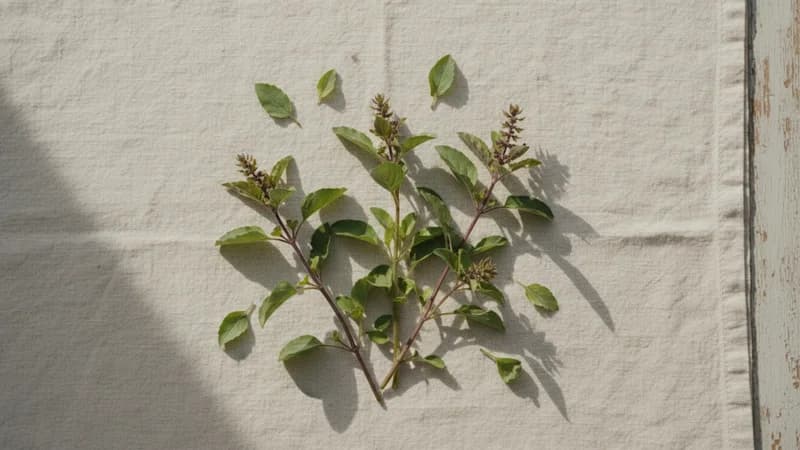
Tulsi (Holy Basil) is best suited to Vata and Kapha, which it helps pacify. In excess it can raise Pitta. Revered as a Rasayana (rejuvenative) and Ojas-building sacred herb, tulsi supports resilience and vitality. Best enjoyed during winter.
Ayurvedic Profile
Tulsi, known as Tulasi in Sanskrit, transcends the category of mere herb to occupy a sacred position in both Ayurvedic medicine and Indian spiritual tradition. The Bhavaprakasha Nighantu describes three primary varieties: Rama Tulsi (light green, milder), Krishna Tulsi (dark purple, more potent), and Vana Tulsi (wild variety). All share the fundamental properties of Katu-Tikta (pungent-bitter) rasa, Ushna (hot) virya, and Katu (pungent) vipaka with Laghu (light), Ruksha (dry), and Tikshna (sharp) gunas.
The Charaka Samhita classifies Tulsi among the Shvasahara (anti-asthmatic), Hikkanigrahana (anti-hiccup), and Krimighna (anti-parasitic) groups. This triple classification reveals its primary therapeutic terrain: the Pranavaha Srotas (respiratory channels), Annavaha Srotas (digestive channels), and its broad antimicrobial action. Tulsi's eugenol content, which gives it its characteristic clove-like aroma, has been validated by modern research as a potent antimicrobial and anti-inflammatory agent.
The Ashtanga Hridaya praises Tulsi as Kaphavataghna (Kapha and Vata destroying) and particularly recommends it for Pinasa (chronic rhinitis), Kasa (cough), Jwara (fever), and Krimi (parasitic infections). In Ayurvedic clinical practice, Tulsi is often the first herb recommended at the onset of upper respiratory symptoms, where its combination of heating virya and antimicrobial action can prevent minor illnesses from progressing.
Beyond its physical therapeutic properties, Tulsi is classified as a Sattvaprakasha (sattva-illuminating) herb in spiritual Ayurvedic practice. The Dhanvantari Nighantu describes it as capable of purifying the aura and creating a protective spiritual environment. The traditional practice of maintaining a Tulsi plant at the entrance of Indian homes combines spiritual protection with practical health benefits, as the plant continuously releases volatile essential oils that purify the surrounding air.
Tulsi's adaptogenic properties, though not described using modern terminology in classical texts, are implicit in its Rasayana (rejuvenative) and Medhya (intellect-promoting) actions. The classical recommendation of daily Tulsi consumption for maintaining Vyadhikshamatva (immunity) reflects an understanding of stress-mediated immune suppression and the role of adaptogenic herbs in maintaining resilience.
Ayurvedic Properties
Rasa (Taste)
pungent, bitter
Virya (Potency)
hot
Vipaka (Post-digestive)
pungent
Guna (Qualities)
light, dry, sharp
How Tulsi (Holy Basil) Affects Vata, Pitta & Kapha
Ayurveda reads every food through the three doshas. Here is how tulsi (holy basil)’s qualities interact with each: Not sure which is yours? Take the free dosha quiz — about 4 minutes.
Tulsi (Holy Basil) helps pacify Vata. Its hot virya (potency) and light, dry and sharp qualities, with its pungent and bitter rasa (taste), counterbalance Vata's tendencies — which is why it traditionally suits Vata dosha in regular use. Vata meal plan
Tulsi (Holy Basil) is well tolerated by those with Pitta dosha in normal amounts, but its hot virya and light, dry and sharp qualities may aggravate Pitta in excess — so people with Pitta as their leading dosha are best keeping to measured portions. Pitta meal plan
Tulsi (Holy Basil) helps pacify Kapha. Its hot virya (potency) and light, dry and sharp qualities, with its pungent and bitter rasa (taste), counterbalance Kapha's tendencies — which is why it traditionally suits Kapha dosha in regular use. Kapha meal plan
Nutrition Facts (per 100g)
23kcal
Calories
3.2g
Protein
2.7g
Carbs
0.6g
Fat
1.6g
Fibre
Ayurvedic Benefits
- Revered as a Rasayana (rejuvenative) and Ojas-building sacred herb, tulsi supports resilience and vitality
- Its warming, pungent nature kindles Agni, clears Kapha and traditionally supports the respiratory channels
- Valued as an adaptogen for a steady mind — tulsi is used to ease the effects of stress and mental fatigue
- Helps clear Ama (metabolic toxins) and supports the body's natural defences, especially through winter
- Eugenol and its aromatic oils give tulsi its characteristic clearing, uplifting Prana
How to Use
- As tulsi (holy basil) is heating (ushna virya), balance it with cooling accompaniments such as coriander, fennel or a little ghee — especially through the warmer months.
- Tulsi (Holy Basil) is at its best during winter — eating it in season keeps its Prana (vital energy) and benefit at their peak.
- Steep a few fresh tulsi leaves as a tea, or simmer them in a warming kadha with ginger and black pepper in cold weather
- Add tulsi towards the end of cooking to preserve its delicate volatile oils and Prana
- Favour it in the cold and damp seasons, when its warming, Kapha-clearing nature is most useful
- Use fresh leaves where possible; dried tulsi keeps well for teas through winter
Contraindications
- In excess it can aggravate Pitta, as it is heating and sharp (Ushna virya, Tikshna guna).
- Take care if you use blood-thinning medicines, as tulsi may add to their effect.
- If you are pregnant or breastfeeding, avoid it unless a qualified practitioner advises it.
- Check with your doctor first if you take prescription medicines (for example blood thinners, or medicines for diabetes, blood pressure or thyroid), have a liver or kidney condition, or are thinking of giving it to a child.
- Herbs support everyday wellbeing but do not replace medical care. See a doctor if a symptom lasts more than 3 weeks, keeps coming back or gets worse, and never stop a prescribed medicine without talking to your doctor.
“Ayurveda classifies Tulsi (Holy Basil) by its pungent, bitter rasa (taste), hot virya (thermal potency), and pungent vipaka (post-digestive effect). InnerVeda reads these three lenses together to map Tulsi (Holy Basil) to your dosha and season.”
Frequently Asked Questions
Tulsi tea is warming and clearing — traditionally taken to support the respiratory channels, kindle digestion, clear Kapha and steady the mind under stress. It suits the cold seasons especially; if Pitta is your leading dosha, take it modestly, as it is heating.
Tulsi is classically used for the throat and chest — its warming, Kapha-clearing nature suits coughs and colds, often simmered as a kadha with ginger, black pepper and honey. It is most helpful in the damp, cold seasons.
Your dosha is the balance of Vata, Pitta and Kapha you were born with. Take the dosha quiz — free, about 4 minutes.
Three questions towards your dosha
These are the first three questions of the full dosha quiz. Answer them here and carry on where you left off.
Prefer to start from the beginning? Take the full dosha quiz.
Dietary information provided is for educational purposes only and is rooted in Ayurvedic tradition. It is not a substitute for professional nutritional or medical advice. Consult a qualified healthcare provider before making significant changes to your diet, especially if you have food allergies, intolerances, or a medical condition.
Want a meal plan matched to your dosha?
Take the free dosha assessment (about 4 minutes) and get a personalised nutrition plan with nearly 300 foods in the app, rated for your body.
Find Your Dosha: FreeAbout 4 minutes