Spirulina: Benefits & Dosha Effects
Sanskrit: Spirulina (स्पीरुलीना)
Spirulina is especially balancing for Pitta and Kapha. With bitter and sweet rasa (taste), cold virya (potency) and sweet vipaka, it is light and oily in quality and a source of iron.

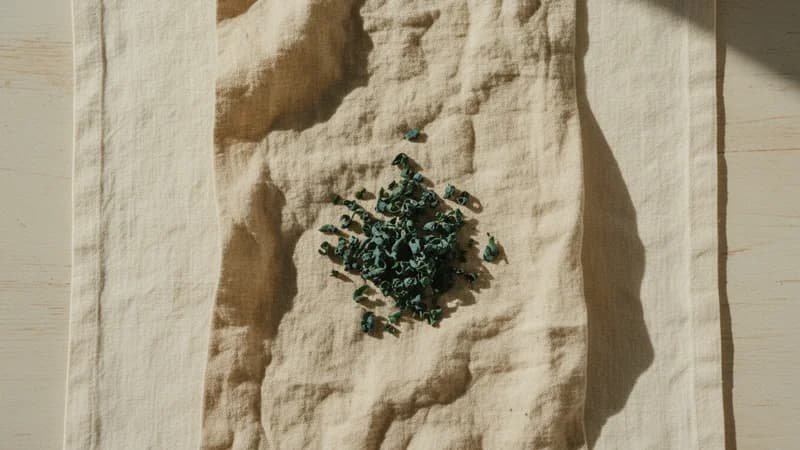
Spirulina is best suited to Pitta and Kapha, which it helps pacify. As a cyanobacterium roughly 60% complete protein by dry weight, spirulina supplies all essential amino acids in a light, easily assimilated form, nourishing Rakta and Mamsa dhatu without the heaviness of animal protein.. Suitable year-round.
Ayurvedic Profile
Spirulina (Spirulina (स्पीरुलीना)) is a vitality-boosting superfoods treasured in Ayurvedic nutrition. Referenced in Sushruta Samhita, it is characterised by bitter and sweet rasa (taste), cooling virya (potency), and sweet vipaka (post-digestive effect). Spirulina's extraordinary protein density and Tikta-Madhura rasa profile makes it a modern Rasayana that nourishes Rakta and Mamsa dhatus; its blue-green pigment phycocyanin provides anti-inflammatory support aligned with Pitta-pacifying principles. Its light and oily gunas make it particularly suited for specific constitutional types. It has a neutral effect on Vata, pacifies Pitta, and pacifies Kapha. From a nutritional standpoint, spirulina provides approximately 290 calories per 100g, with 57.5g protein, 23.9g carbohydrates, and is a valuable source of Iron, Vitamin B12, Beta-carotene. Best enjoyed during all-seasons, spirulina supports healthy Agni (digestive fire) when prepared according to Ayurvedic principles, helping prevent Ama (toxin) accumulation and nourish the dhatus (body tissues).
Ayurvedic Properties
Rasa (Taste)
bitter, sweet
Virya (Potency)
cold
Vipaka (Post-digestive)
sweet
Guna (Qualities)
light, oily
How Spirulina Affects Vata, Pitta & Kapha
Ayurveda reads every food through the three doshas. Here is how spirulina’s qualities interact with each: Not sure which is yours? Take the free dosha quiz — about 4 minutes.
Spirulina has a broadly neutral effect on Vata. Its bitter and sweet rasa and light and oily qualities neither strongly aggravate nor pacify Vata, so those with Vata dosha can enjoy it in moderation within a varied diet. Vata meal plan
Spirulina helps pacify Pitta. Its cold virya (potency) and light and oily qualities, with its bitter and sweet rasa (taste), counterbalance Pitta's tendencies — which is why it traditionally suits Pitta dosha in regular use. Pitta meal plan
Spirulina helps pacify Kapha. Its cold virya (potency) and light and oily qualities, with its bitter and sweet rasa (taste), counterbalance Kapha's tendencies — which is why it traditionally suits Kapha dosha in regular use. Kapha meal plan
Nutrition Facts (per 100g)
290kcal
Calories
57.5g
Protein
23.9g
Carbs
7.7g
Fat
3.6g
Fibre
Ayurvedic Benefits
- As a cyanobacterium roughly 60% complete protein by dry weight, spirulina supplies all essential amino acids in a light, easily assimilated form, nourishing Rakta and Mamsa dhatu without the heaviness of animal protein.
- Its deep blue-green colour comes from phycocyanin alongside chlorophyll; classically its bitter (tikta) rasa and cooling (sheeta) virya make it well suited to pacifying aggravated Pitta and settling excess internal heat.
- A notable plant-source of iron and beta-carotene, it is traditionally used to support those building healthy blood and colour, particularly where a cooling, sweet-vipaka food is wanted rather than a heating one.
- The light (laghu) and slightly oily (snigdha) guna make it Kapha-reducing, so it may help those seeking a nutrient-dense addition that does not add sluggishness or heaviness to the system.
- With a sweet post-digestive effect (madhura vipaka), it is nourishing to the tissues over time and is used as a modern rasayana-style food to support steady energy and Ojas when Agni is sound.
How to Use
- As spirulina is cooling (shita virya), favour it in warmer weather and pair it with warming spices like ginger or black pepper when the seasons turn cold.
- Begin with a quarter to half a teaspoon of powder stirred into a cool smoothie, juice or water; its taste is markedly savoury and mineral, so citrus, banana or a little honey balances it well.
- Because its virya is cooling, take it earlier in the day rather than late evening, and in colder weather pair it with a warming spice such as ginger or black pepper to protect Agni.
- Tablets or pressed flakes suit those who dislike the strong flavour; take with water away from very hot drinks, which can flatten the delicate green pigments.
- Keep to modest, consistent amounts (commonly 1 to 3 grams daily) rather than large one-off doses; its value is in steady tissue nourishment, not a single big serving.
- Store the powder sealed away from light and heat, as its beta-carotene and phycocyanin degrade with exposure; a good product is a vivid blue-green, never dull khaki.
Contraindications
- Best limited by those with autoimmune conditions or on immunosuppressant medication, as its immune-activating profile may not suit them; take medical advice first.
- People with phenylketonuria should avoid it because it is rich in phenylalanine; anyone on blood-thinning medication should also seek guidance owing to its vitamin K and iron content.
- Quality matters for safety: source only reputably tested spirulina, since poorly cultivated batches can carry microcystin contamination or heavy metals.
“Ayurveda classifies Spirulina by its bitter, sweet rasa (taste), cold virya (thermal potency), and sweet vipaka (post-digestive effect). InnerVeda reads these three lenses together to map Spirulina to your dosha and season.”
Frequently Asked Questions
Spirulina contains large amounts of a B12-like compound, but much of it is a pseudo-B12 analogue that the human body cannot use reliably. If you follow a vegan diet, treat spirulina as a bonus for iron and protein, not as your dependable B12 source, and use a proven B12 supplement instead.
That intense marine, savoury note is natural to the whole dried organism and its chlorophyll and phycocyanin pigments. It is not a sign of spoilage. Blending it into a fruity smoothie, or choosing tablets, is the simplest way to enjoy the nutrition without the flavour dominating.
Yes. Its bitter-sweet rasa, cooling virya and sweet vipaka are naturally Pitta-pacifying, so it tends to suit those who run hot or inflamed. Vata types can take it too, ideally with a little warming spice, while Kapha types benefit from its light quality.
Your dosha is the balance of Vata, Pitta and Kapha you were born with. Take the dosha quiz — free, about 4 minutes.
Three questions towards your dosha
These are the first three questions of the full dosha quiz. Answer them here and carry on where you left off.
Prefer to start from the beginning? Take the full dosha quiz.
Dietary information provided is for educational purposes only and is rooted in Ayurvedic tradition. It is not a substitute for professional nutritional or medical advice. Consult a qualified healthcare provider before making significant changes to your diet, especially if you have food allergies, intolerances, or a medical condition.
Want a meal plan matched to your dosha?
Take the free dosha assessment (about 4 minutes) and get a personalised nutrition plan with nearly 300 foods in the app, rated for your body.
Find Your Dosha: FreeAbout 4 minutes